Artwork
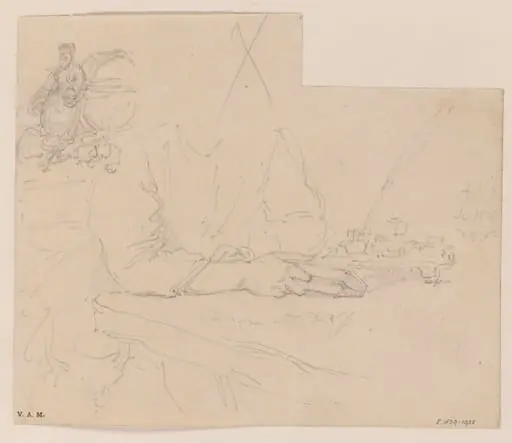
Figure Studies [verso]
![Figure Studies [verso], by George Romney, ink](https://artifactworldgallery.com/img/george-romney--figure-studies-verso--19708132818b32a0-w1024.webp)
Figure Studies [verso] is an ink drawing by the Romanticist artist George Romney. It is held in the collection of the National Gallery of Art.
About this work
Overview
Created around 1784, this drawing by George Romney is executed in pen and brown ink on laid paper. It forms the verso of a larger sheet, likely a study page used for preliminary sketches. The work belongs to Romney’s broader practice of recording human form through direct observation, a habit central to his development as a portraitist.
Subject & Meaning
The drawing presents multiple figure studies, possibly nude or lightly draped poses, rendered with quick, fluid strokes. These are not finished compositions but explorations of posture, weight, and anatomy. Romney used such studies to refine his understanding of the human body, essential for the lifelike presence in his commissioned portraits.
Technique & Style
Romney employed a restrained palette of brown ink, using varied line weight and hatching to suggest volume and shadow. The marks are economical yet precise, reflecting his ability to capture gesture and structure with minimal strokes. The paper’s texture subtly interacts with the ink, enhancing the tactile quality of the forms.
History & Provenance
The drawing remained within Romney’s personal collection during his lifetime and was later dispersed among private and institutional holdings. Its survival as a verso suggests it was not intended for public display, but rather served as a working document. Its current location reflects 20th-century acquisitions by museums focused on British drawing.
Context
In late 18th-century Britain, artists routinely compiled figure studies to support portrait commissions. Romney, though best known for his polished portraits of aristocrats, maintained a rigorous private practice of life drawing. This sheet aligns with contemporaneous habits among British artists who valued direct observation over idealized academic models.
Legacy
This drawing exemplifies the quiet, persistent labor behind Romney’s public success. Though overshadowed by his finished portraits, such studies reveal his commitment to anatomical accuracy and expressive form. Today, they offer insight into the working methods of British artists who bridged Enlightenment empiricism and Romantic sensibility.
Artist & collection


![Two Cow's Heads [verso], by Paul Gauguin](https://artifactworldgallery.com/img/paul-gauguin--two-cow-s-heads-verso--d880ac31a237a947-w320.webp)
![Sheet of Studies [recto and verso], by John Flaxman](https://artifactworldgallery.com/img/john-flaxman--sheet-of-studies-recto-and-verso--af59e52d5279d768-w320.webp)
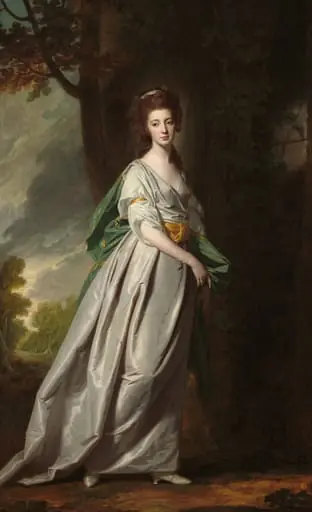
![An Elegant Lady in Classical Dress [recto], by George Romney](https://artifactworldgallery.com/img/george-romney--an-elegant-lady-in-classical-dress-recto--c0f4e57cf0adb97c-w320.webp)