Artwork
Figure Studies
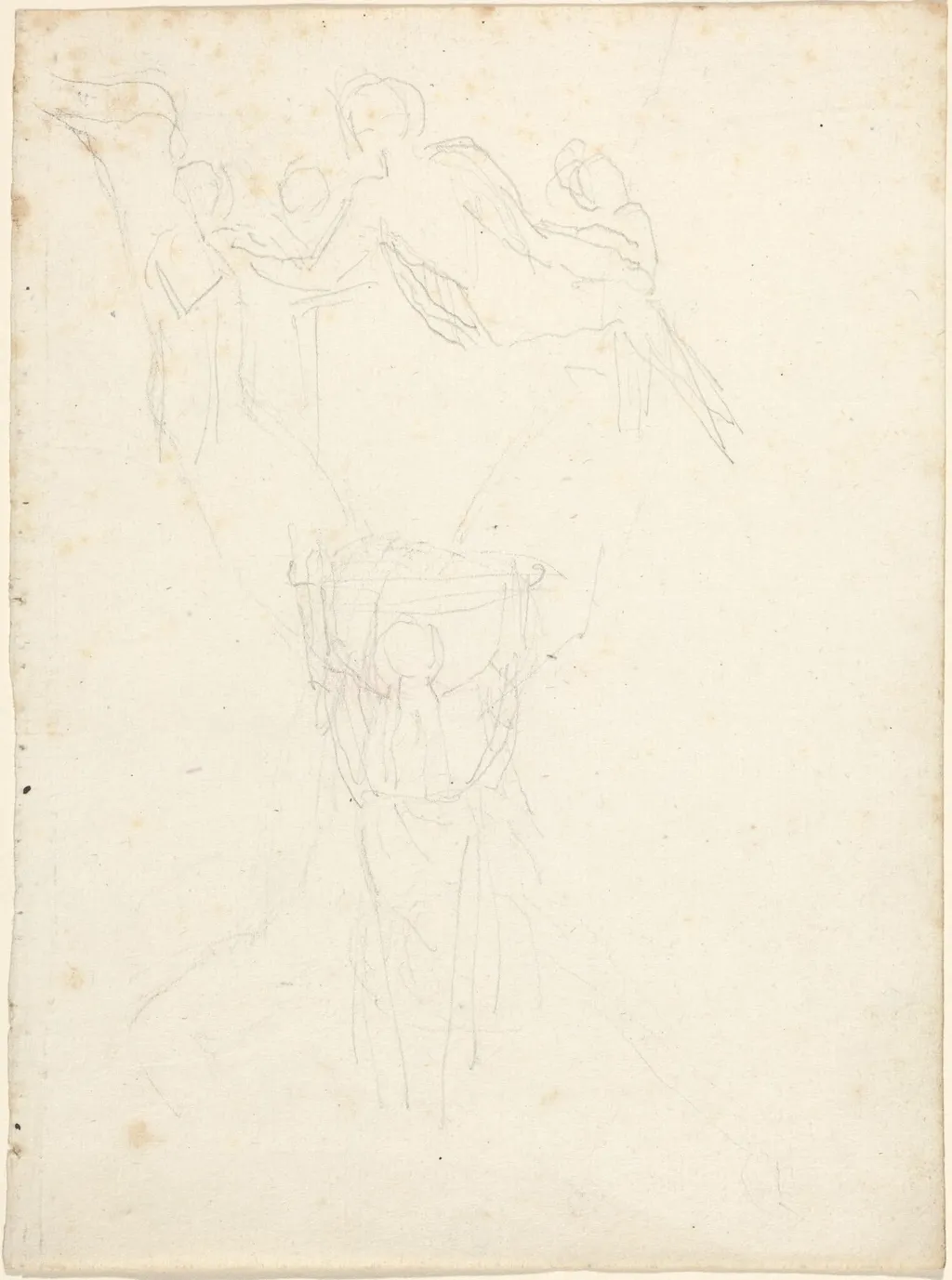
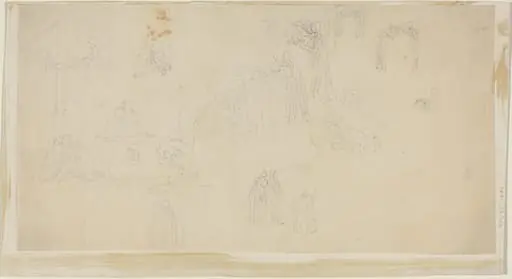
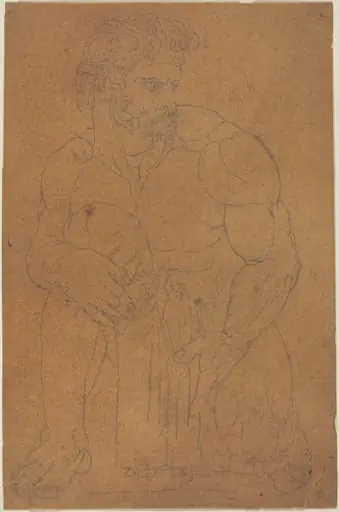
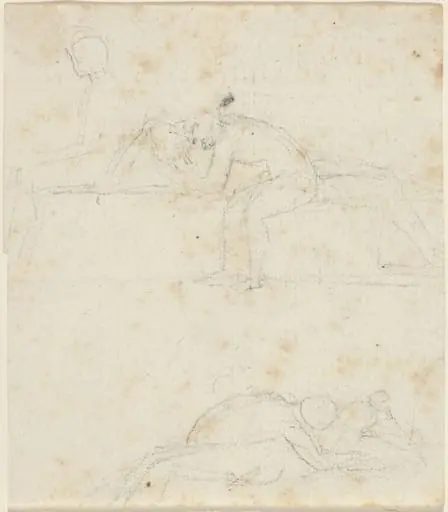
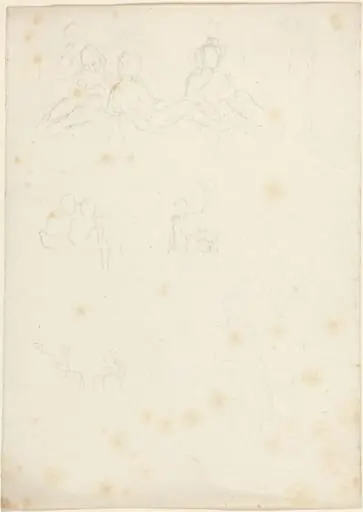
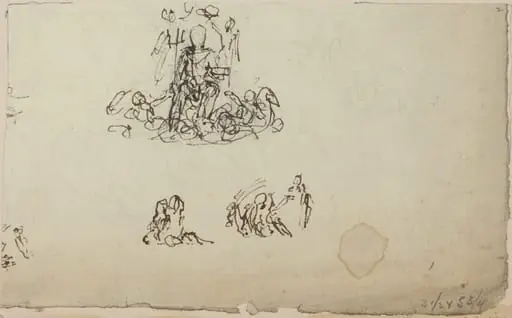
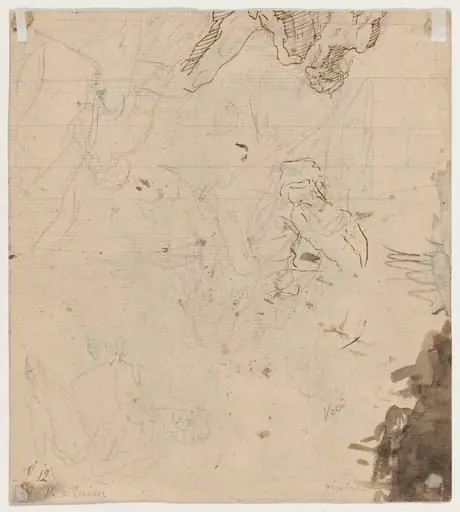
Figure Studies is a graphite drawing by the Romanticist artist John Flaxman. It dates from 1790 and is held in the collection of the National Gallery of Art.
About this work
Overview
Figure Studies is a graphite drawing created by John Flaxman in 1790, exemplifying his Neoclassical approach through disciplined renderings of the human form.
Subject & Meaning
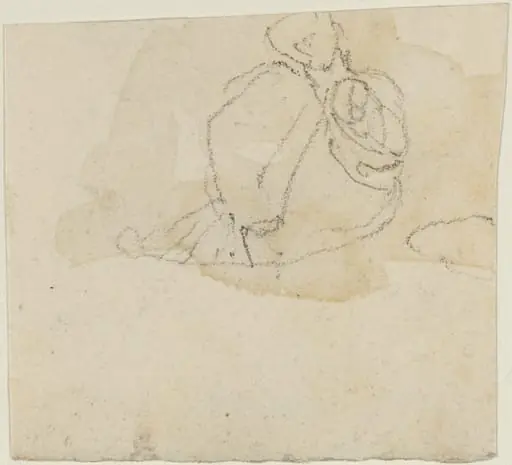
The drawing features three loosely depicted figures: one standing with arms crossed and two above, entwined in flowing robes. These quick, expressive sketches prioritize capturing movement and basic forms over detailed refinement, suggesting a preliminary or exploratory purpose.
Technique & Style
Flaxman executed the piece with light, shaky graphite lines, reflecting a rapid or practice-oriented process. The overall effect is one of simplicity and emphasis on essential anatomical and compositional elements, characteristic of his dual background in sculpture and drawing.
History & Provenance
Created during the height of Neoclassicism's emphasis on clarity and formal precision, Figure Studies aligns with the artistic values of its time. Flaxman's broader career, including work on funerary monuments and collaborations with Josiah Wedgwood, contextualizes his meticulous yet rapid exploration of human anatomy here.
Context
The drawing's appearance—on worn, stained paper with faint, loose lines—suggests it may have been a personal sketch or preliminary study rather than a finished work intended for public viewing or reproduction.
Artist & collection
Artist
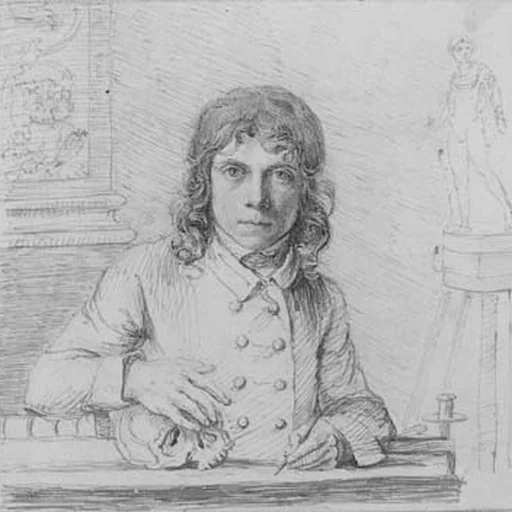
John Flaxman (6 July 1755 – 7 December 1826) was an English sculptor and draughtsman who was a leading figure in British and European Neoclassicism.

![Figure Studies [verso], by Thomas Sully](https://artifactworldgallery.com/img/thomas-sully--figure-studies-verso--951eb42592bb5e4f-w320.webp)
![Figure Studies [verso], by Giovanni Battista Cipriani](https://artifactworldgallery.com/img/giovanni-battista-cipriani--figure-studies-verso--9d89c1dfd297f554-w320.webp)