Artwork
Grădina vilei din Balcic
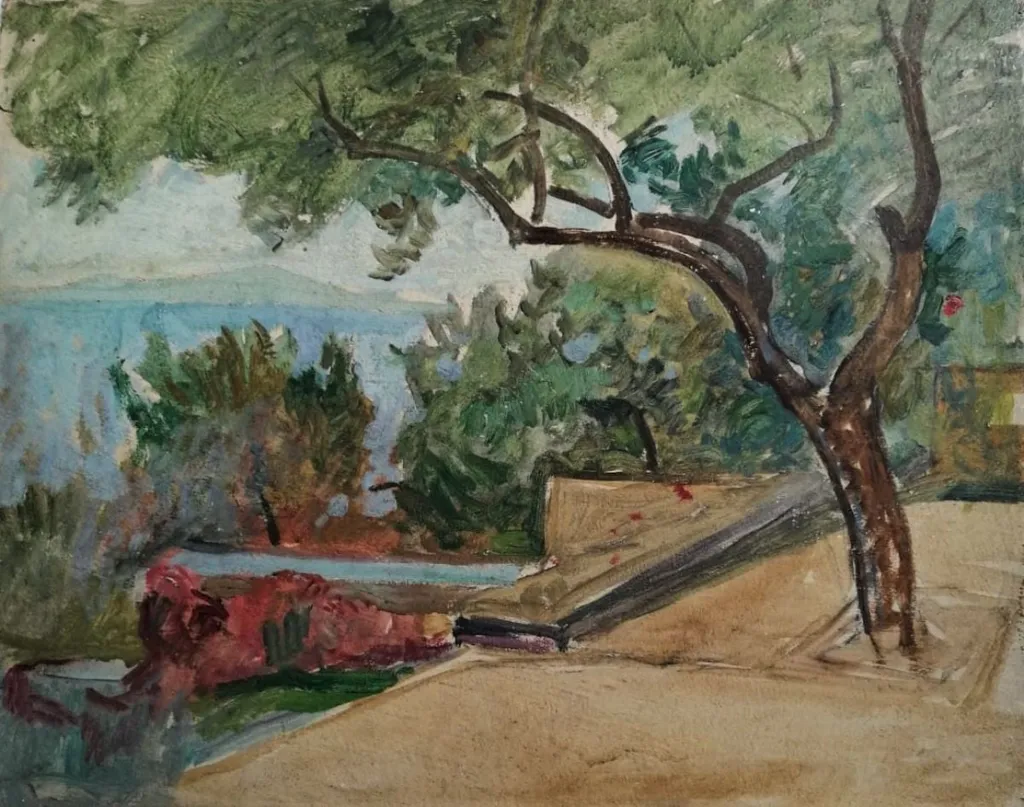
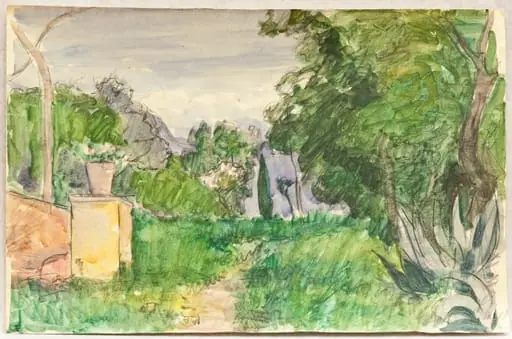
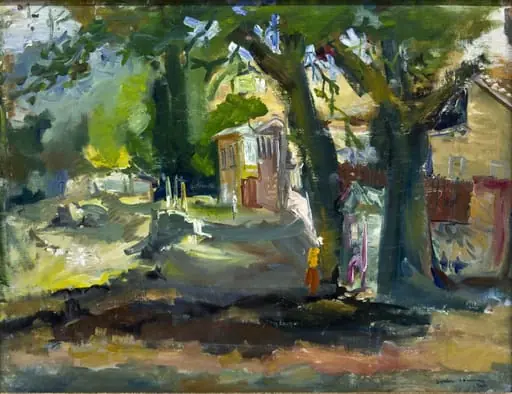
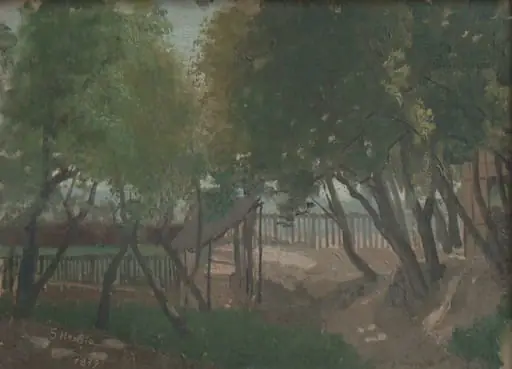
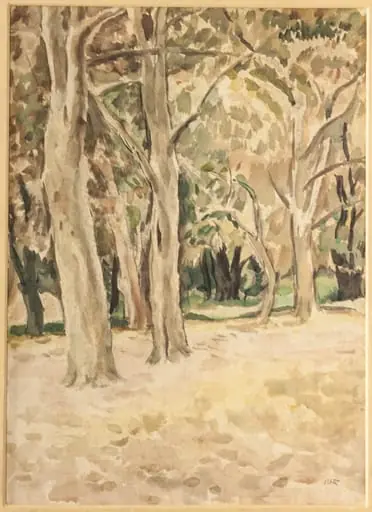
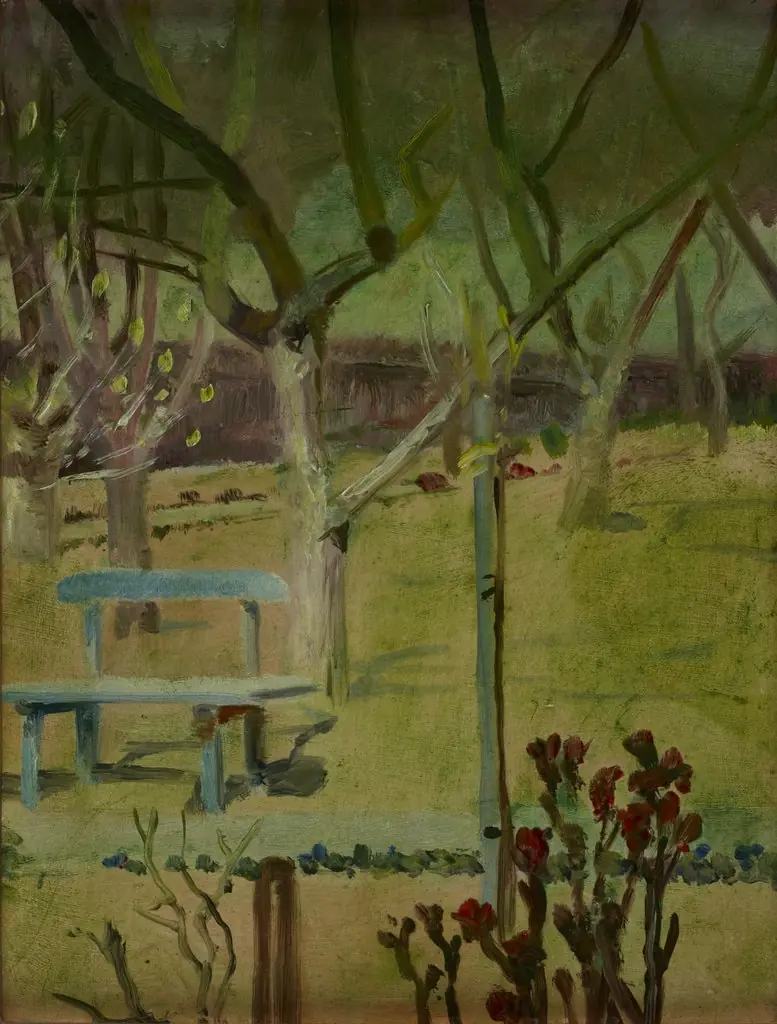
Grădina vilei din Balcic is a print by Alexandru Carol Satmary. It dates from 1927 and is held in the collection of the Bucharest Municipality Museum.
About this work
Overview
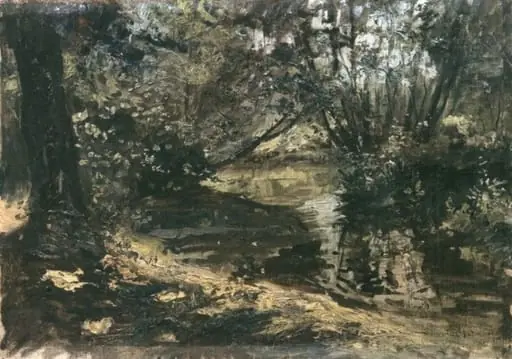
Painted around 1927 by Alexandru Carol Satmary, Grădina vilei din Balcic depicts a quiet garden scene in the Romanian Black Sea resort of Balchik.
Painted around 1927 by Alexandru Carol Satmary, Grădina vilei din Balcic depicts a quiet garden scene in the Romanian Black Sea resort of Balchik. The work is part of the Museum of Ethnography’s collection, where it is preserved as an example of early 20th-century Romanian landscape painting. Its subdued tones and loose handling reflect a personal, observational approach rather than a formal academic style.
Subject & Meaning
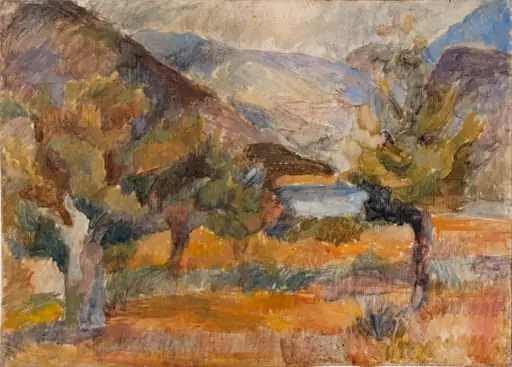
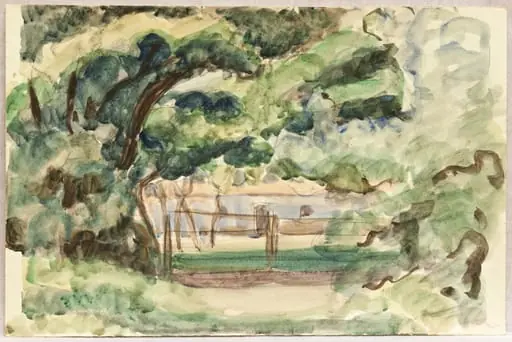
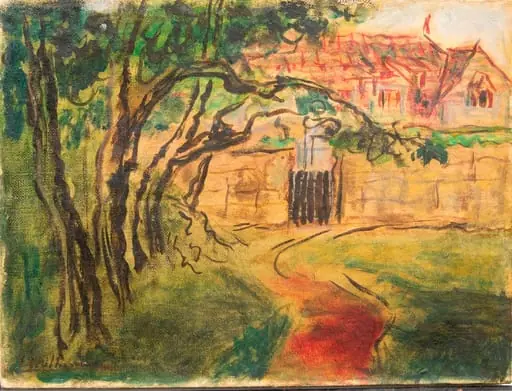
The painting presents a private garden space, centered on a gnarled tree whose limbs reach toward a distant body of water. The path leading to the shore suggests a quiet ritual of passage, perhaps evoking contemplation or daily routine. The absence of figures emphasizes solitude and the quiet rhythm of nature, aligning with a broader interwar interest in intimate, unidealized environments.
Technique & Style
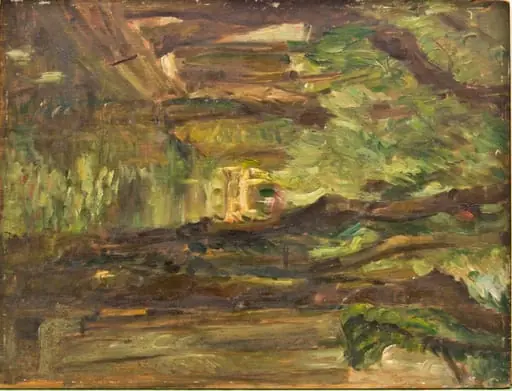
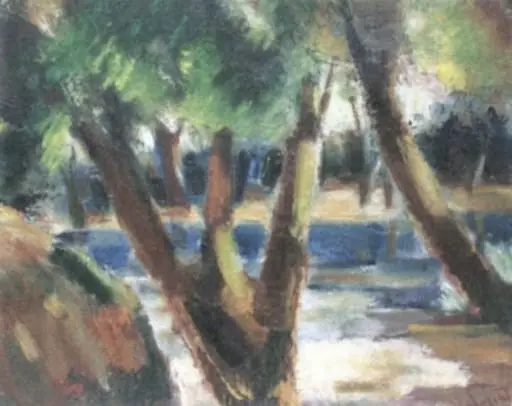
Satmary employed loose, fluid brushwork to suggest the texture of foliage and the movement of air. Colors are restrained—shades of olive, slate, and earth brown dominate—with minimal contrast. The water is rendered with soft horizontal strokes, contrasting the verticality of the tree. This approach avoids sharp definition, favoring atmospheric suggestion over precise detail.
History & Provenance
The painting was created during Satmary’s active period in Romania’s interwar years and entered the Museum of Ethnography’s holdings shortly after its completion. Its preservation in an ethnographic institution, rather than a fine arts museum, suggests its value as a cultural document of domestic and regional life, reflecting local aesthetics and environment.
Context
In the 1920s, Romanian artists increasingly turned from grand historical themes to personal, regional subjects. Balchik, a favored retreat for Bucharest’s intelligentsia, became a motif for painters seeking quietude. Satmary’s work aligns with this trend, capturing a modest, everyday landscape that resonated with contemporary ideals of authenticity and introspection.
Legacy
Though not widely exhibited, Grădina vilei din Balcic remains a representative example of Satmary’s mature style and the broader shift in Romanian painting toward intimate, non-monumental landscapes. Its presence in the Museum of Ethnography underscores its role as a record of place and personal vision, rather than a public statement.
Artist & collection

Artist
Alexandru Carol Satmary (1870–1933) was an artist, born in Bucharest.