Artwork
Margarete
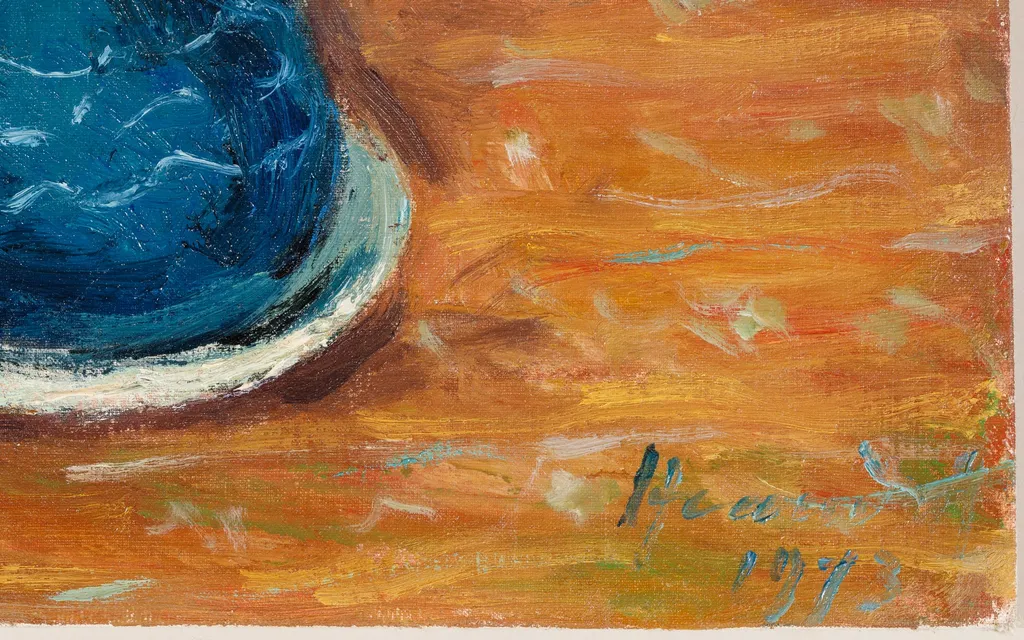
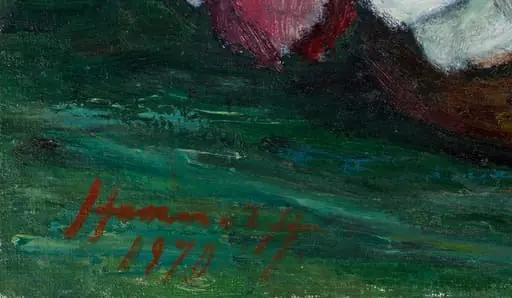
Margarete is a print by Hrandt Avakian. It dates from 1973 and is held in the collection of the National Museum of Art of Romania.
About this work
Overview
Avakian’s approach prioritizes emotional resonance over literal representation, inviting quiet reflection rather than explicit interpretation.
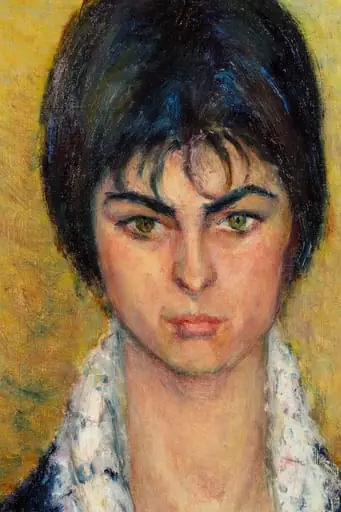
Margarete is a 1973 painting by Hrandt Avakian, rendered in oil or similar medium on canvas. The composition centers on a solitary female figure, depicted with soft focus and minimal detail, set against a warm, golden backdrop. The work avoids narrative clarity, instead emphasizing mood through color and form. Avakian’s approach prioritizes emotional resonance over literal representation, inviting quiet reflection rather than explicit interpretation.
Subject & Meaning
The figure, identified as Margarete, is shown in a contemplative posture, gazing downward with her face rendered indistinct. Her white dress and blue shawl suggest cultural or regional dress, though no specific tradition is confirmed. The ambiguity of her identity and expression reinforces a sense of introspection, possibly evoking themes of memory, loss, or inner solitude. The lack of facial detail universalizes her presence, allowing viewers to project their own associations.
Technique & Style
Avakian employs a muted, atmospheric technique, blurring edges and softening contours to dissolve the figure into its surroundings. The warm golden background contrasts subtly with the cool tones of the shawl, creating a gentle chromatic tension. Brushwork is restrained, favoring tonal gradations over sharp definition. This method aligns with a lyrical realism that values emotional tone over anatomical precision, drawing attention to the psychological space rather than physical detail.
History & Provenance
Created in 1973, Margarete emerged during a period when Avakian was exploring intimate, psychologically charged portraiture. The painting’s early history is not widely documented, and its exhibition record remains limited. It has remained in private collections since its completion, with no major public acquisitions or institutional exhibitions recorded. Its relative obscurity contrasts with the emotional weight of its imagery.
Context
In the early 1970s, Avakian was part of a broader artistic current in which figurative painting turned inward, away from political or social commentary toward personal and emotional states. Margarete reflects this shift, aligning with contemporaneous works that favored silence, ambiguity, and atmospheric presence. The painting’s quietude resonates with postwar European and diasporic sensibilities, where identity and memory were often rendered through suggestion rather than statement.
Legacy
Margarete remains a quietly significant example of Avakian’s mature style, though it has not entered mainstream art historical discourse. Its influence is subtle, felt more in its emotional tone than in formal imitation. The work endures as a private meditation on presence and absence, offering a counterpoint to more overtly expressive or narrative-driven figurative art of its era. It continues to be referenced in studies of understated portraiture in late 20th-century painting.
Artist & collection