Artwork
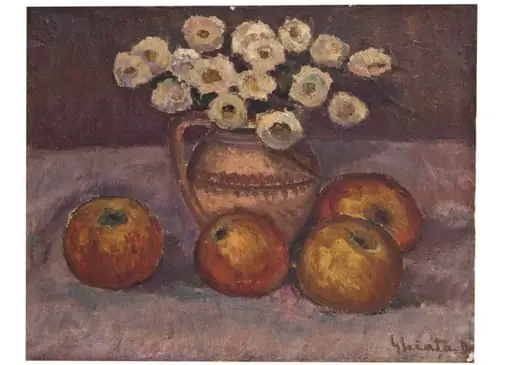
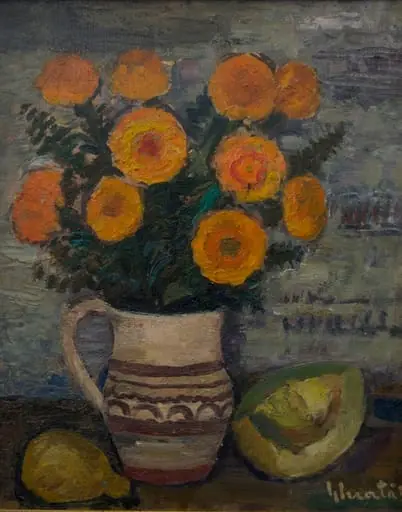
Flori în ulcea de lut
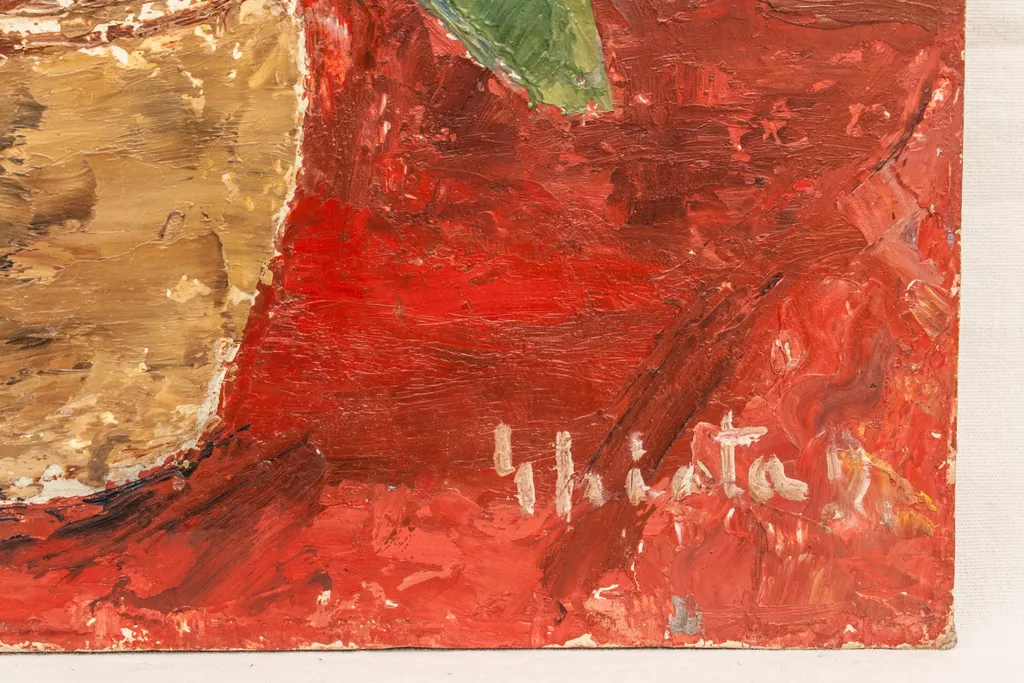
Flori în ulcea de lut is a print by Dumitru Ghiață. It dates from 1938 and is held in the collection of the Gavrila Simion Eco-Museum Research Institute Tulcea.
About this work
Overview
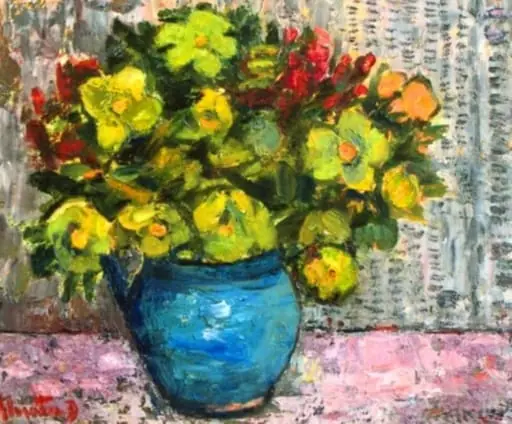
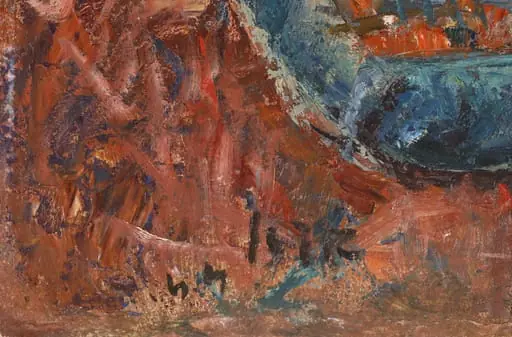
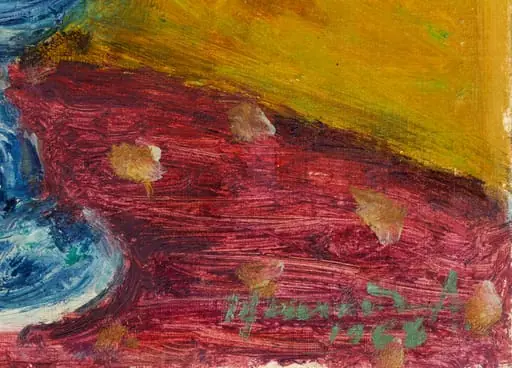
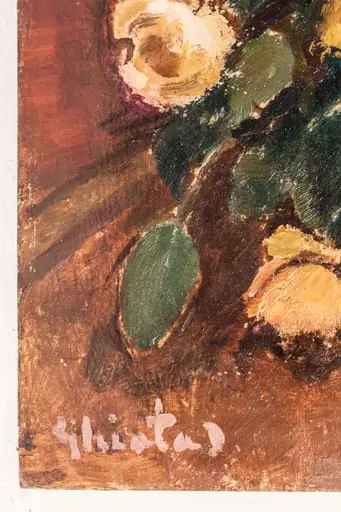
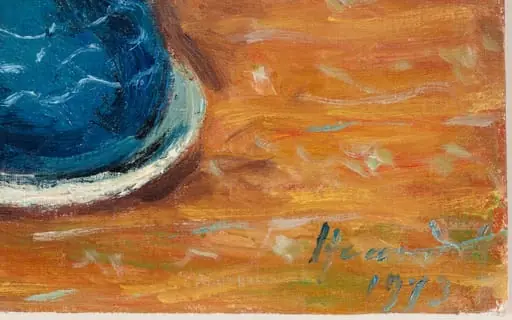
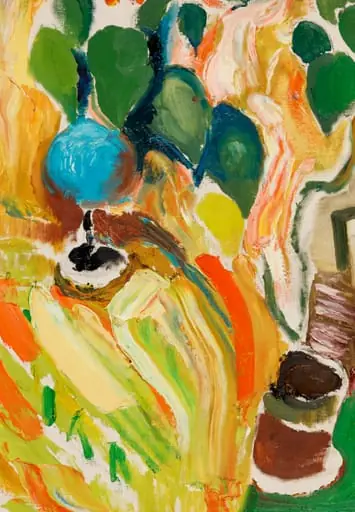
Painted around 1938 by Romanian artist Dumitru Ghiață, *Flori în ulcea de lut* is a still life rendered in thick, tactile oil paint.
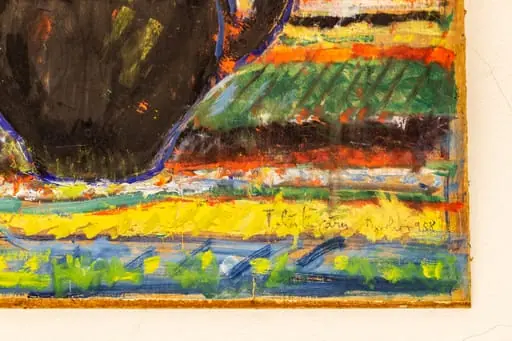
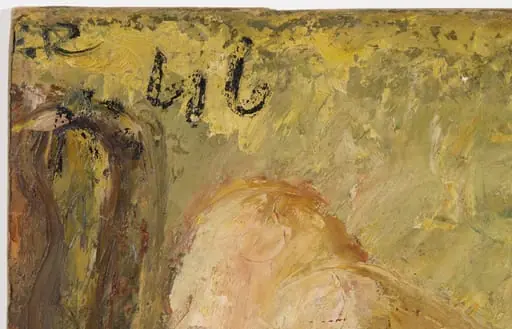
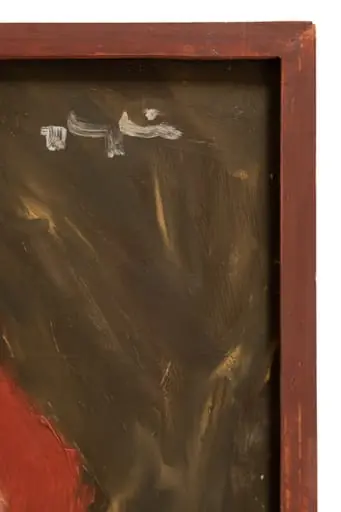
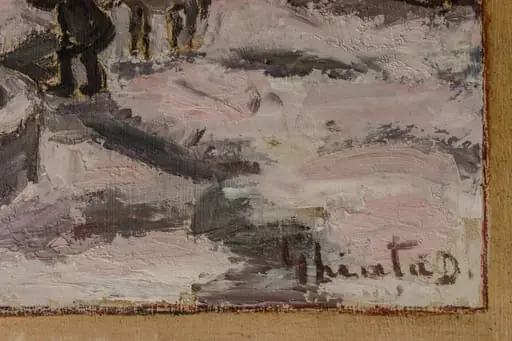
Painted around 1938 by Romanian artist Dumitru Ghiață, *Flori în ulcea de lut* is a still life rendered in thick, tactile oil paint. The work presents a close-up view of a rough, clay-like surface, with pigment applied in heavy, irregular strokes. Its muted palette of reds, browns, and faint yellows, accented by a trace of green, suggests a floral arrangement embedded within the texture rather than clearly defined.
Subject & Meaning
The title, meaning 'Flowers in the Clay Pot,' implies a domestic, earth-bound floral subject. Yet the painting obscures recognizable forms beneath layers of pigment, transforming the flowers into abstracted traces. This ambiguity reflects Ghiață’s interest in folk simplicity, where the essence of nature is suggested rather than illustrated, evoking quiet reverence for humble, everyday objects.
Technique & Style
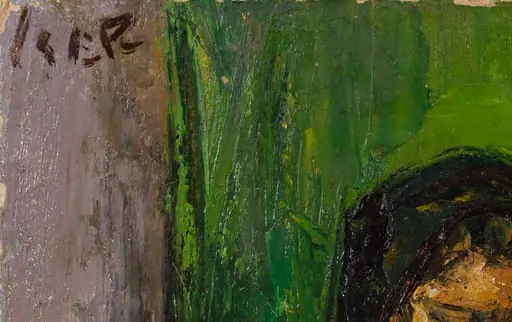
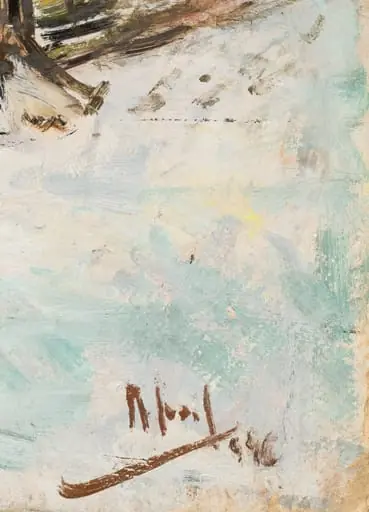
Ghiață employed impasto to build a dense, sculptural surface, using a palette knife or stiff brush to lay on paint unevenly. The texture dominates the composition, with ridges and depressions catching light differently across the canvas. Colors are applied without blending, preserving raw, tactile qualities. The faint inscription 'Flori' is barely legible, reinforcing the work’s emphasis on material over detail.
History & Provenance
The painting has remained in the collection of the Museum of Ethnography in Romania since its creation. Its preservation there aligns with Ghiață’s association with vernacular traditions and rural aesthetics. Unlike many of his contemporaries who pursued modernist experimentation, Ghiață’s work was valued for its grounded, unpretentious character, making it a natural fit for an institution focused on cultural heritage.
Context
In late 1930s Romania, artists increasingly turned to indigenous themes as part of a broader cultural reassessment. Ghiață’s focus on modest subjects—flowers in clay vessels—resonated with a nationalist impulse to celebrate rural life. His restrained style, free of academic polish, aligned with a movement that sought authenticity over refinement, distinguishing his work from urban modernism.
Legacy
Ghiață’s approach influenced later Romanian artists interested in materiality and folk expression. *Flori în ulcea de lut* exemplifies a quiet resistance to ornamental art, prioritizing the physical presence of paint and the dignity of ordinary things. Though not widely exhibited internationally, it remains a touchstone in Romanian art for its unembellished engagement with nature and craft.
Artist & collection
Artist
Dumitru Ghiață (22 September 1888 – 3 July 1972) was a Romanian landscape painter.
Museum
Gavrila Simion Eco-Museum Research Institute Tulcea
Continue through works from the same source collection.