Artwork
Tacâmul
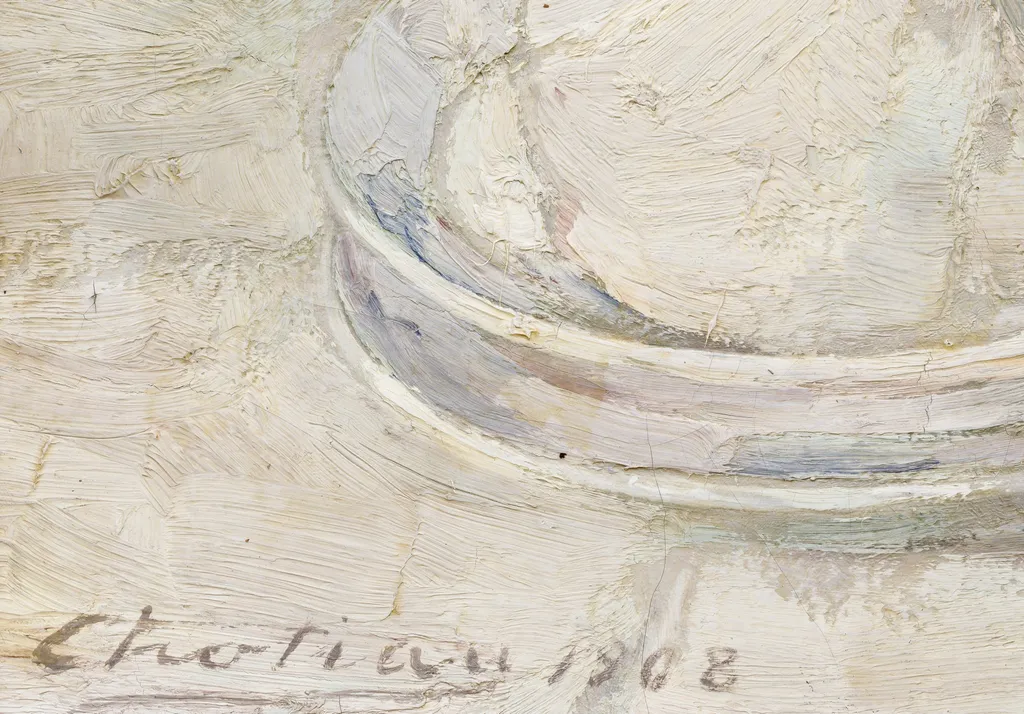
Tacâmul is an unspecified painting by Max Chotiau. It dates from 1850 and is held in the collection of the National Museum of Art of Romania.
About this work
Overview
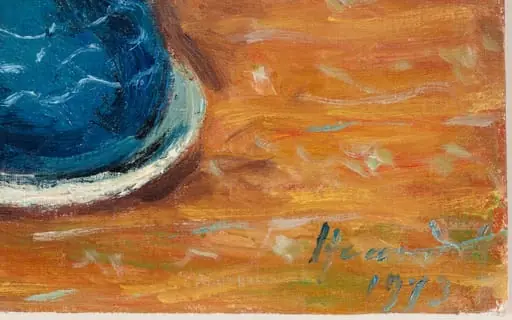
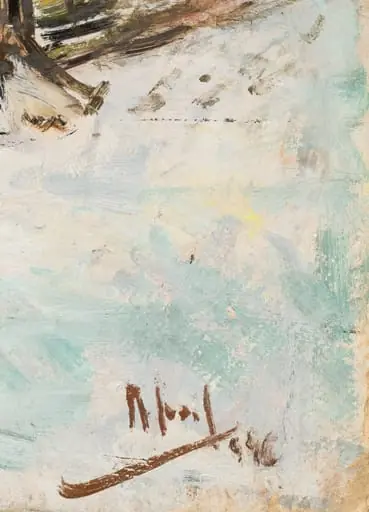
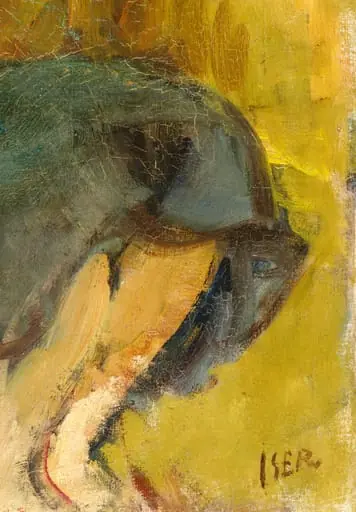
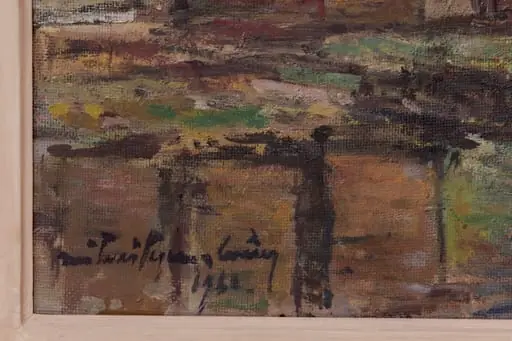
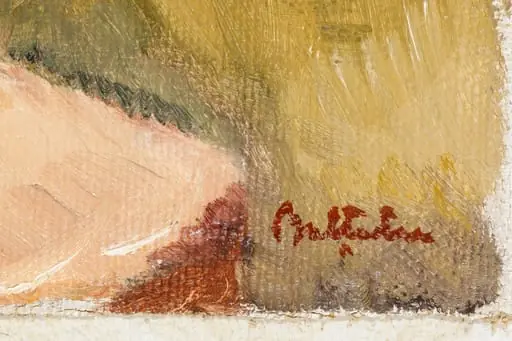
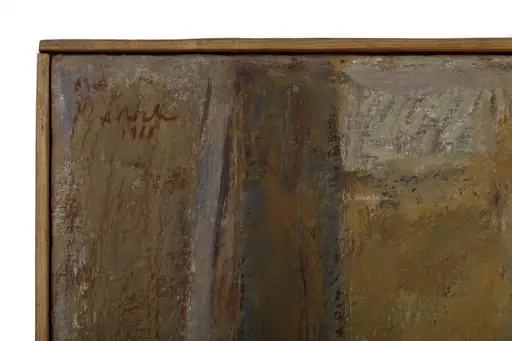
“Tacâmul” is an oil painting attributed to the Romanian artist Max Chotiau, dated approximately to 1850. The work is signed in the lower left corner with the title, indicating the artist’s intent to identify the piece. Its dimensions and current location are not documented in the available records.
Technique & Style
The surface of the canvas is treated with thick, uneven brushwork that creates a textured, almost sculptural quality. Broad, soft tones of white, beige and pale blue dominate, interspersed with darker streaks that suggest a gestural, impasto approach. The handling of paint gives the image a blurred, atmospheric effect, obscuring precise details.
Subject & Meaning
At the centre of the composition a vague form emerges, hinting at a face or object, yet the lack of definition leaves its identity open to interpretation. The ambiguous central shape, combined with the muted palette, invites viewers to consider mood and perception rather than a specific narrative.
History & Provenance
The painting’s provenance is unclear; no exhibition history or collection record accompanies the work. Aside from the artist’s signature, there are no documented sales, inventories, or critical references that trace its ownership since its creation in the mid‑nineteenth century.
Context
Created around 1850, “Tacâmul” belongs to a period when Romanian artists were beginning to engage with broader European painting trends, including the exploration of texture and light. The work’s impasto‑like surface aligns with contemporary experiments in materiality, though it does not correspond to a known movement or school.
Artist & collection
Artist
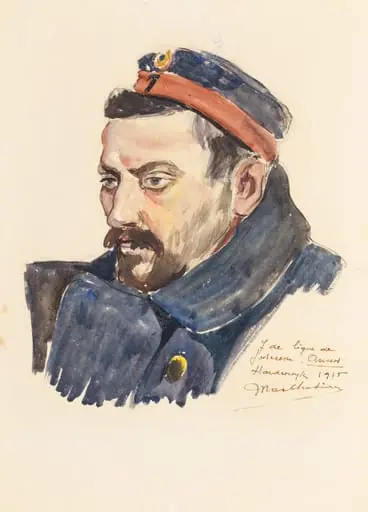
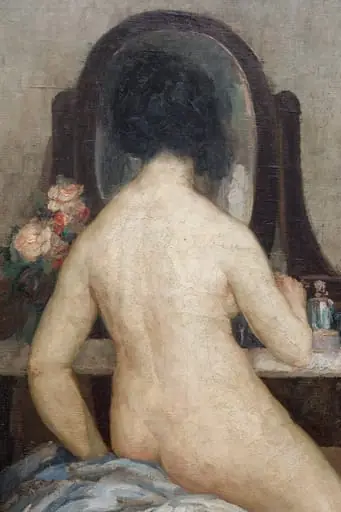
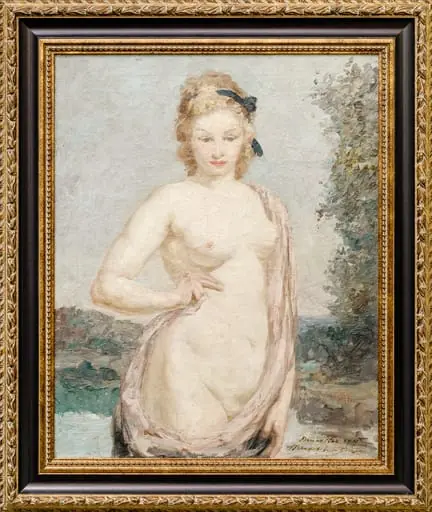
Max Chotiau painted simple scenes from everyday life. Four of his works sit in this bundle, including the 1915 painting *Soldat* and *La oglindă*, a quiet view by a mirror. Try his print *Nud*—a pared-down figure…