Artwork
Peisaj cu biserică
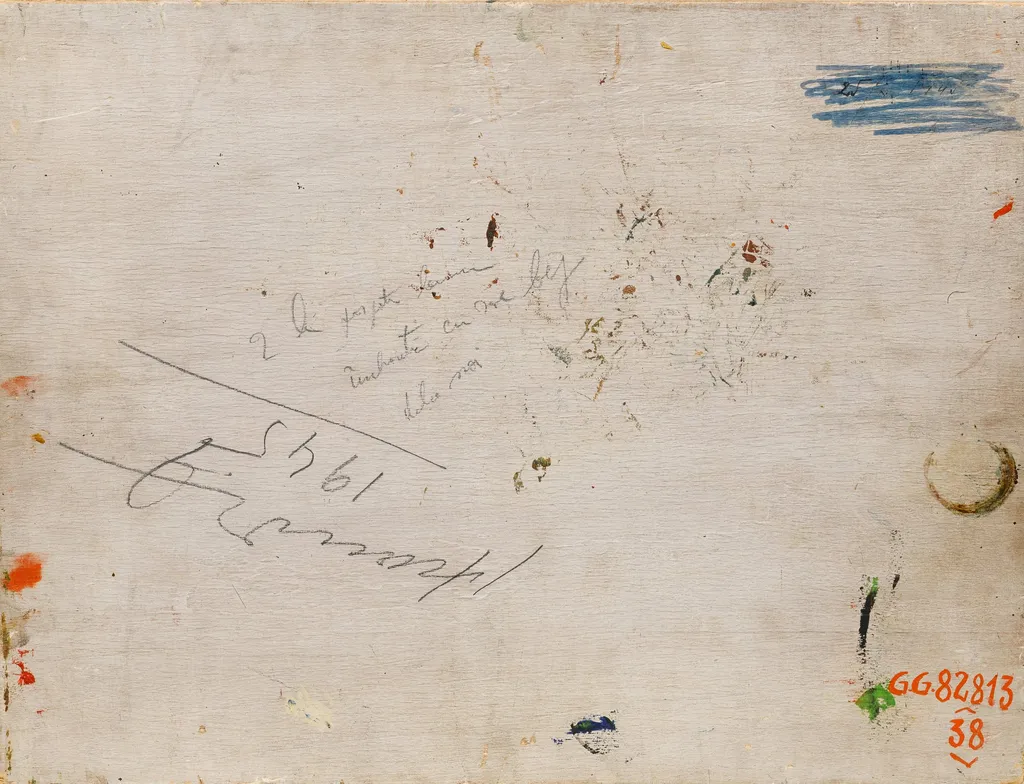
Peisaj cu biserică is a print by Hrandt Avakian. It dates from 1850 and is held in the collection of the National Museum of Art of Romania.
About this work
Overview
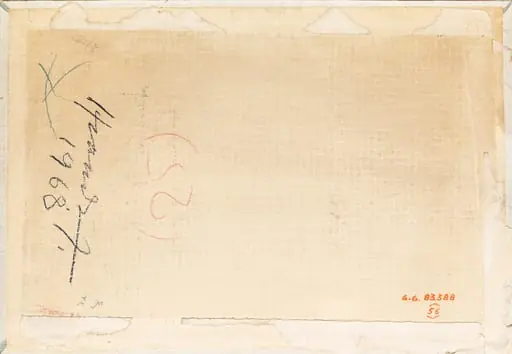
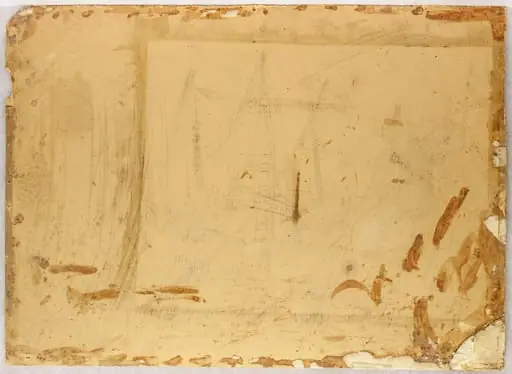
Faint pencil lines suggest the silhouette of a structure, possibly a church, while scattered pigment marks—orange and blue—appear near the margins.
Created around 1850 by Hrandt Avakian, this work is a modest sheet of paper bearing a sparse, unfinished composition. Faint pencil lines suggest the silhouette of a structure, possibly a church, while scattered pigment marks—orange and blue—appear near the margins. The surface shows signs of age: creases, smudges, and marginal notations in pencil or ink. Its raw, unpolished state suggests it was not intended as a finished piece but as a working record or study.
Subject & Meaning
The central form resembles a simple ecclesiastical building, its outline rendered with minimal detail. The presence of possible Romanian script in the upper region implies a local context, perhaps a note on location or function. The absence of figures or landscape elements shifts focus to the structure itself, hinting at documentation rather than artistic expression. The work may reflect an observer’s quick record of a rural church, possibly during travel or fieldwork.
Technique & Style
The execution is economical and immediate: thin pencil lines define the building’s form, while accidental pigment splatters suggest watercolor or ink applied loosely. The paper bears no washes or shading, only isolated stains and erasures. The style is unrefined, prioritizing speed over finish. Textual annotations, faint and irregular, appear alongside the image, reinforcing its function as a personal or observational sketch rather than a polished composition.
History & Provenance
The work’s origin lies in mid-19th-century Romania, likely tied to Avakian’s activities as a documenter of regional architecture. Its worn condition and marginal notations suggest it was carried and handled over time. It entered institutional collection through later acquisition, possibly from a private archive or ethnographic fieldwork collection. No detailed record of its early ownership survives, but its physical state aligns with materials used by 19th-century travelers and researchers.
Context
In the mid-1800s, artists and ethnographers across Eastern Europe began systematically recording vernacular architecture as national identities took shape. Avakian’s sketch fits within this trend—neither grand nor idealized, it captures a modest rural church with minimal embellishment. Such drawings served as reference material for later studies, preserving forms that might otherwise have been lost to time or change.
Legacy
Though not widely exhibited, this work contributes to a broader archive of Romanian architectural documentation from the period. Its unadorned nature makes it valuable as evidence of how early observers engaged with their surroundings—not as artists, but as recorders. It remains in the collection of the Museum of Ethnography, where it supports scholarly study of regional building traditions and the methods of 19th-century visual ethnography.
Artist & collection


 Vaci în ogradă
 Pescar șezând
 Balcic
 Portul Tulcea
 Peisaj marin Balcic
 Trandafiri roșii
 Autoportret
 Nuntă tătărască
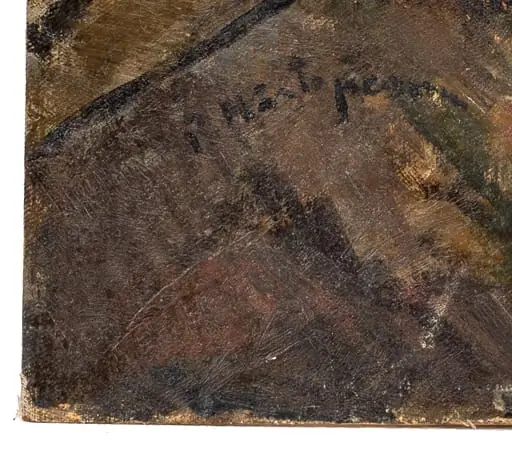 Spre căpitănia portului Balcic
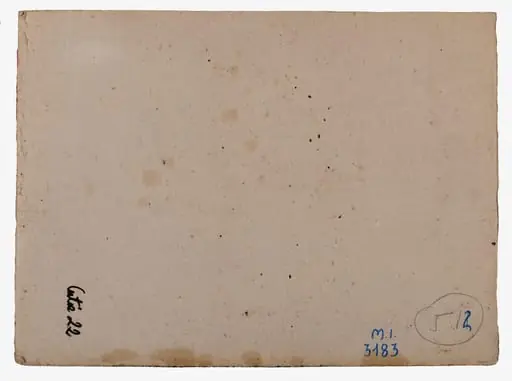 Studiu de peisaj. În prim-plan, iarbă colorată în culorile toamnei (verde, ocru, roșu, indigo). În plan îndepărtat, un gard negru, în spatele căruia se observă culoarea roșie reflectorizantă, indigo și albastru spre marginea de sus. Tușe surte care agită suprafața. Disonanță cromatică. Semnat cu indigo, dreapta jos: Victor M. Craiu.
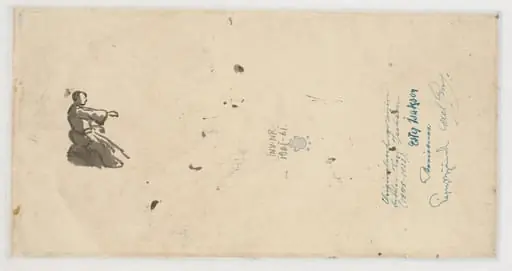 Siddende figur med fremstrakt arm