Artwork
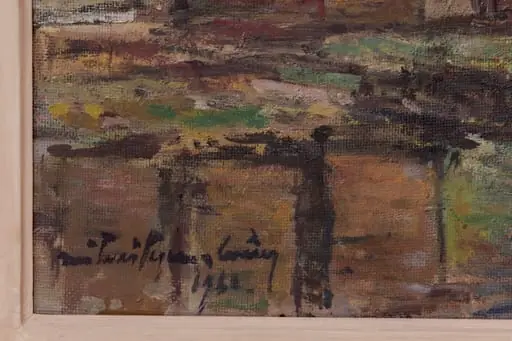
Studiu de peisaj. În prim-plan, iarbă colorată în culorile toamnei (verde, ocru, roșu, indigo). În plan îndepărtat, un gard negru, în spatele căruia se observă culoarea roșie reflectorizantă, indigo și albastru spre marginea de sus. Tușe surte care agită suprafața. Disonanță cromatică. Semnat cu indigo, dreapta jos: Victor M. Craiu.
Studiu de peisaj. În prim-plan, iarbă colorată în culorile toamnei (verde, ocru, roșu, indigo). În plan îndepărtat, un gard negru, în spatele căruia se observă culoarea roșie reflectorizantă, indigo și albastru spre marginea de sus. Tușe surte care agită suprafața. Disonanță cromatică. Semnat cu indigo, dreapta jos: Victor M. Craiu. is a print by Mihăilescu-Craiu Victor. It dates from 1944 and is held in the collection of the Moldova National Museum Complex. Created around 1944 by Victor M.
About this work
Overview
Its surface shows signs of aging—fading, faint speckling, and minor handling marks.
Created around 1944 by Victor M. Craiu, this landscape study is a small-scale work executed in pigment on paper. Its surface shows signs of aging—fading, faint speckling, and minor handling marks. Two handwritten annotations in the lower corners, one in black and one in blue with a circled numeral, suggest it may have been part of a larger collection or study series. The composition balances bold foreground elements with subdued background tones.
Subject & Meaning
The scene depicts a seasonal transition, with autumnal grasses in the foreground rendered in vivid greens, ochres, reds, and indigo. Behind them, a dark linear form—possibly a fence—acts as a structural divider, separating the warm, textured earth from a distant sky or field washed in cool blues and muted reds. The dissonant color pairing evokes tension between closeness and distance, vitality and decay, without depicting a specific location or narrative.
Technique & Style
Craiu applied pigment with loose, uneven strokes, creating a tactile, almost chaotic surface. Colors are layered without smooth blending, emphasizing texture over realism. The use of contrasting hues—warm foreground tones against cool, distant ones—produces visual friction. Subtle washes and dry brushwork suggest atmospheric haze, while the lack of defined contours reinforces an impressionistic, non-narrative approach to landscape.
History & Provenance
The work is signed in indigo at the lower right, confirming authorship by Victor M. Craiu. Its faded condition and handwritten annotations imply it was not intended as a finished exhibition piece but rather a personal study or sketch. The presence of two marginal notes, likely added by a collector or instructor, suggests it circulated in academic or private circles during or shortly after its creation.
Context
Made during the early 1940s in Romania, the work reflects a period when local artists were exploring expressive color and informal composition, often outside official academic norms. Craiu’s use of dissonant palettes and textured surfaces aligns with broader European tendencies toward emotional abstraction in landscape, even as political conditions limited public exposure to such experimental work.
Legacy
Though not widely exhibited, this study exemplifies Craiu’s interest in color as emotional structure rather than descriptive tool. Its raw technique and unpolished surface distinguish it from idealized landscape traditions. Today, it remains a quiet testament to the private, experimental practices of Romanian modernists navigating artistic freedom under constrained cultural conditions.
Artist & collection
Artist
Victor M. Craiu painted Romanian landscapes and figure scenes using thick, choppy brushstrokes that give his surfaces a restless energy. In prints like *Strămoșul* and *Peisaj urban*, he layered bold autumn greens,…
 Flori de toamnă
 Natură statică
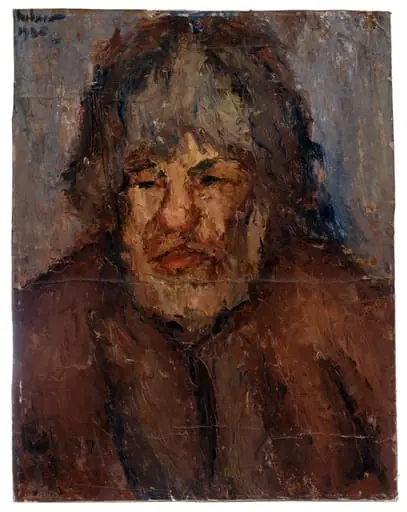 Strămoșul
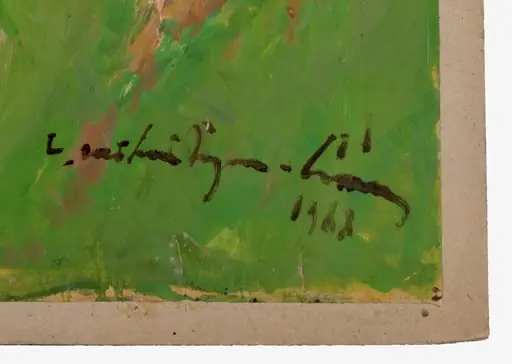 Studiu de peisaj cu un drum pe care merge o căruță trasă de cai. În prim-plan, căruța văzută din spate, dreapta. În căruță, un bărbat cu căciulă neagră și haină gri, o femeie cu batic alb și haină brun-ocru și o fetiță cu batic alb cu verde-roșu, așezată în spatele celor doi, lângă două butoaie. Drumul taie ca o diagonală lucrarea; de-o parte și de alta, iarbă. Linia orizontului foarte ridicată, după care se vede un copac verde, dealul albastru în depărtare și cerul. Semnat și datat cu brun, dreapta jos: V. Mihăilescu Craiu 1968.
 Natură statică cu flori
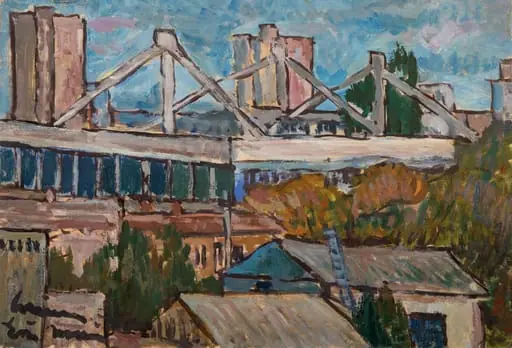 Peisaj urban; în prim-plan, acoperișuri de case și vegetație. În plan îndepărtat, o hală de producție care are pe acoperiș grinzi verticale care susțin alte grinzi de-o parte și de alta, celălalt capăt având punct de sprijin marginile construcției. Două coșuri apar în spatele halei. Colorat în gri. Tușă păstoasă. Semnat cu negru, stânga jos: Craiu.
 Peisaj industrial pe Valea Bistriței
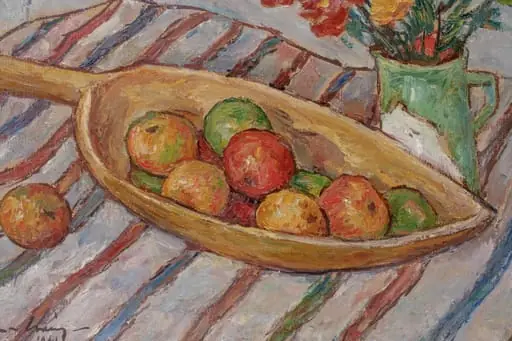 Natură moartă cu mere și flori