Artwork
Peisaj din Tei
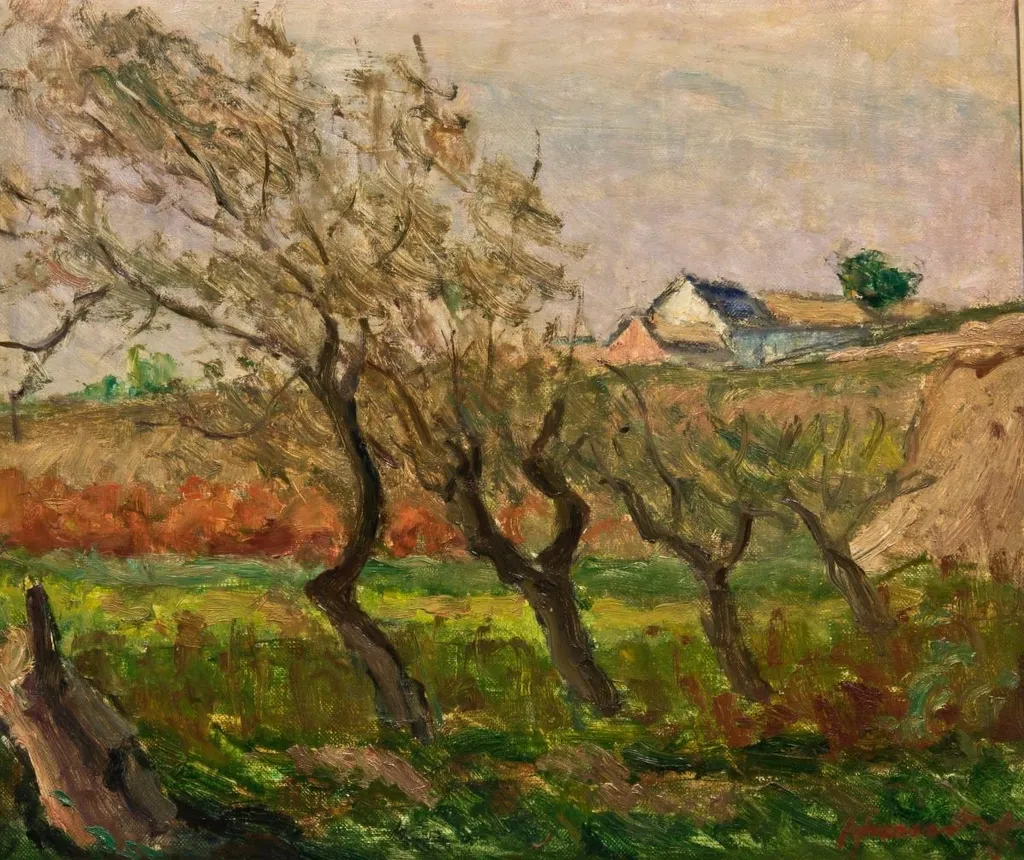
Peisaj din Tei is a print by Hrandt Avakian. It dates from 1950 and is held in the collection of the National Museum of Art of Romania.
About this work
Overview
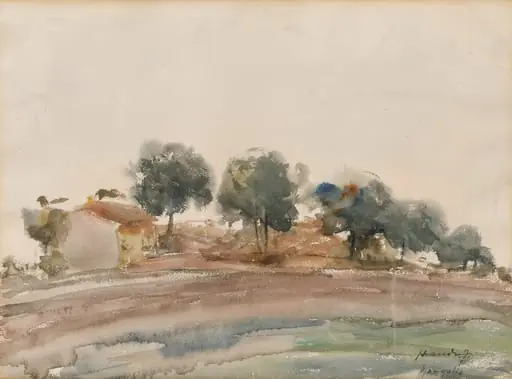
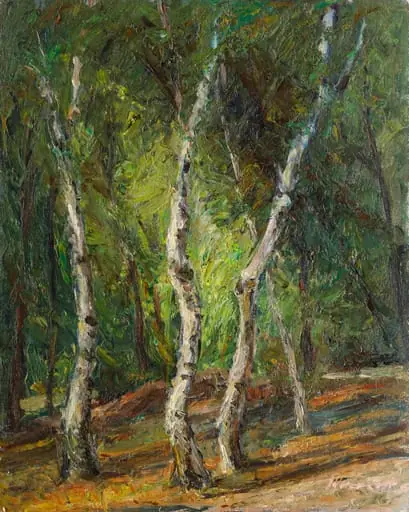
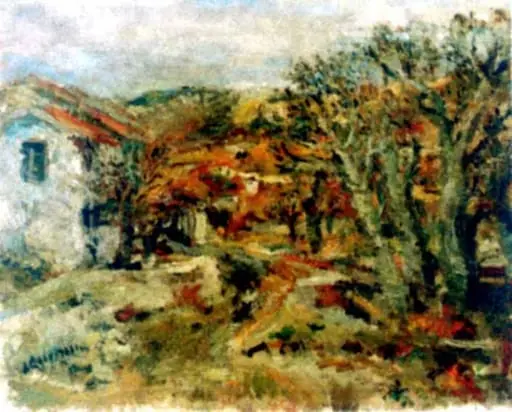
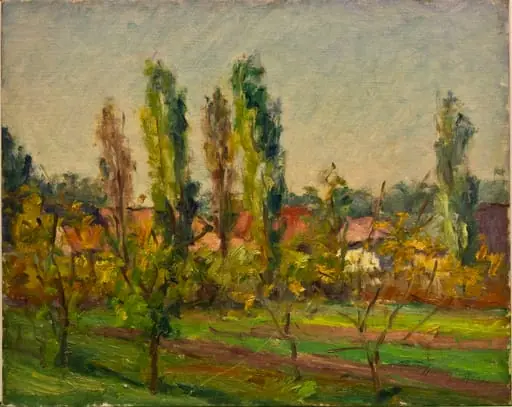
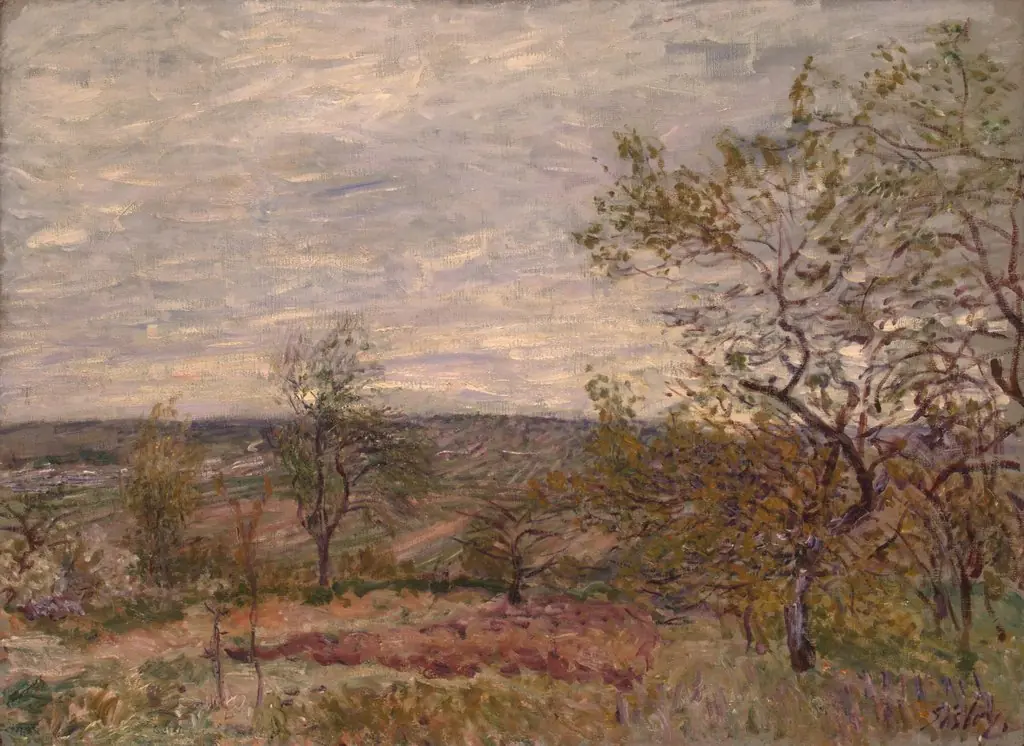
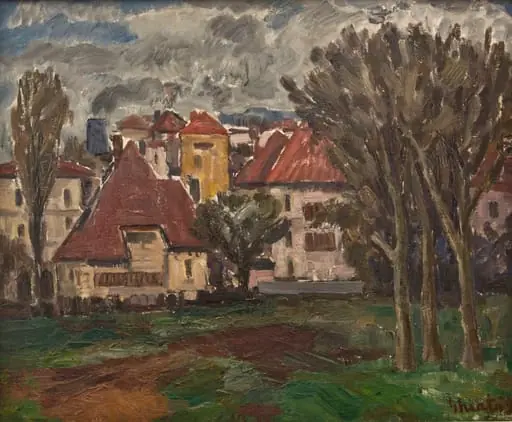
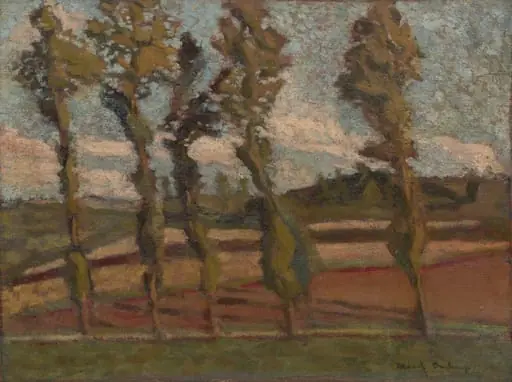
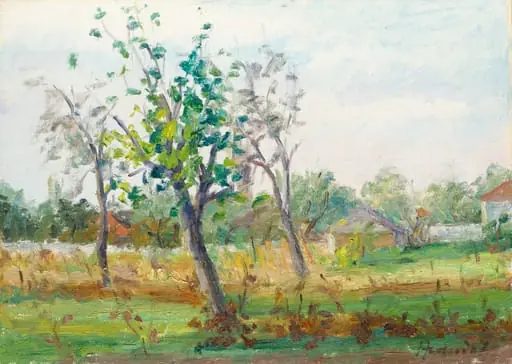
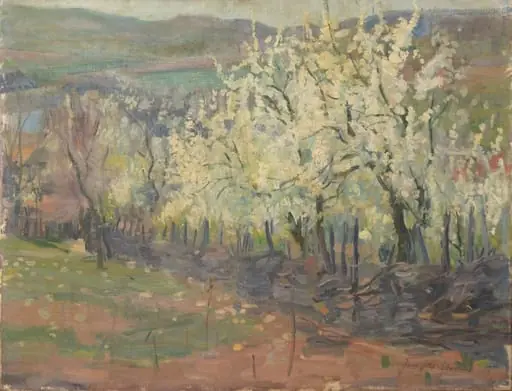
Painted around 1950 by Hrandt Avakian, this landscape captures a quiet rural scene in Tei, Romania. The composition centers on gnarled trees in the foreground, their bare limbs contrasting with a muted, uneven ground and distant structures. The work conveys a sense of stillness and weathered endurance, rendered without idealization or decorative flourish.
Subject & Meaning
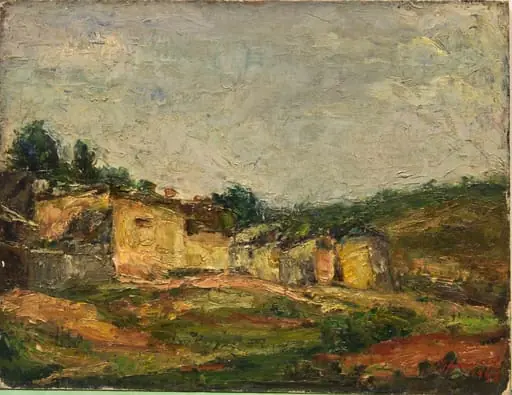
The scene depicts a modest agricultural setting—twisted trees, scattered outbuildings, and a diffuse sky—suggesting the quiet rhythm of rural life. There is no human presence, yet the architecture and vegetation imply habitation and labor. The somber tones and fragmented forms evoke a mood of resilience, shaped by time and climate rather than narrative drama.
Technique & Style
Avakian applied paint with thick, uneven strokes, building texture through impasto rather than smooth blending. The brushwork is deliberate yet urgent, emphasizing surface over precision. Colors are restrained: browns, greens, and grays dominate, with the sky rendered in thin washes that contrast the heavier foreground. This approach prioritizes emotional tone over topographical accuracy.
History & Provenance
Created during Avakian’s time in Romania, the painting reflects his engagement with local landscapes after returning from earlier years abroad. It was likely made in the early postwar period, when artistic expression in Eastern Europe often turned toward intimate, unadorned depictions of place. The work remained in private hands until its inclusion in institutional collections decades later.
Context
Avakian’s work aligns with this quieter resistance—focusing on vernacular landscapes without overt political messaging.
In the 1950s, Romanian artists navigated state pressures toward socialist realism, yet many continued exploring personal, regional subjects through expressive means. Avakian’s work aligns with this quieter resistance—focusing on vernacular landscapes without overt political messaging. His style echoes broader European trends of post-expressionist landscape painting, filtered through local conditions.
Legacy
The painting contributes to a lesser-known but persistent strand of Romanian modernism that valued emotional authenticity over ideological conformity. While not widely exhibited internationally, it remains a reference point for studies of postwar Romanian art that resisted both academic convention and state-mandated aesthetics, preserving a sense of place through material and mood.
Artist & collection