Artwork
Peisaj din Sighișoara
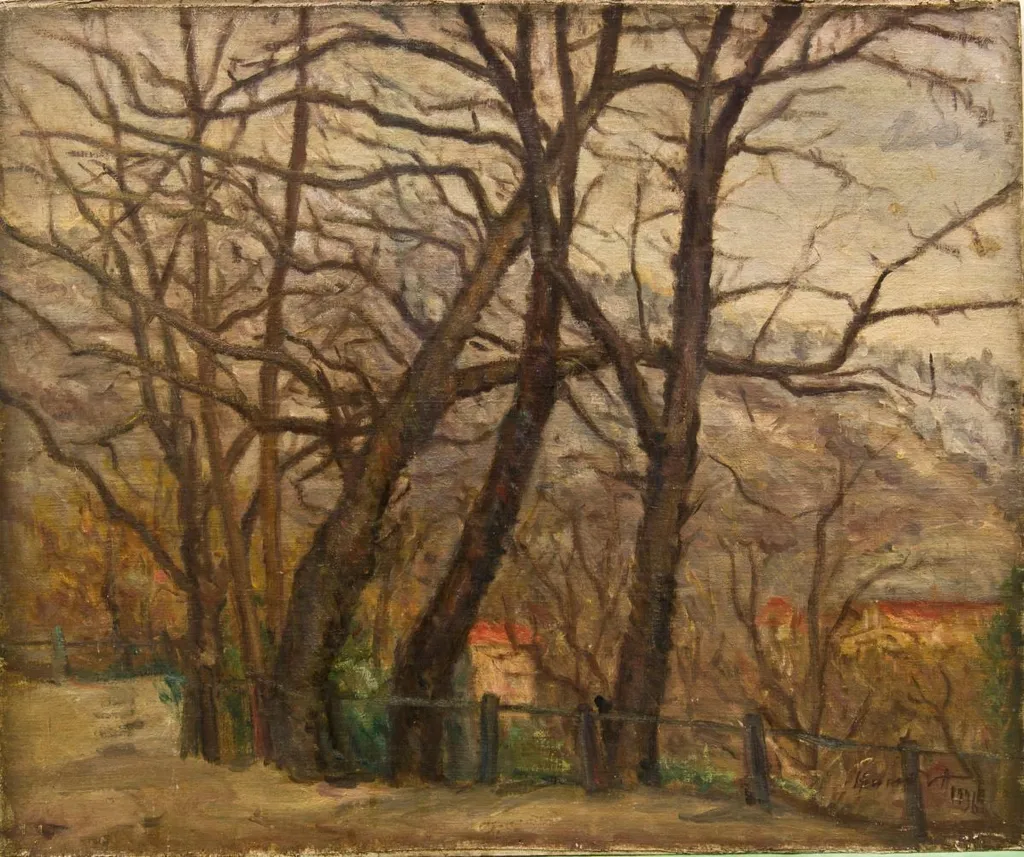
Peisaj din Sighișoara is a print by Hrandt Avakian. It dates from 1936 and is held in the collection of the National Museum of Art of Romania.
About this work
Overview
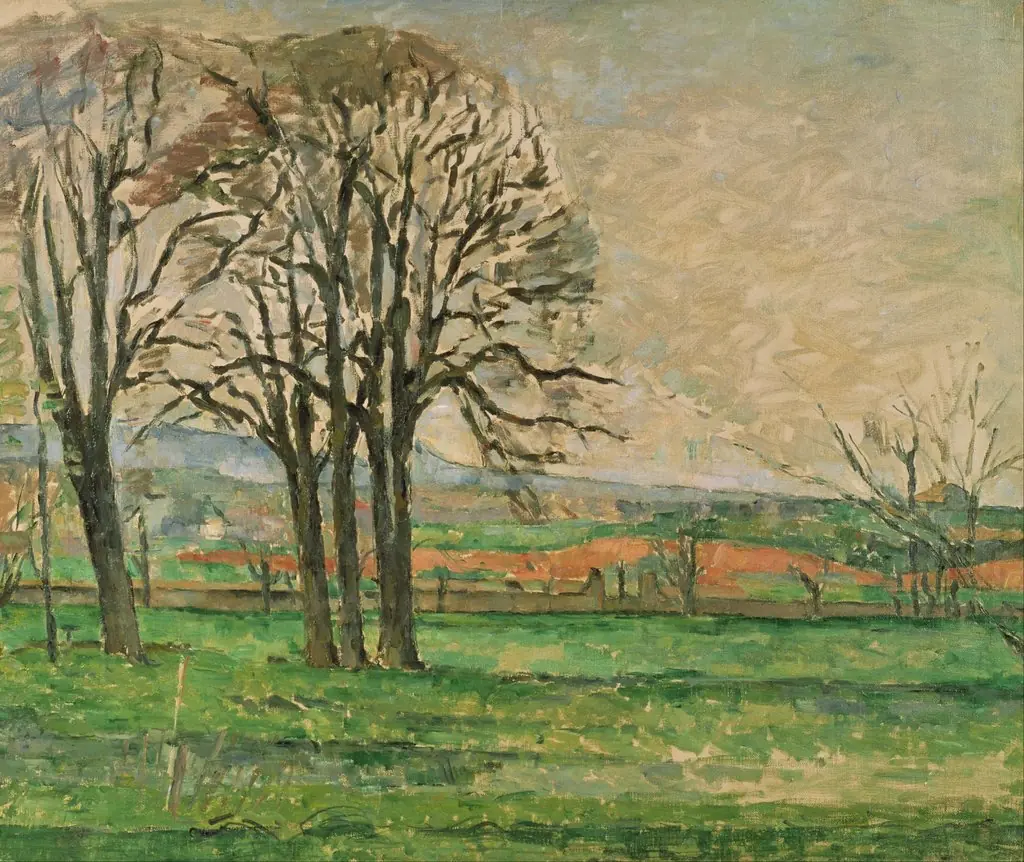
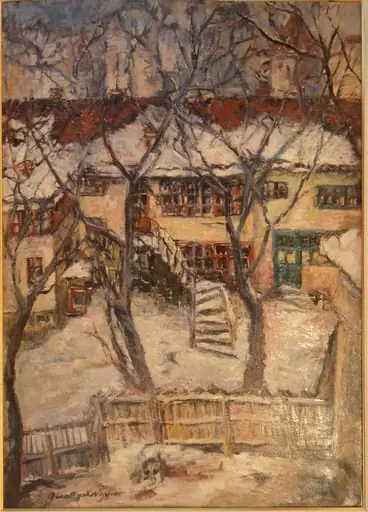
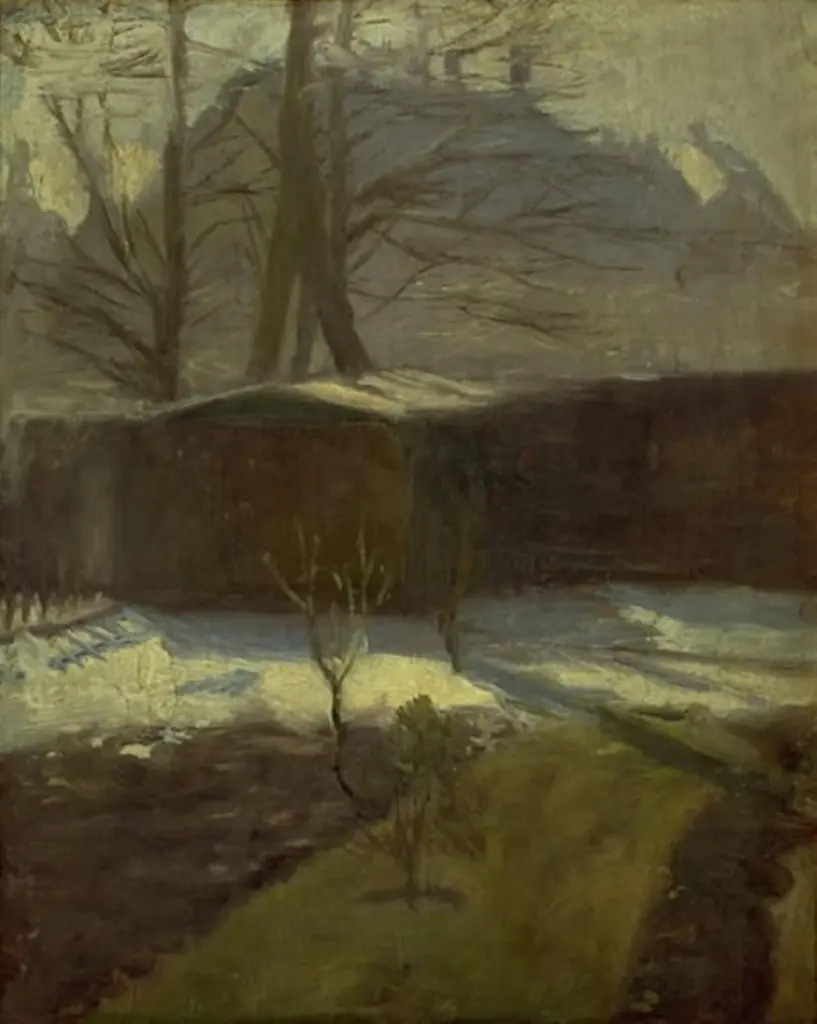
The ground is barren, and a low wooden fence traces the lower edge, grounding the scene in a sense of stillness and isolation.
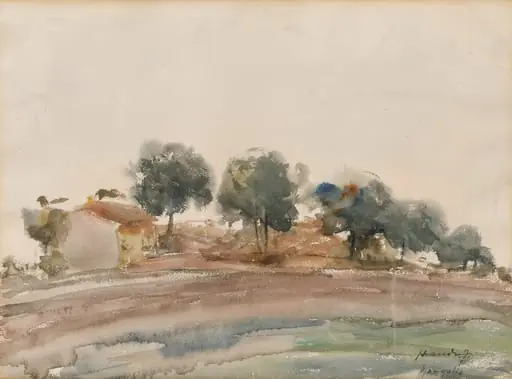
Painted in 1936 by Hrandt Avakian, this landscape depicts a quiet, wintry scene near Sighișoara. The composition centers on skeletal trees in the foreground, their twisted forms dominating the view. A modest structure with a red roof emerges faintly behind them, partially obscured. The ground is barren, and a low wooden fence traces the lower edge, grounding the scene in a sense of stillness and isolation.
Subject & Meaning
The painting conveys a sense of quiet endurance. The bare, gnarled trees suggest resilience against harsh conditions, while the half-concealed building hints at human presence without activity. The absence of life—no figures, no movement—evokes solitude and the passage of time. The muted palette reinforces a mood of contemplation, reflecting the landscape’s winter dormancy rather than its seasonal vitality.
Technique & Style
Avakian employs thick, textured brushwork to render the trees, using impasto to emphasize their rough, weathered surfaces. The paint is applied with deliberate heaviness, creating a tactile quality that mirrors the physicality of the landscape. Colors are subdued—ochres, gray-greens, and pale blues—avoiding vibrancy to sustain the scene’s somber tone. The brushstrokes are unrefined, contributing to an earthy, almost raw aesthetic.
History & Provenance
Created during Avakian’s time in Romania, the work reflects his engagement with local rural scenes. Little is documented about its early ownership, but it remained within private collections in Eastern Europe until the late 20th century. Its current location is held in a regional museum, where it is preserved as part of a broader collection of interwar Romanian landscapes.
Context
Painted in the mid-1930s, the work emerges amid a period of growing interest in regional identity across Eastern Europe. Artists like Avakian turned to乡土 landscapes as a means of expressing cultural rootedness, often avoiding urban modernism. The subdued tones and focus on natural forms align with broader European trends in post-impressionist and expressionist landscape painting, though without overt political or ideological framing.
Legacy
Though not widely exhibited beyond regional circles, the painting is recognized for its quiet intensity and technical restraint. It contributes to the understanding of Avakian’s role in Romanian interwar art, where personal observation of the land took precedence over grand narrative. Its preservation offers insight into how rural environments were visually interpreted during a time of cultural consolidation.
Artist & collection