Artwork
Peisaj
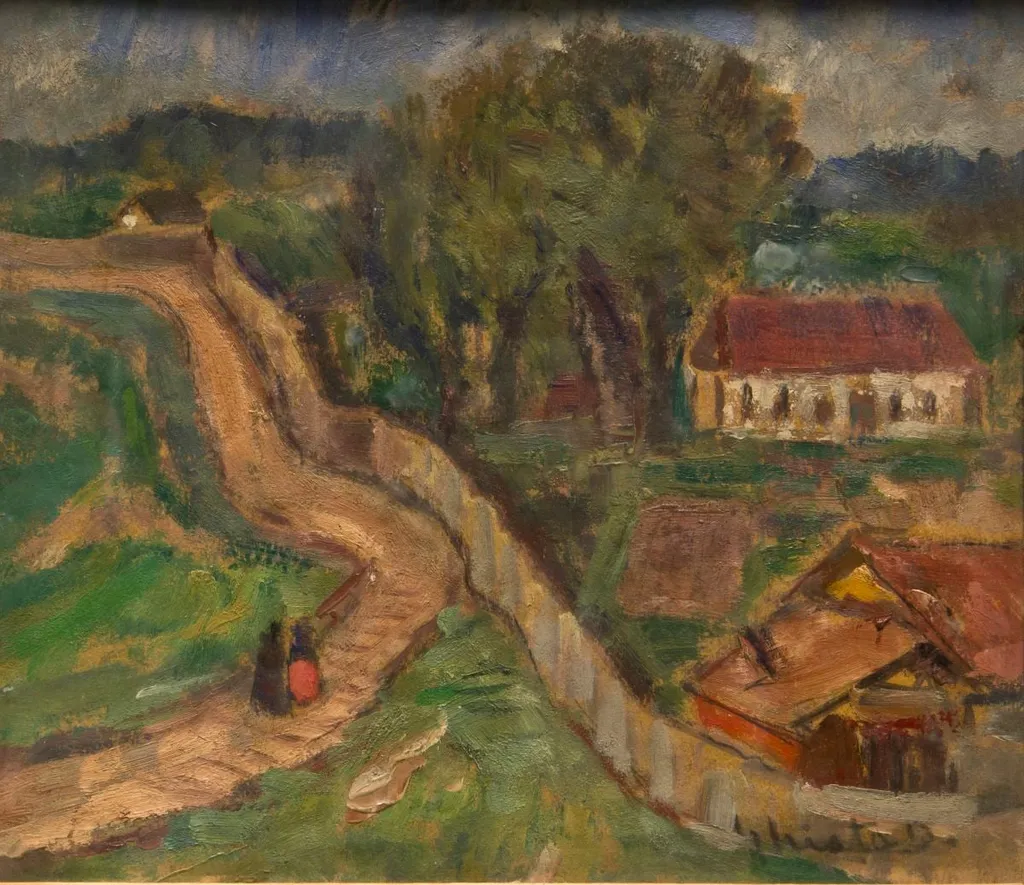
Peisaj is a print by Dumitru Ghiață. It dates from 1938 and is held in the collection of the National Museum of Art of Romania.
About this work
Overview
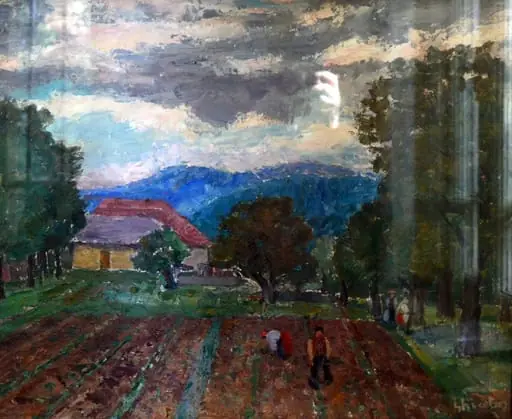
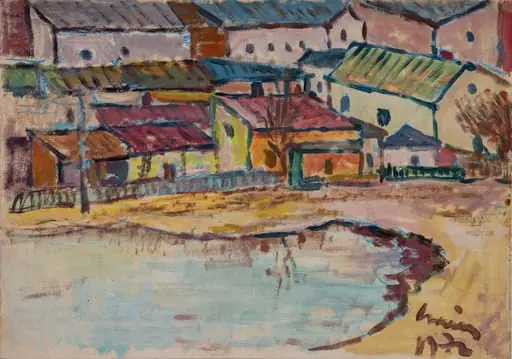
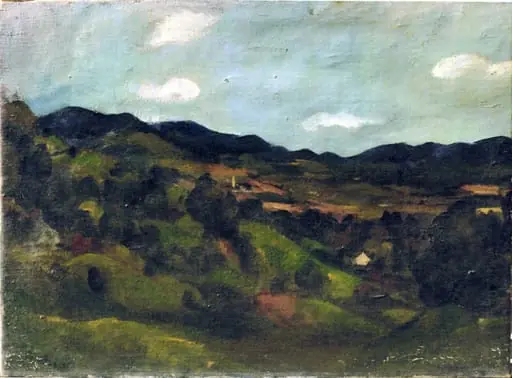
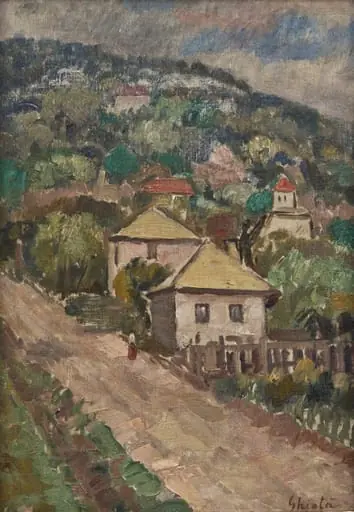
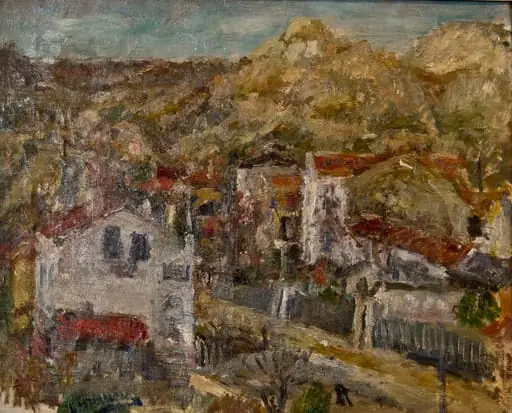
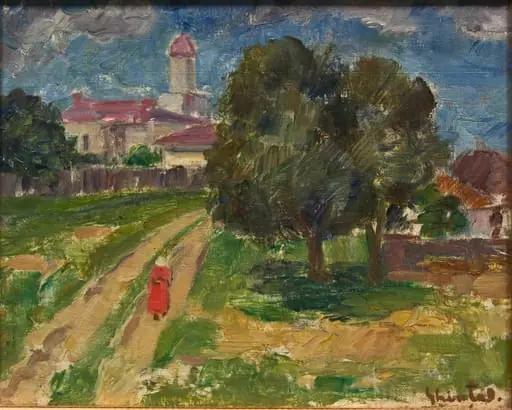
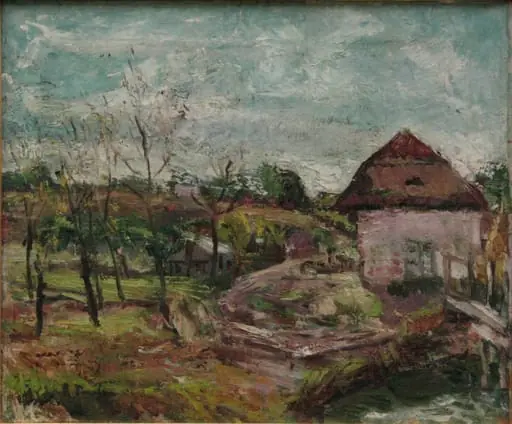
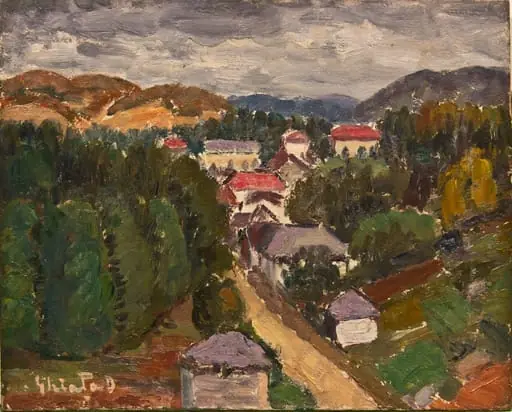
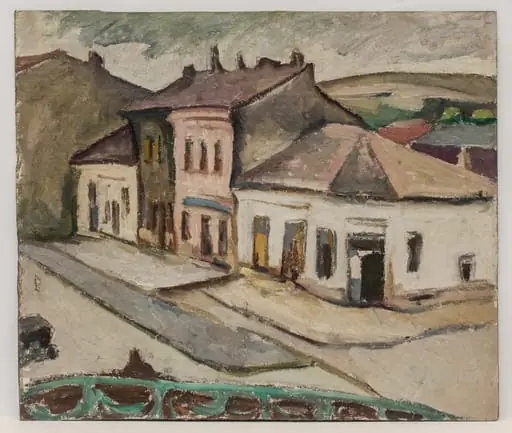
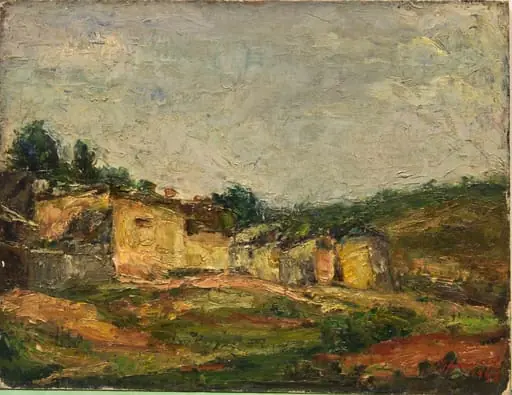
Created circa 1938, Peisaj is a landscape by Romanian painter Dumitru Ghiață (1888–1972). The work depicts a rural road winding through fields, trees and modest houses with red roofs, populated by two diminutive figures, one in a vivid red coat. Its palette is restrained, dominated by earth tones and muted reds, while the brushwork is thick and expressive.
Subject & Meaning
The composition presents a simple countryside journey, emphasizing the relationship between human movement and the surrounding terrain. The solitary figures suggest everyday travel, while the bright coat draws attention to individual presence within the broader natural setting.
Technique & Style
Ghiață employs a synthetic, folk‑inspired approach, using bold, impasto strokes that render light and shadow without fine detail. The visible texture of the paint and the loose handling give the scene a sketch‑like immediacy, aligning with his reputation for a direct, unembellished visual language.
History & Provenance
Peisaj was painted near the end of Ghiață’s mature period, a time when he consistently explored Romanian rural motifs. The work remains in a private Romanian collection, having passed through the artist’s estate after his death in 1972.
Context
The painting reflects the interwar Romanian art scene’s interest in national identity, where many artists turned to folk traditions and local landscapes for subject matter. Ghiață’s restrained color scheme and simplified forms echo broader regional tendencies toward modest, earthy representation.
Artist & collection
Artist
Dumitru Ghiață (22 September 1888 – 3 July 1972) was a Romanian landscape painter.