Artwork
La Fontaine de l'Amour
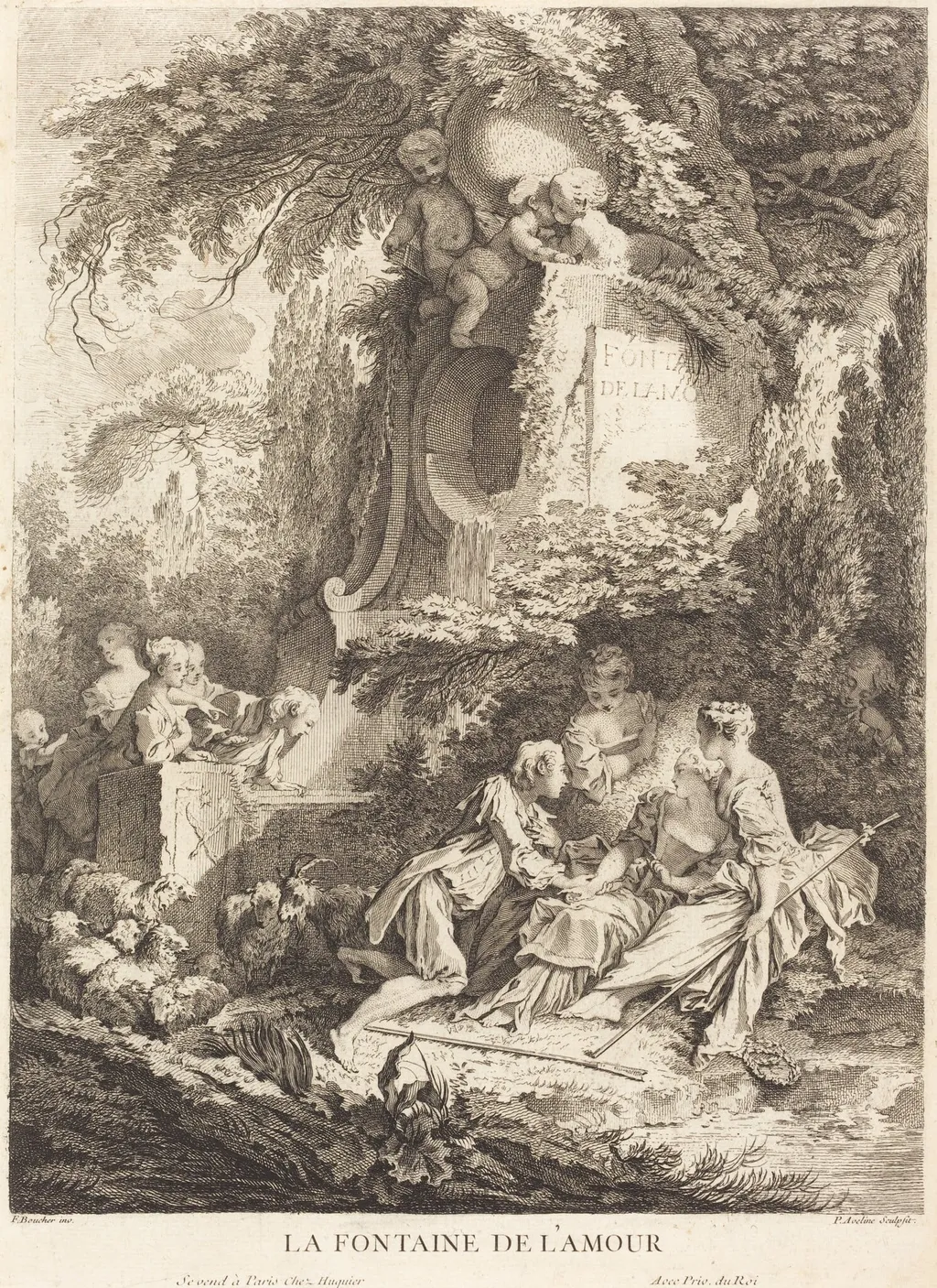
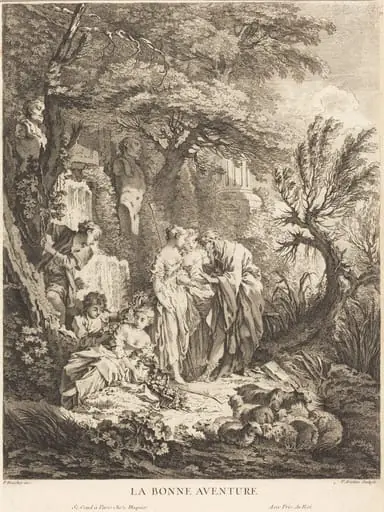
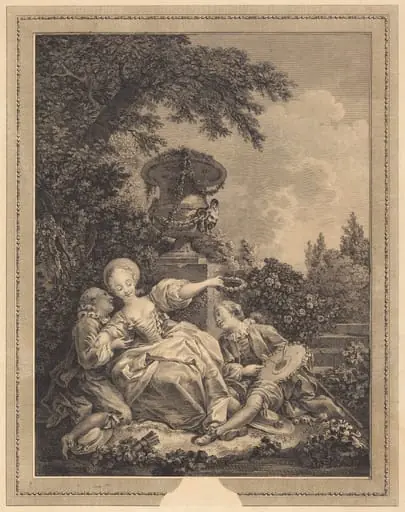
La Fontaine de l'Amour is an ink print by the Baroque artist Pierre-Alexandre Aveline. It dates from 1738 and is held in the collection of the National Gallery of Art. Pierre‑Alexandre Aveline’s 1738 print, titled La Fontaine de l’Amour, is an engraving combined with etching on laid paper.
About this work
Overview
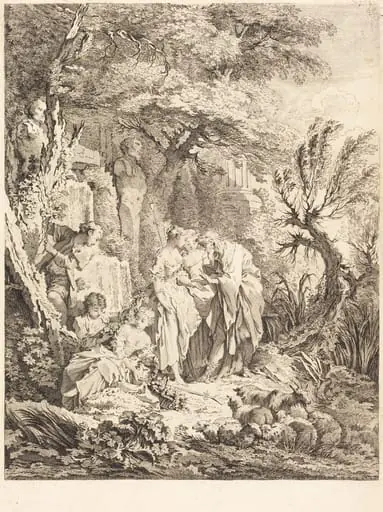
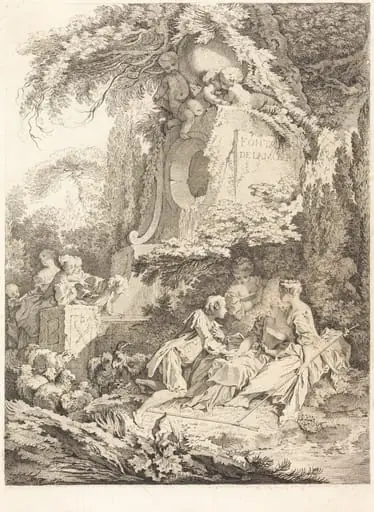
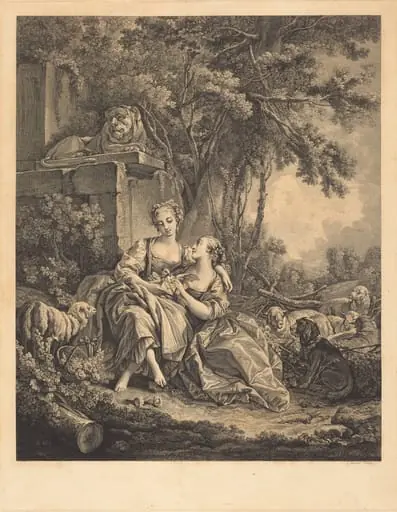
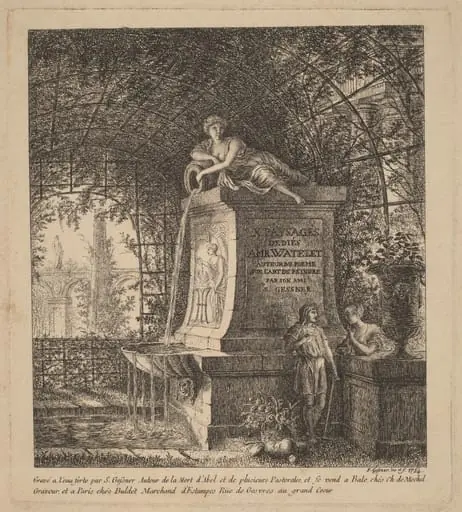
Pierre‑Alexandre Aveline’s 1738 print, titled La Fontaine de l’Amour, is an engraving combined with etching on laid paper. The work presents a woodland gathering centered on a fountain, rendered entirely in monochrome. Its composition balances figures and foliage, creating a tranquil yet narrative scene.
Subject & Meaning
The image depicts a mixed group—adults, a woman leaning over the fountain, a man with a staff, and two children at a ledge—assembled in a verdant setting. The title suggests a focus on love, and the intimate interaction of the figures around the water source reinforces themes of affection and communal harmony.
Technique & Style
Aveline employed a hybrid process, first engraving the outlines and then adding etching washes to achieve tonal variation. Fine, closely spaced lines model the foliage and fabric, while cross‑hatching builds shadow, giving the scene depth despite the absence of colour. The use of laid paper contributes a subtle texture to the print’s surface.
History & Provenance
Created in 1738, the print reflects the French printmaking tradition of the early eighteenth century, when engravers often produced book illustrations and decorative prints. Aveline, active in Paris, was known for his meticulous work, and this piece likely circulated among collectors of genre scenes.
Context
During the Rococo period, pastoral and amorous subjects were popular in visual arts, emphasizing lightness and intimacy. La Fontaine de l’Amour fits within this aesthetic, aligning with contemporary tastes for idyllic, narrative compositions that blended nature with human sentiment.
Legacy
The print exemplifies the technical skill of French engravers before the rise of lithography, illustrating how layered line work could convey complex scenes. It continues to serve as a reference for scholars studying the interplay of engraving and etching in the production of nuanced, narrative prints.
Artist & collection