Artwork
Satyr, Nymph and River God
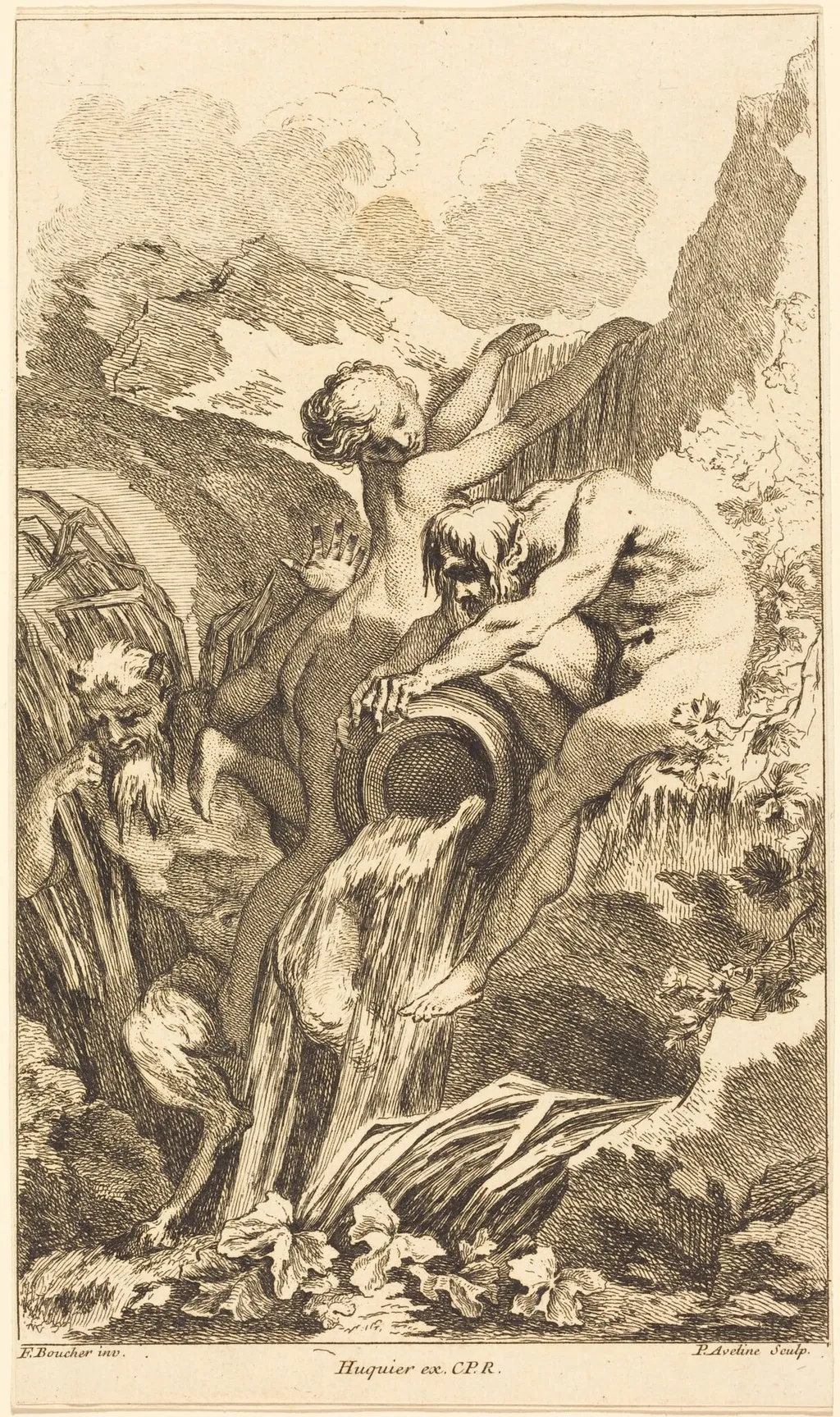
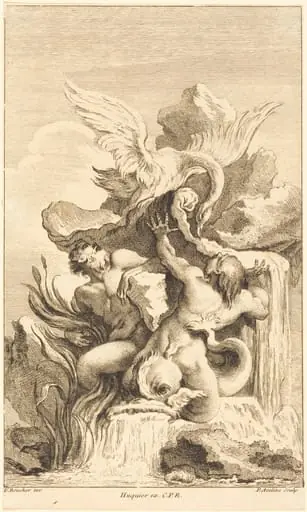
Satyr, Nymph and River God is an ink print by the Baroque artist Pierre-Alexandre Aveline. It dates from 1736 and is held in the collection of the National Gallery of Art.
About this work
Overview
Pierre-Alexandre Aveline created this black-and-white etching in 1736, capturing a dynamic moment from classical mythology.
Pierre-Alexandre Aveline created this black-and-white etching in 1736, capturing a dynamic moment from classical mythology. The composition centers on three figures in motion: a bearded male figure, a female form, and a horned, goat-legged entity. The scene unfolds against a turbulent natural backdrop, rendered with energetic lines that convey urgency and tension. As a print, it reflects the 18th-century interest in mythological narratives and the technical precision of etching as a medium for reproducing dramatic imagery.
Subject & Meaning
The figures suggest a mythological encounter, likely drawn from Greco-Roman legends involving satyrs, nymphs, and river deities. The muscular man clinging to the tree may represent a river god, while the horned creature is a satyr, and the woman a nymph. Their intertwined postures imply pursuit or resistance, evoking themes of nature’s wildness and divine interaction. The scene does not illustrate a specific myth but channels the broader cultural fascination with mythic chaos and elemental forces.
Technique & Style
Aveline employed etching to achieve fine, incised lines that define movement and texture. The sharp, angular strokes model the figures’ musculature and the stormy landscape, while cross-hatching adds depth to shadows and foliage. The lack of tone or color heightens the drama through contrast alone. The technique allows for intricate detail and a sense of immediacy, characteristic of French printmakers who adapted Baroque energy into the medium of print.
History & Provenance
Created in 1736, the print emerged during a period when French artists revived classical themes for decorative and intellectual audiences. Aveline, active in Paris, produced numerous mythological prints for collectors and illustrators. While the exact early ownership is undocumented, the work aligns with the broader circulation of myth-based prints in aristocratic and scholarly circles, where such imagery served both aesthetic and educational purposes.
Context
In early 18th-century France, mythological subjects remained popular in printmaking, reflecting Enlightenment-era engagement with antiquity. Artists like Aveline responded to a market that valued narrative clarity and technical finesse. Etching allowed for wider dissemination than painting, making these scenes accessible beyond elite collections. The turbulent style mirrors contemporary tastes for emotional intensity, even in reproductive art.
Legacy
Aveline’s etching contributes to a tradition of mythological prints that bridged fine art and popular imagery in the 18th century. Though not widely reproduced today, it exemplifies how classical themes were reinterpreted through printmaking’s precision and accessibility. Its survival in institutional collections underscores its role as a document of artistic practice and mythological reception during the Rococo era.
Artist & collection


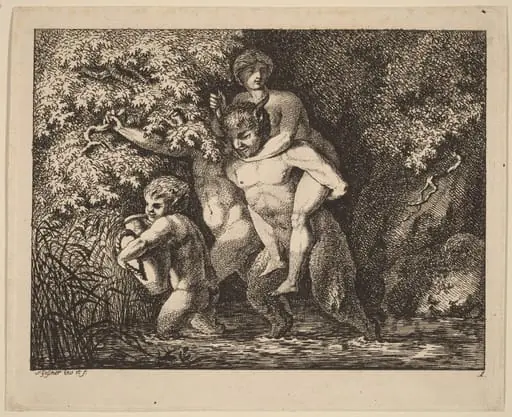 Satyr Carrying a Nymph
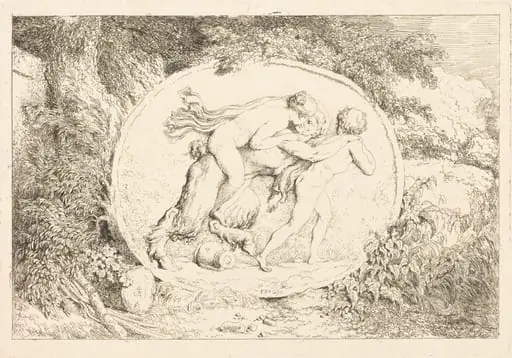 Nymph Astride a Satyr (Jeune fille a califourchon sur un satyre)
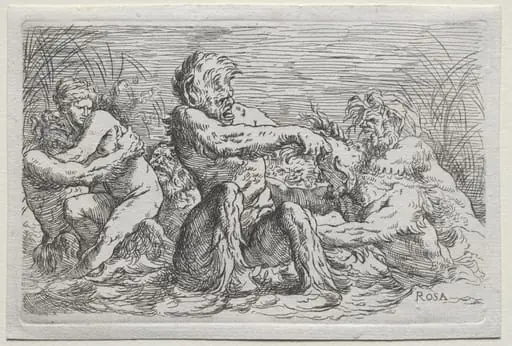 River Gods
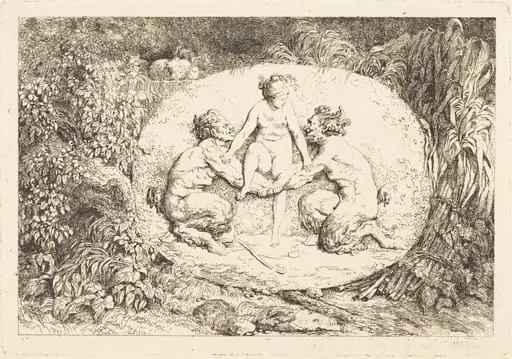 Nymph Supported by Two Satyrs (Nymphe s'asseyant sur les mains de deux satyres)
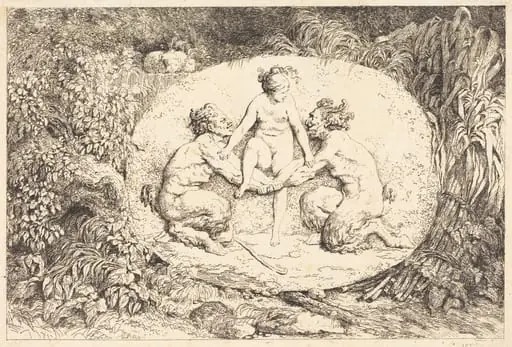 Nymph Supported by Two Satyrs (Nymphe s'asseyant sur les mains de deux satyres)
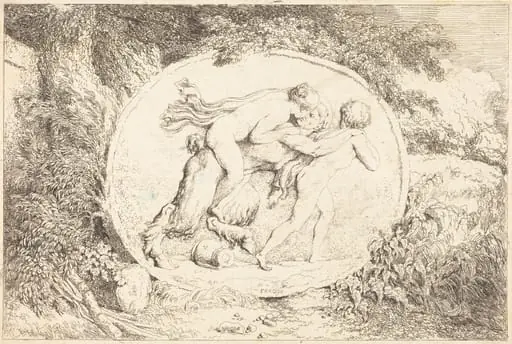 Nymph Astride a Satyr (Jeune fille a califourchon sur un satyre)