Artwork
Fountain in a Summerhouse
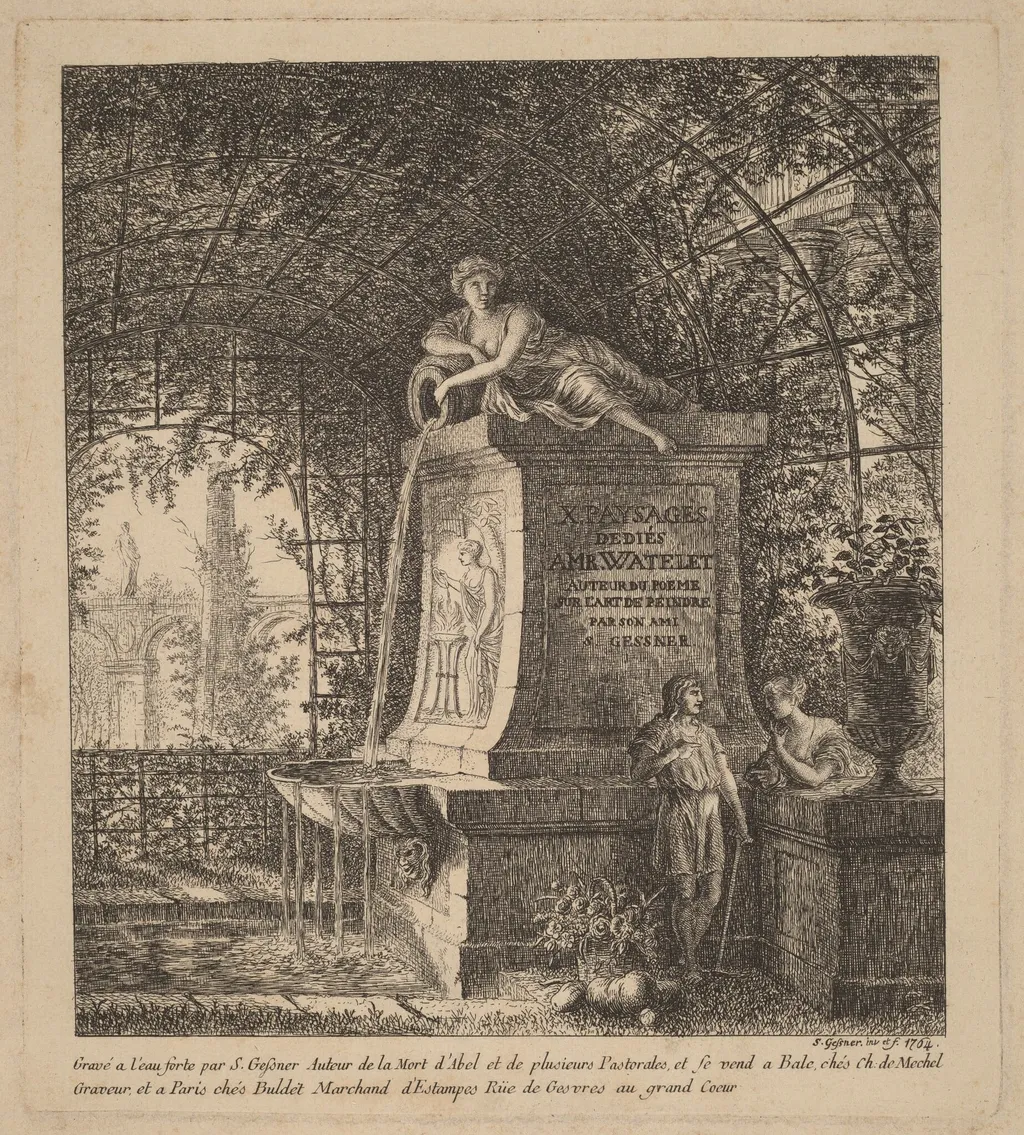
Fountain in a Summerhouse is an ink print by the Romanticist artist Salomon Gessner. It dates from 1764 and is held in the collection of the National Gallery of Art.
About this work
Overview
Salomon Gessner’s 1764 etching, titled Fountain in a Summerhouse, depicts a tranquil garden setting centered around a stone fountain.
Salomon Gessner’s 1764 etching, titled Fountain in a Summerhouse, depicts a tranquil garden setting centered around a stone fountain. Two women, one leaning on the fountain’s edge and the other holding a vase of flowers, occupy the foreground, while a narrow window in the background contains a miniature scene of additional figures. Trees, shrubs, a fence, and distant architecture complete the composition.
Subject & Meaning
The work presents an intimate, leisurely moment within a cultivated landscape, emphasizing the harmony between human presence and nature. The inclusion of a framed interior scene suggests a layered narrative, inviting viewers to contemplate the relationship between interior and exterior spaces and the social rituals of garden enjoyment.
Technique & Style
Executed in fine-line etching on laid paper, Gessner achieves delicate texture through meticulous incising and acid biting. The rendering of water, foliage, and drapery demonstrates a careful control of line weight, creating subtle tonal variations that convey depth and material quality within the print’s limited palette.
History & Provenance
Created in 1764, the etching belongs to Gessner’s broader output of pastoral and genre scenes popular in the mid‑eighteenth century. While specific ownership records are scarce, the print has circulated among collectors of Swiss Enlightenment art and appears in several nineteenth‑century catalogues of his work.
Context
Gessner, a Swiss poet‑artist, contributed to the era’s taste for idyllic countryside imagery, aligning with contemporary interests in the picturesque and the moralizing potential of nature. The print reflects the period’s fascination with garden architecture, particularly the summerhouse as a venue for genteel leisure.
Artist & collection


 Arcadian Landscape with an Obelisk
 Satyr Carrying a Nymph on His Back
 A Fisherman and Two Children in a Landscape with Thatched Cottages
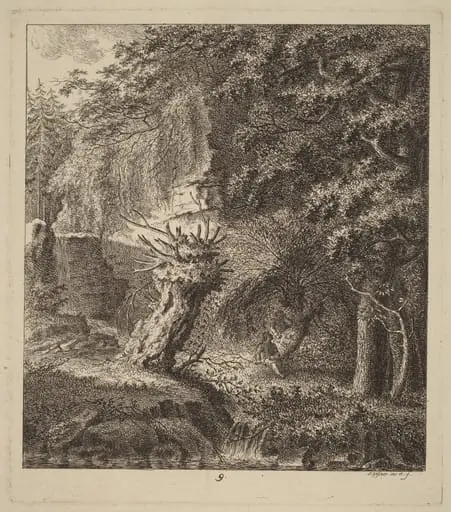 Wooded Landscape with a Pollarded Tree
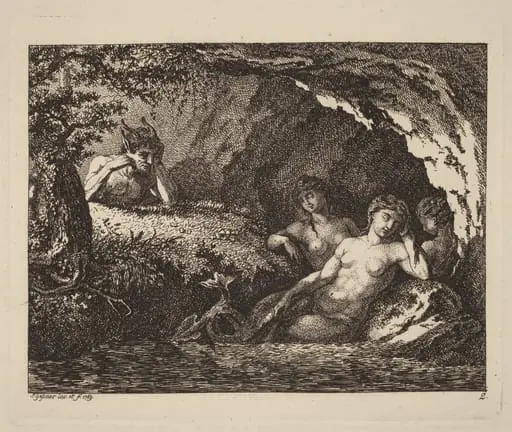 Three Sleeping Sprites with a Satyr
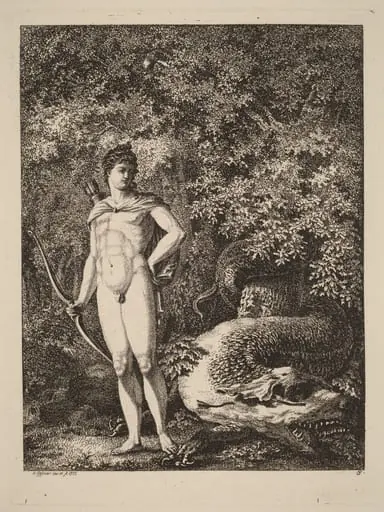 Apollo with a Bow and Dragon
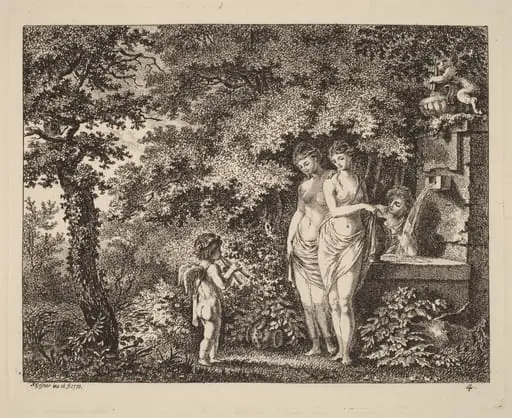 Eros with Three Girls at a Fountain
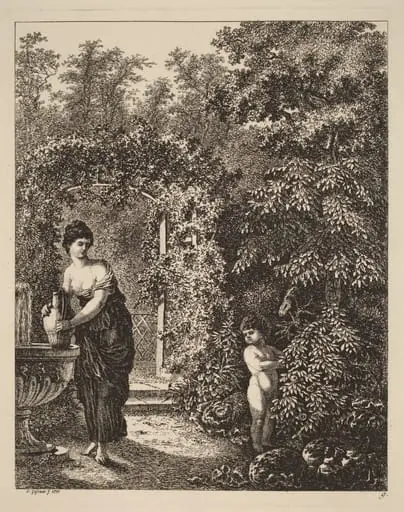 Putto Visiting a Girl at a Fountain
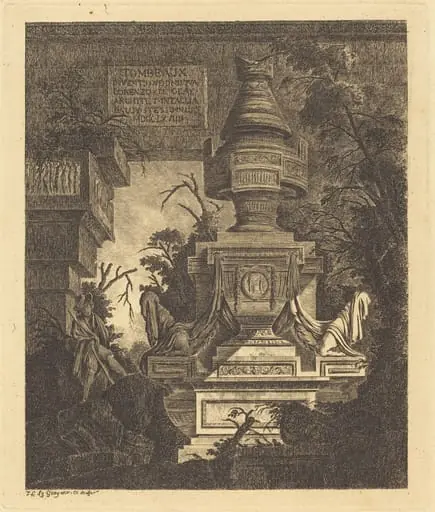 Frontispiece for "Views of Tombs"
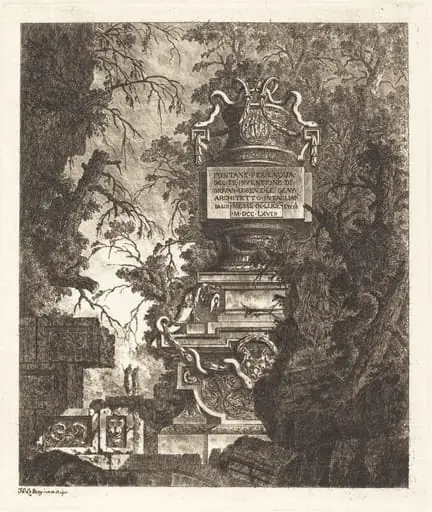 Frontispiece for "Fountains"
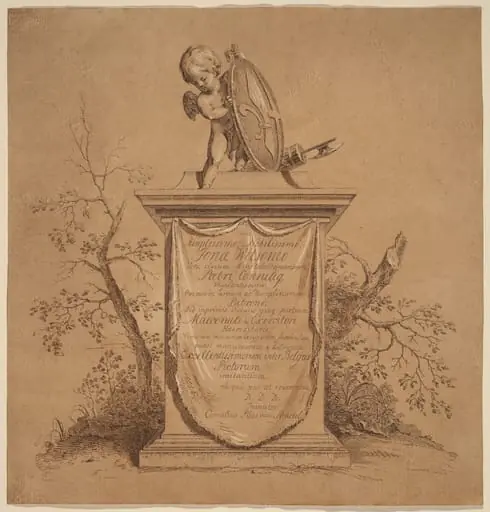 Title Page
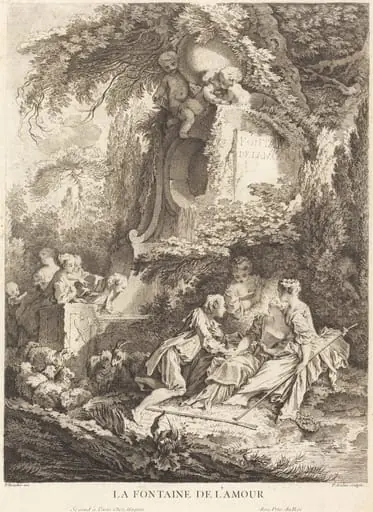 La Fontaine de l'Amour
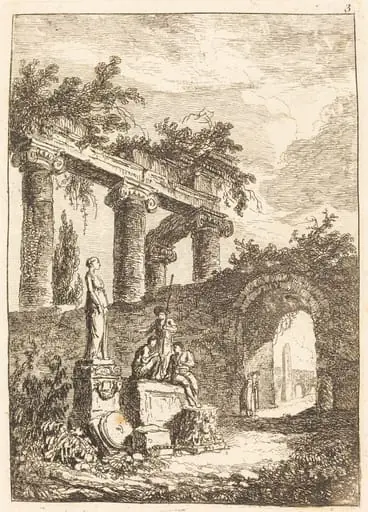 The Statue before the Ruins
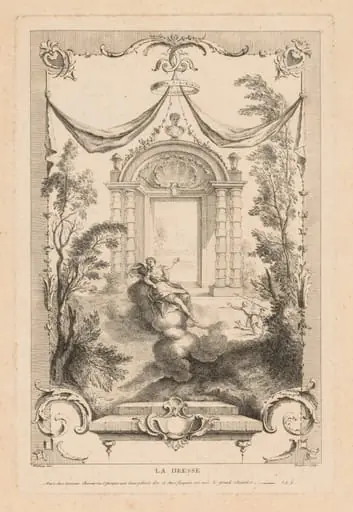 The Goddess, Diana on the Clouds
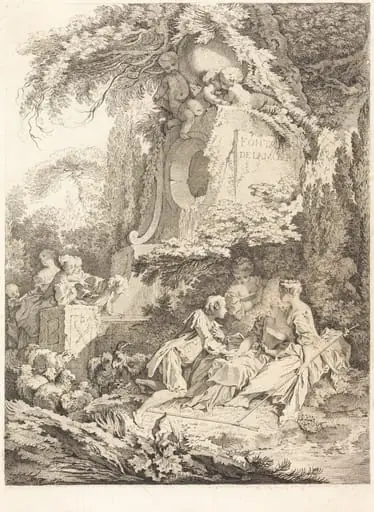 La Fontaine de l'Amour
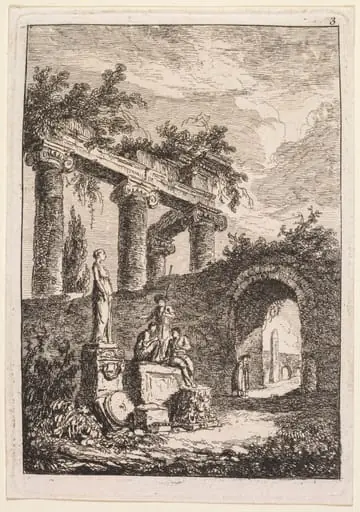 The Statue in Front of Ruins
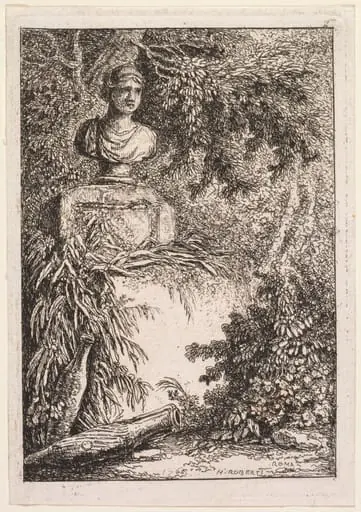 Les Soirées de Rome: Le Buste
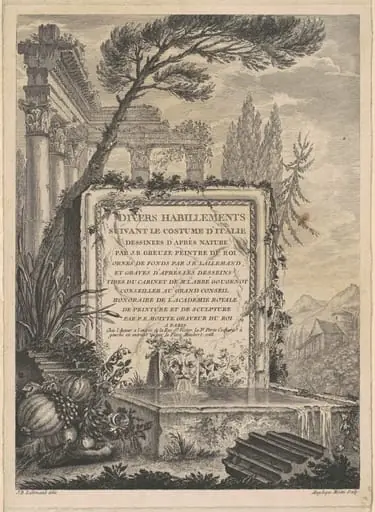 Architectural Fantasy of Roman Ruins with an Inscription Plaque
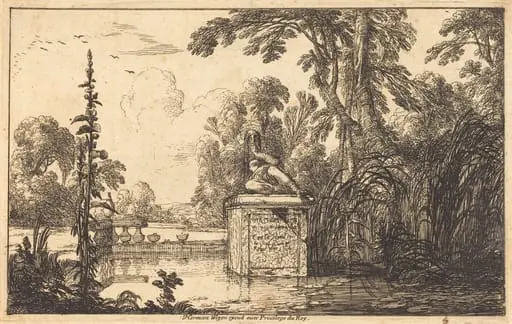 Pool in a Formal Garden
 Allegory in Honor of Henri IV