Artwork
The Artist’s Son on lit de parade
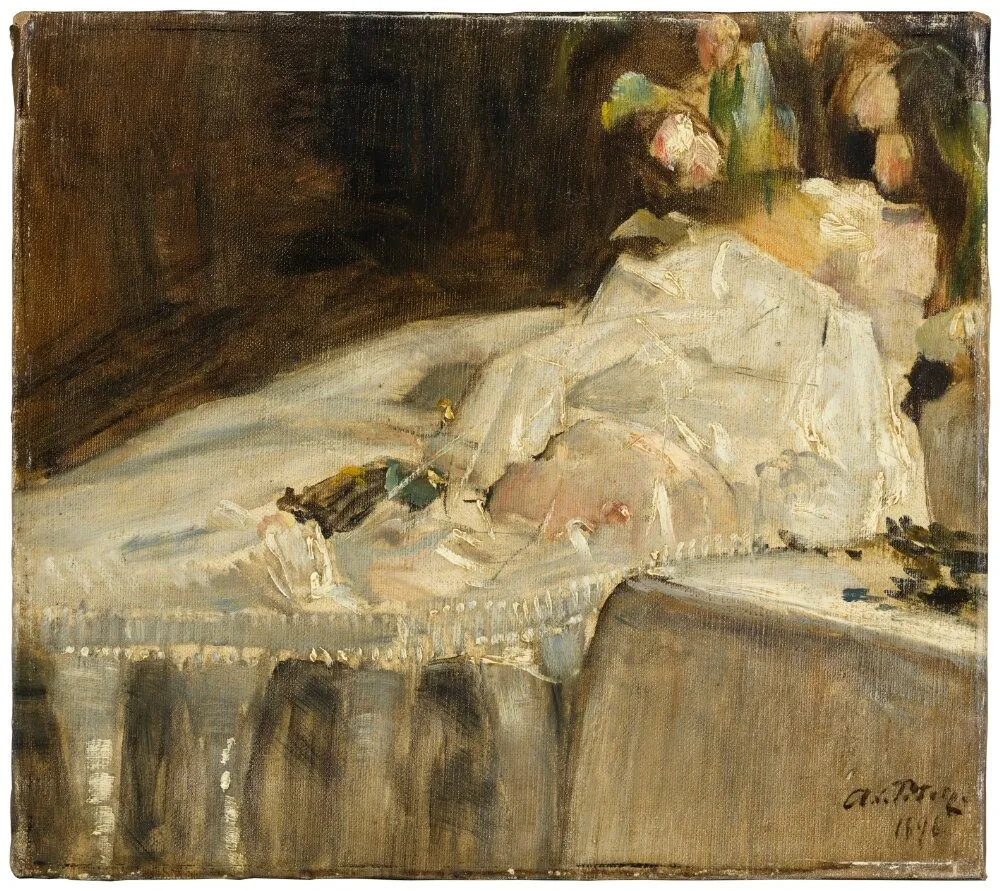
The Artist’s Son on lit de parade is an oil painting by the Impressionist artist Axel Peter. It dates from 1898 and is held in the collection of the Nationalmuseum.
About this work
Overview
Its intimate scale and subdued palette reflect a quiet domestic moment, avoiding theatricality in favor of restrained observation.
Painted in 1898 by Axel Peter, this oil on canvas work portrays his young son resting on a bed. The painting is part of the Nationalmuseum’s collection in Stockholm. Its intimate scale and subdued palette reflect a quiet domestic moment, avoiding theatricality in favor of restrained observation. The composition centers on the child’s stillness, framed by simple furnishings and a shadowed interior.
Subject & Meaning
The subject is the artist’s son, depicted in a moment of repose, dressed in plain white garments that suggest innocence and vulnerability. The absence of narrative or symbolic elements shifts focus to the quiet dignity of childhood. The serene expression and relaxed posture convey a sense of peace, not idealized or sentimentalized, but observed with emotional restraint, perhaps reflecting the artist’s personal connection to the scene.
Technique & Style
Peter employs chiaroscuro to model the boy’s form against a deep, neutral background, enhancing three-dimensionality without dramatic contrast. Brushwork is subtle and blended, avoiding visible strokes, which contributes to the painting’s calm tone. The white clothing and bedding are rendered with soft gradations of light, while the surrounding shadows remain unbroken, reinforcing the stillness of the moment through tonal harmony rather than detail.
History & Provenance
The painting was completed in 1898 and entered the Nationalmuseum’s collection shortly thereafter, likely through direct acquisition from the artist. Its preservation within a national institution suggests early recognition of its quiet artistic merit. No significant alterations or documented restorations are recorded, and it has remained in public ownership since its acquisition, maintaining its original condition.
Context
Created during a period when Scandinavian artists increasingly turned to intimate, everyday subjects, this work aligns with a broader trend away from grand historical themes. Peter’s focus on familial quietude reflects influences from French Realism and Dutch genre painting, adapted to a Nordic sensibility of understatement. The painting stands apart from the more dramatic lighting of contemporaneous academic works, favoring psychological stillness over spectacle.
Legacy
Though Axel Peter is not widely known outside Sweden, this painting remains one of his most recognized works. It is occasionally referenced in studies of late 19th-century Nordic domestic portraiture for its emotional restraint and technical subtlety. Its presence in the Nationalmuseum ensures continued visibility, offering viewers a quiet counterpoint to the more overtly expressive art of the era.
Artist & collection