Artwork
Untitled
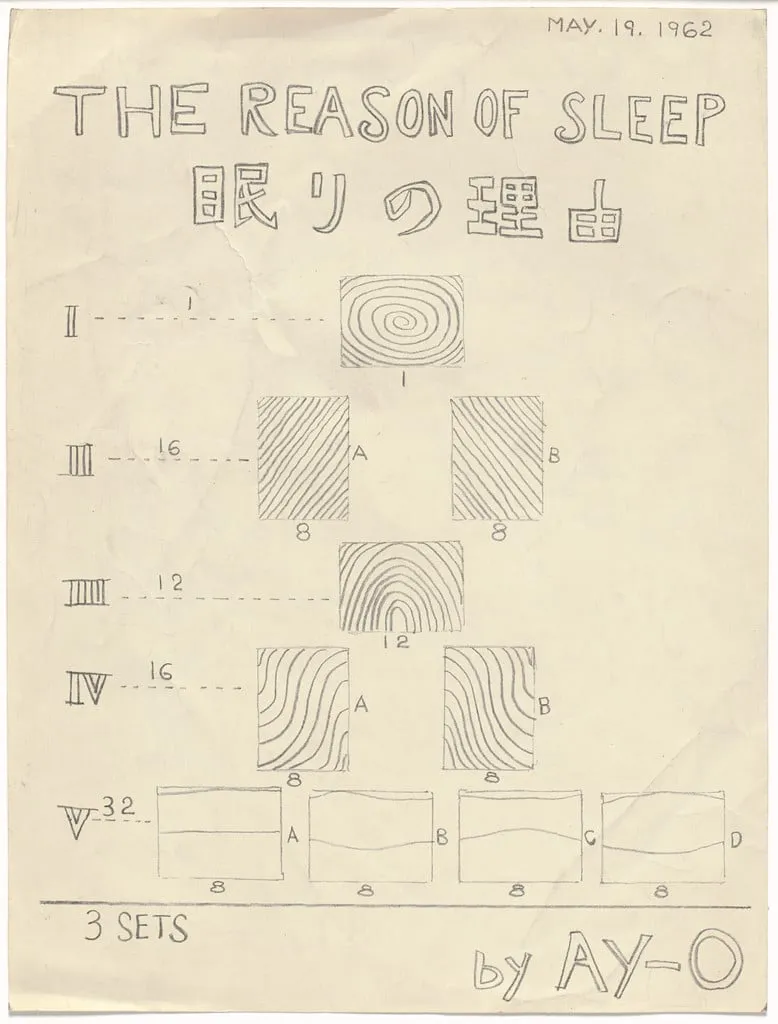
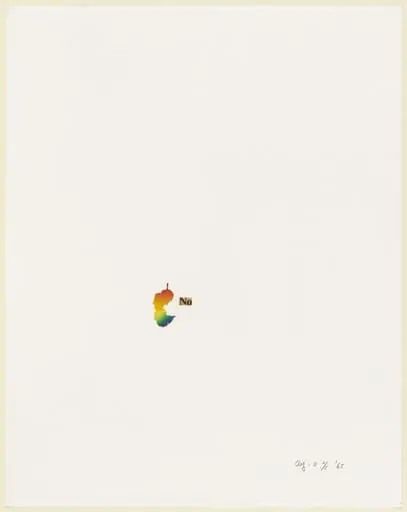
Untitled is an ink print by Ay-O. It dates from 1962 and is held in the collection of the Museum of Modern Art.
About this work
The piece features a beige background with a title written in pencil at the top, "THE REASON OF SLEEP", accompanied by Japanese characters.
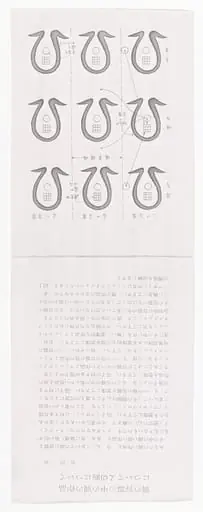
This artwork is a lithograph titled "Untitled" created by Ay-O in 1962. The piece features a beige background with a title written in pencil at the top, "THE REASON OF SLEEP", accompanied by Japanese characters. Below the title, there are four rows of abstract shapes, including spirals and wavy lines, arranged in a grid-like pattern. The shapes are drawn in pencil and vary in size and complexity. At the bottom of the artwork, the text "3 SETS" and "by Ay-O" are written in pencil.
The artwork's use of simple shapes and lines creates a sense of calmness and serenity, which may be reflective of the theme of sleep. The title and Japanese characters add an air of mystery and cultural significance to the piece.
If you're interested in exploring more works by Ay-O, you can visit The Museum of Modern Art.
Overview
Created in 1962, this lithograph by Japanese artist Ay-O is one of many experimental prints produced during his early involvement with the Fluxus movement. Executed in pencil on paper, the work lacks conventional imagery, instead presenting a quiet arrangement of abstract forms. Its modest scale and restrained palette reflect the artist’s interest in minimalism and process, aligning with Fluxus’s emphasis on everyday materials and conceptual play.
Subject & Meaning
The title, 'THE REASON OF SLEEP,' written in English and Japanese, suggests a poetic inquiry into rest or unconscious states. The abstract spirals and undulating lines below may evoke dreamlike patterns or internal rhythms, though no literal representation is offered. The work invites contemplation rather than narrative interpretation, aligning with Fluxus’s preference for open-ended experiences over fixed meanings.
Technique & Style
The piece is a hand-drawn lithograph, with all elements rendered in pencil. The composition is organized into four horizontal rows of irregular, non-repeating shapes—spirals, curves, and fragmented lines—each varying in density and scale. The use of pencil on beige paper creates a muted, intimate tone. The artist’s hand is evident in the subtle variations of line weight and spacing, emphasizing process over polish.
History & Provenance
Produced in 1962, this work entered The Museum of Modern Art’s collection as part of its broader effort to document international avant-garde practices of the 1960s. Ay-O, then emerging as a key figure in Fluxus, was actively exchanging ideas with artists across Europe and the U.S. The work’s inclusion in MoMA’s holdings reflects its significance within the movement’s early print culture, though its exact exhibition history prior to acquisition remains undocumented.
Context
Ay-O’s work from this period responds to the global Fluxus ethos, which rejected traditional art objects in favor of ephemeral, participatory, and often humorous gestures. In Japan, where postwar cultural identity was being renegotiated, artists like Ay-O blended Eastern aesthetics with Western experimentalism. This lithograph’s quiet abstraction and bilingual text reflect that hybridity, positioning sleep as a metaphor for mental stillness amid cultural flux.
Legacy
Though not widely exhibited, this lithograph exemplifies Ay-O’s enduring interest in the intersection of language, repetition, and perception. It contributes to a body of work that influenced later generations of Japanese conceptual artists. Its presence in MoMA’s collection ensures its role as a quiet but persistent reference point in discussions of Fluxus printmaking and the aesthetics of minimalism in postwar Asia.
Artist & collection
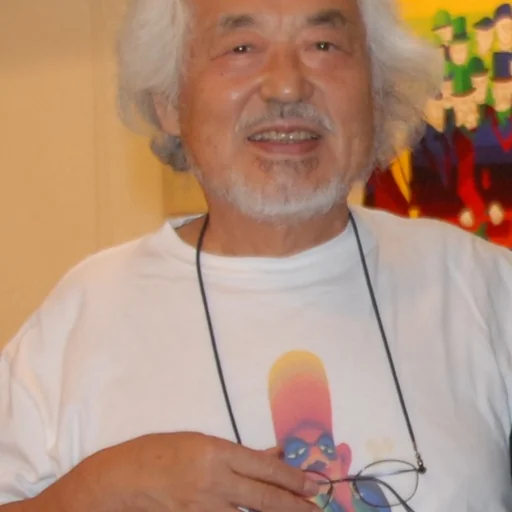
Artist
Takao Iijima (born 19 May 1931), better known by his art name Ay-O (靉嘔 Ai Ō), is a Japanese avant-garde visual and performance artist who has been associated with Fluxus since its international beginnings in the 1960s.