Artwork
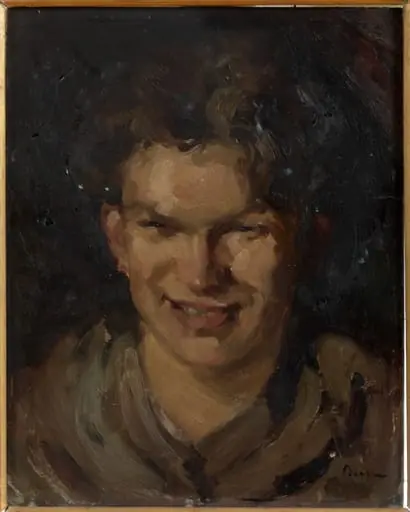
Autoportret Aurel Băeșu
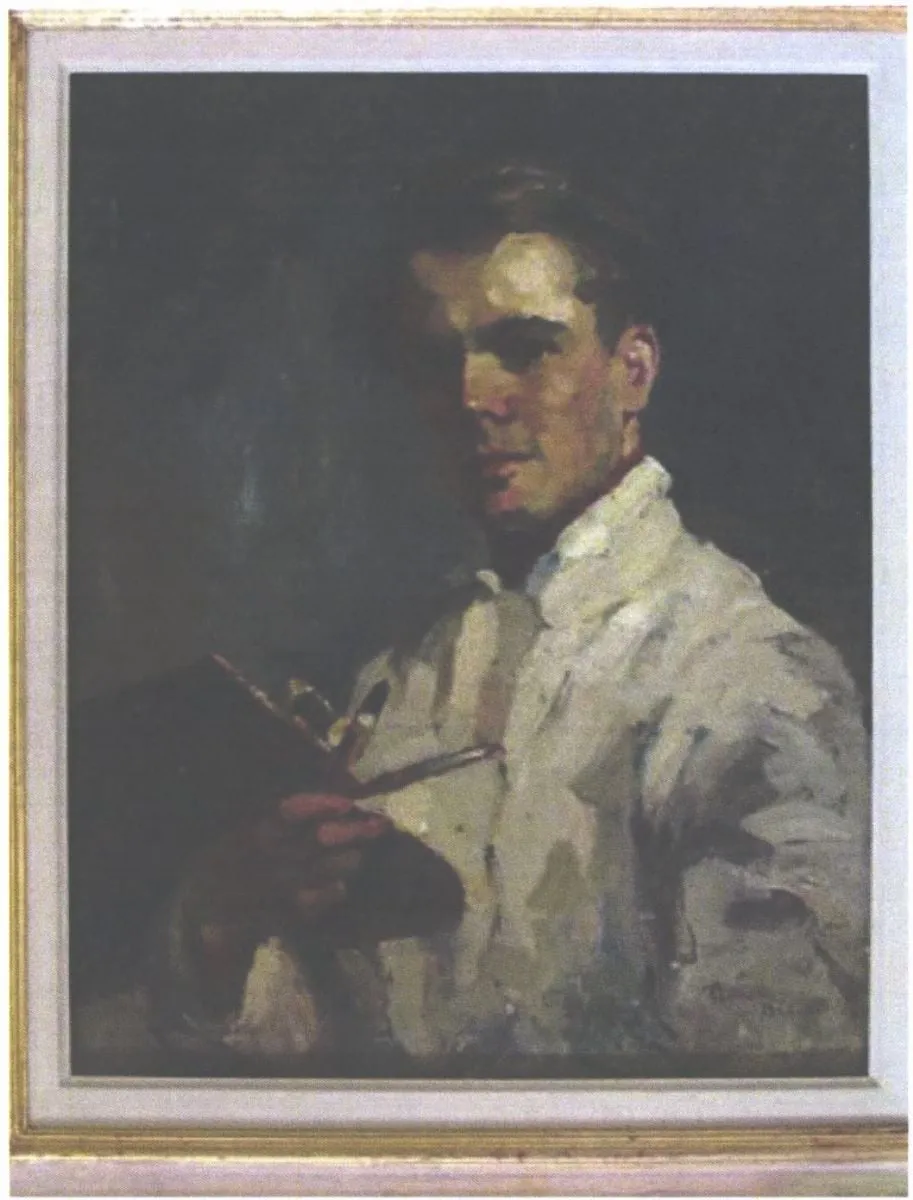
Autoportret Aurel Băeșu is a print by Aurel Băeșu. It dates from 1922 and is held in the collection of the Moldova National Museum Complex.
About this work
Overview
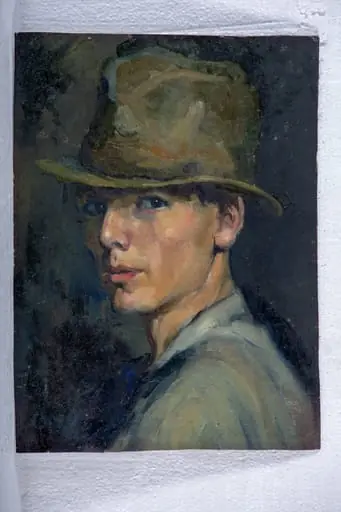
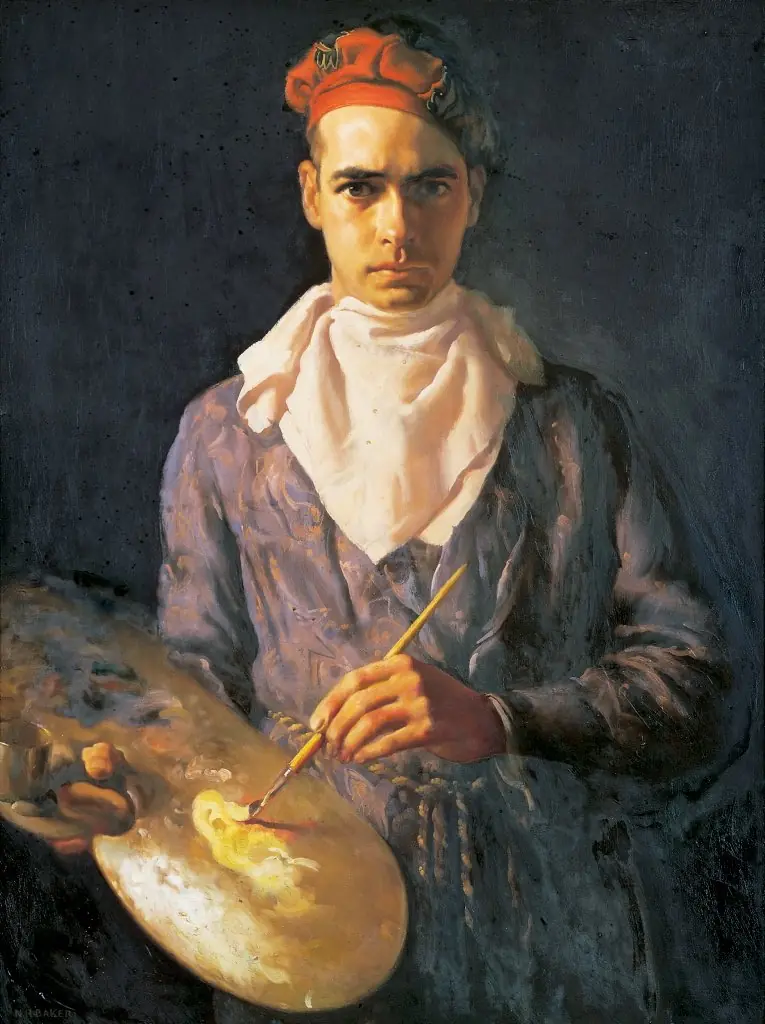
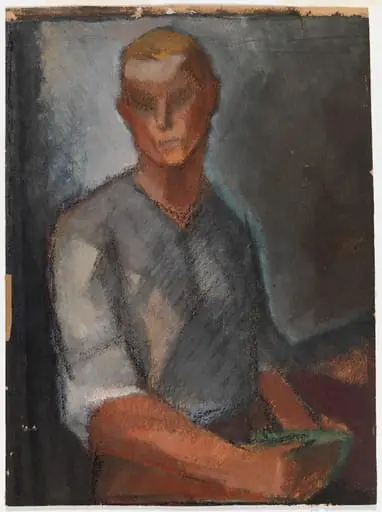
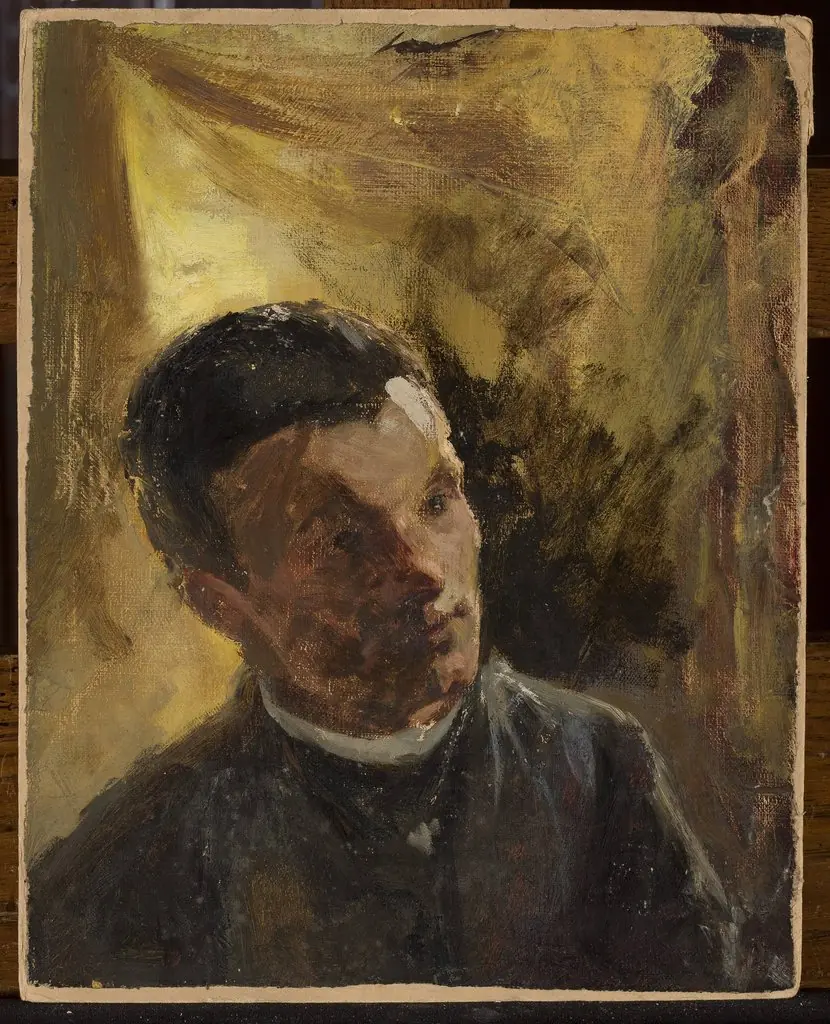
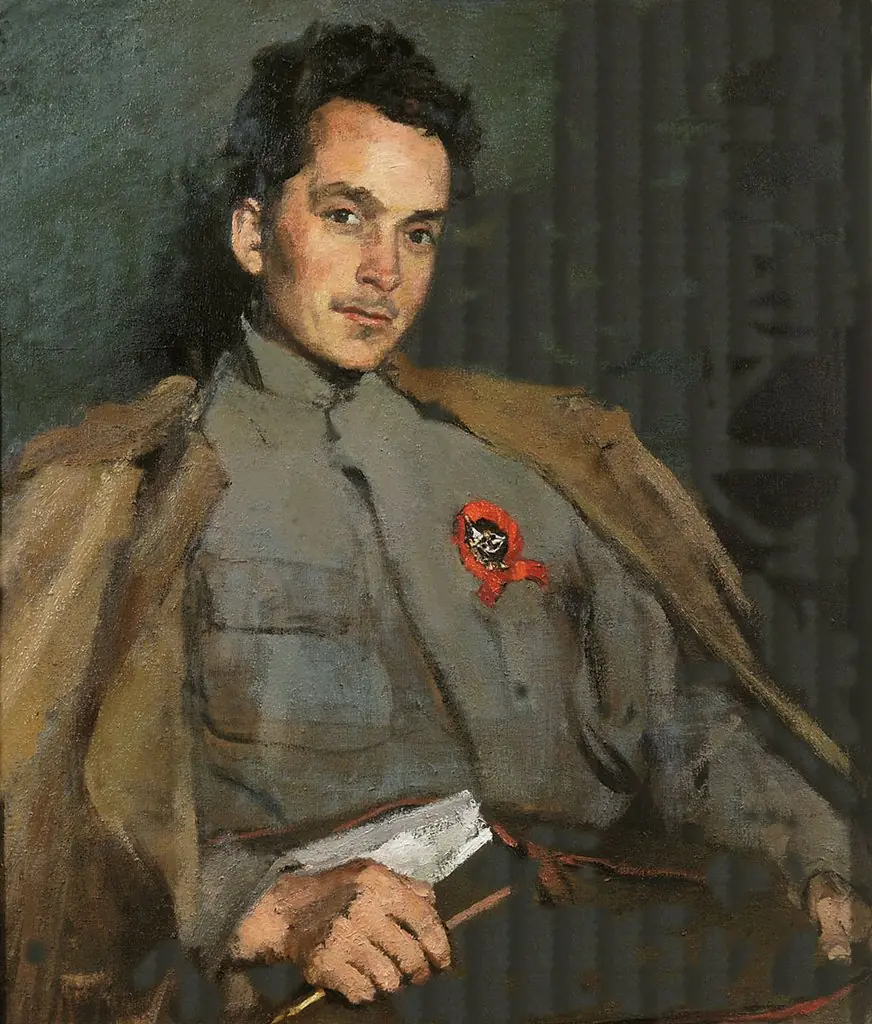
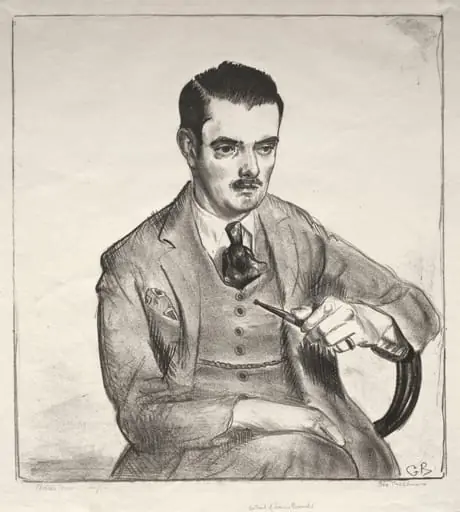
Painted in 1922, Aurel Băeșu’s self-portrait presents the artist at work, capturing a quiet moment of introspection.
Painted in 1922, Aurel Băeșu’s self-portrait presents the artist at work, capturing a quiet moment of introspection. A Romanian painter active in the early 20th century, Băeșu was part of a generation influenced by Impressionist sensibilities, particularly in his treatment of light and texture. The work stands as both a personal statement and a reflection of broader artistic trends in interwar Romania.
Subject & Meaning
The subject is the artist himself, depicted mid-creation with a paintbrush in hand and a palette resting before him. This gesture underscores his identity as a maker, not merely a subject. The direct gaze and composed posture suggest self-awareness and professional seriousness. The absence of extraneous detail focuses attention on the act of painting, framing the portrait as an assertion of artistic identity.
Technique & Style
Băeșu employs chiaroscuro to model the face and upper body, using sharp contrasts between light and shadow to define form. The brushwork is loose yet deliberate, aligning with Impressionist tendencies in capturing transient effects of light. The dark, undefined background isolates the figure, enhancing the three-dimensionality of the torso and face. The palette and brush are rendered with subtle tonal shifts, grounding the scene in tactile reality.
History & Provenance
Created during Băeșu’s mature period, the painting reflects his development after studying under Nicolae Grigorescu, whose emphasis on naturalism and plein air painting left a lasting imprint. Though specific ownership history is not widely documented, the work remains part of Romania’s national art heritage, often included in retrospectives of early modern Romanian painting.
Context
In the 1920s, Romanian artists were navigating between academic traditions and modern European styles. Băeșu’s self-portrait aligns with a broader trend of artists turning inward, using self-representation to assert individuality amid cultural transformation. The influence of French Impressionism, filtered through local sensibilities, is evident in his attention to atmospheric light and informal composition.
Legacy
Though Băeșu’s career was cut short by his early death in 1928, this self-portrait endures as a key example of Romanian Impressionism. It illustrates how local artists adapted international movements to express personal and national identity. The work continues to be referenced in studies of Romanian modernism, valued for its quiet sincerity and technical restraint.
Artist & collection
Artist
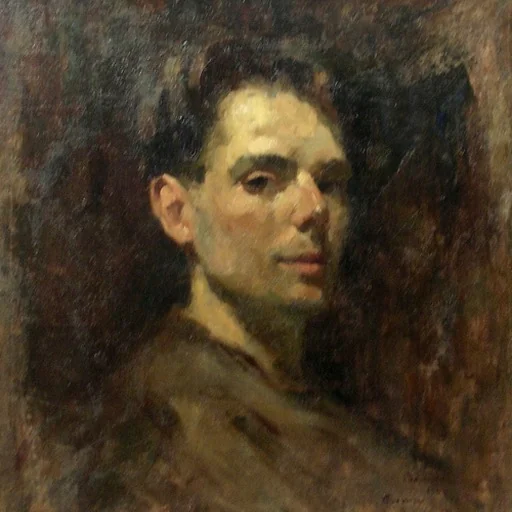
Aurel Băeșu (26 May 1896 – 24 August 1928) was a Romanian Impressionist landscape and portrait painter. Many of his works show the influence of Nicolae Grigorescu; an influence that was common among painters of his generation.