Artwork
Capete de expresie
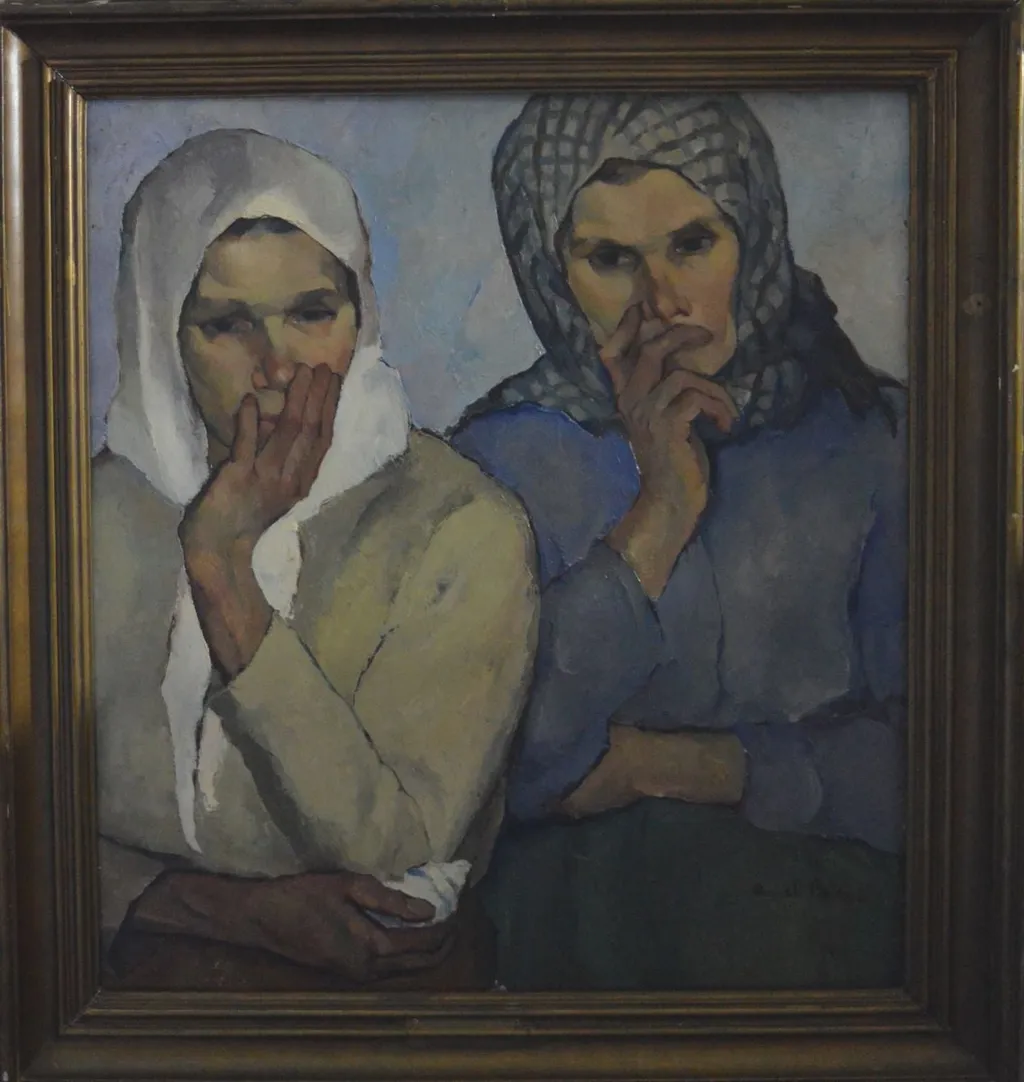
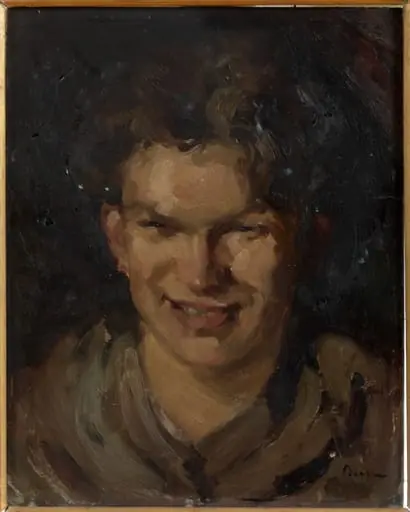
Capete de expresie is a print by Aurel Băeșu. It dates from 1922 and is held in the collection of the Bucharest Municipality Museum.
About this work
Overview
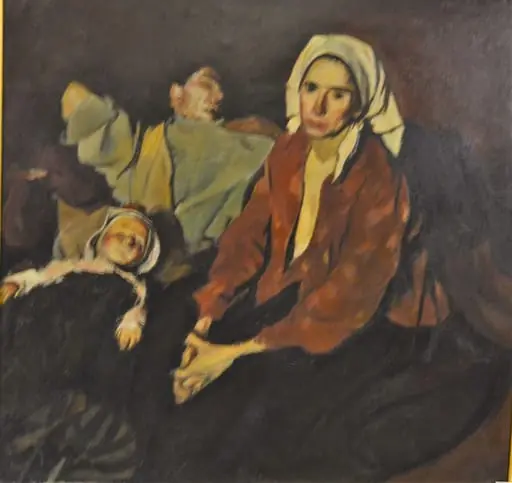
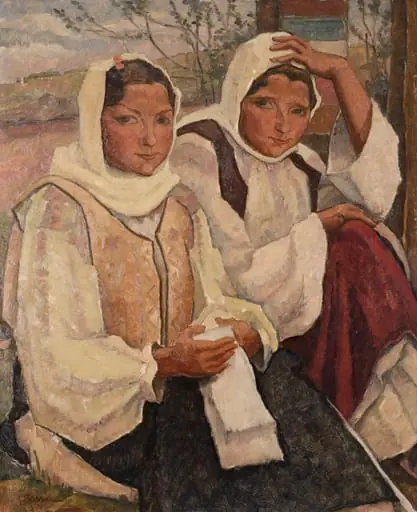
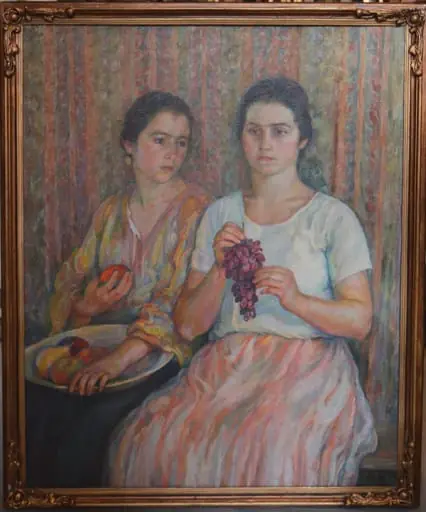
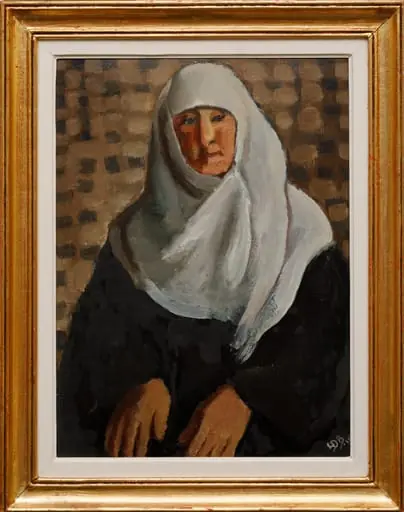
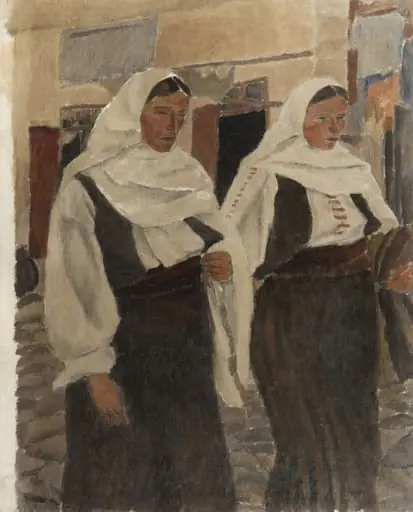
Painted around 1922 by Romanian artist Aurel Băeșu, *Capete de expresie* is a portrait study depicting two women seated side by side. The work belongs to the Impressionist tradition in Romanian art, emphasizing subtle light effects and emotional nuance over detailed realism. It is part of the Museum of Ethnography’s collection, reflecting its cultural rather than purely aesthetic significance.
Subject & Meaning
The painting presents two women, both wearing headscarves and with hands raised near their faces, suggesting inward reflection or quiet emotion.
The painting presents two women, both wearing headscarves and with hands raised near their faces, suggesting inward reflection or quiet emotion. Their postures and expressions convey a sense of introspection, possibly evoking themes of solitude, memory, or shared experience. The absence of narrative context invites viewers to focus on the psychological presence of the figures rather than their identities.
Technique & Style
Băeșu employs soft, blended brushwork and a restrained palette to capture the texture of fabric and the play of light on skin. The figures emerge from a muted blue-gray background, enhancing their prominence. While not overtly dramatic, the use of tonal contrast suggests an awareness of chiaroscuro, subtly modeling form without heavy shadows, consistent with Impressionist sensibilities.
History & Provenance
Created during the early 1920s, the painting emerged from a period when Romanian artists were refining a national style rooted in Impressionism and local subject matter. Băeșu, influenced by Nicolae Grigorescu, focused on everyday people. The work entered the Museum of Ethnography’s holdings, where it was preserved as part of a broader effort to document rural and folk life in interwar Romania.
Context
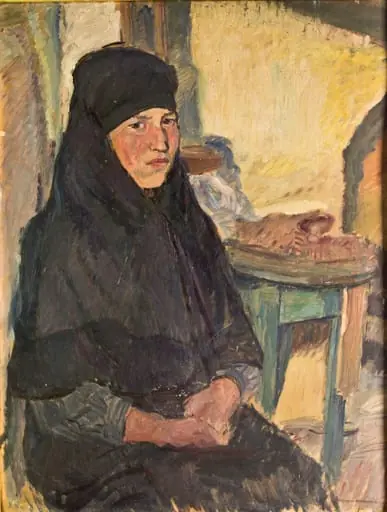
In interwar Romania, artists like Băeșu turned to intimate portraits of rural women as a means of expressing cultural identity. The headscarves and modest attire reflect traditional dress, while the quiet demeanor of the subjects aligns with broader artistic interests in dignity and inner life. This work stands apart from grand historical themes, favoring quiet observation over spectacle.
Legacy
Though not widely exhibited outside institutional collections, *Capete de expresie* remains a representative example of Romanian Impressionist portraiture. Its quiet emotional resonance and attention to ordinary life contributed to a generation of artists who valued psychological depth over formal grandeur, influencing later depictions of rural Romanian women in modern art.
Artist & collection
Artist
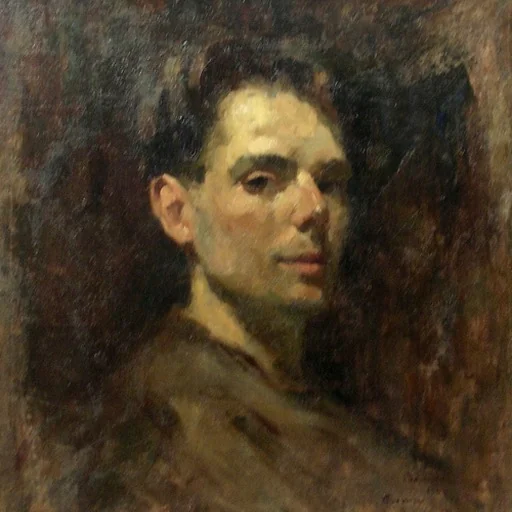
Aurel Băeșu (26 May 1896 – 24 August 1928) was a Romanian Impressionist landscape and portrait painter. Many of his works show the influence of Nicolae Grigorescu; an influence that was common among painters of his generation.