Artwork
Odihnă la câmp
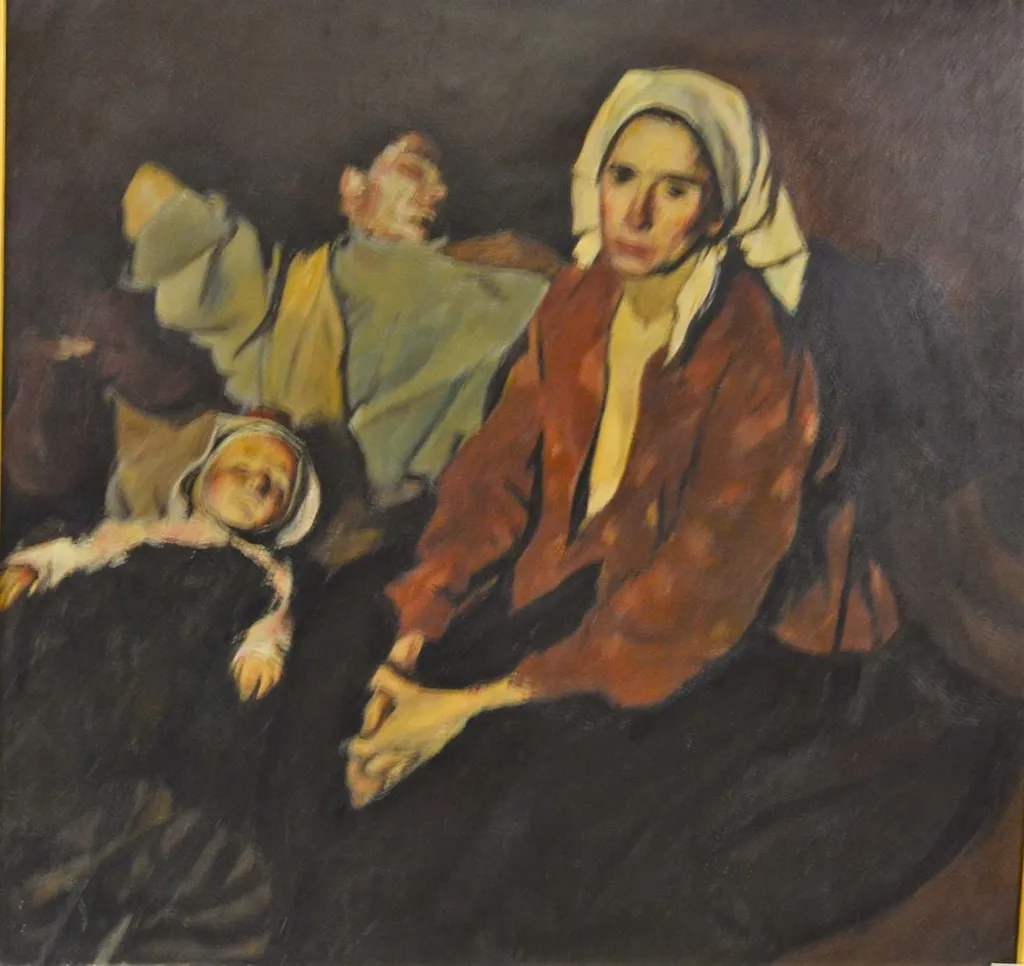
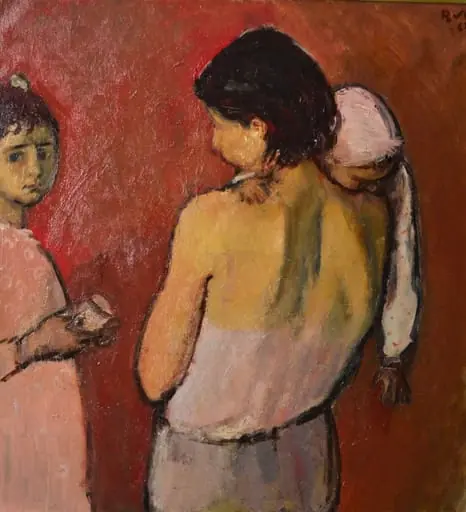
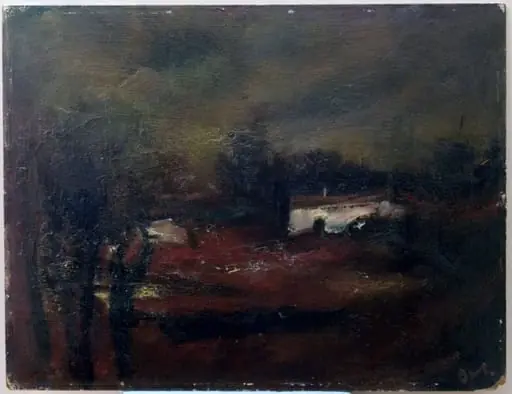
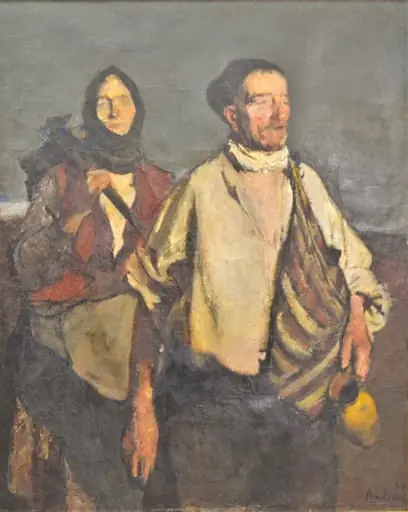
Odihnă la câmp is an unspecified painting by Corneliu Baba. It is held in the collection of the Art Museum of Constanta. This painting depicts three figures seated closely in a somber, outdoor setting.
About this work
Overview
The palette is muted, dominated by earthy browns, greens, and dull yellows, reinforcing a sense of stillness and cold.
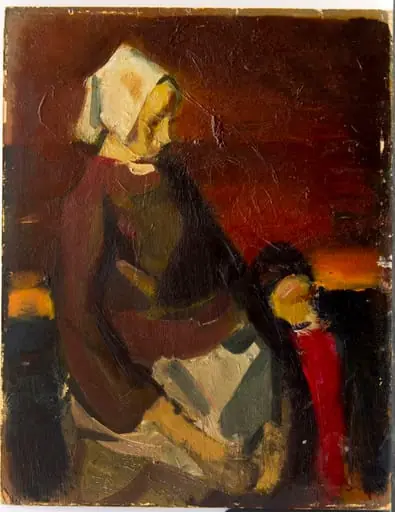
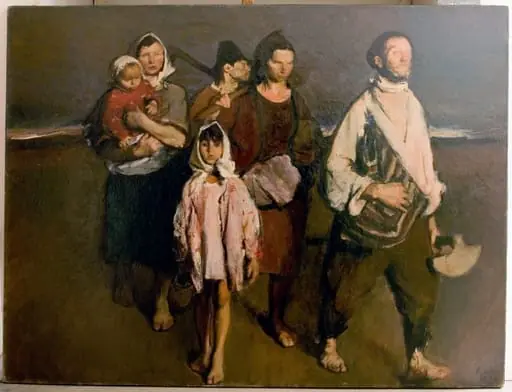
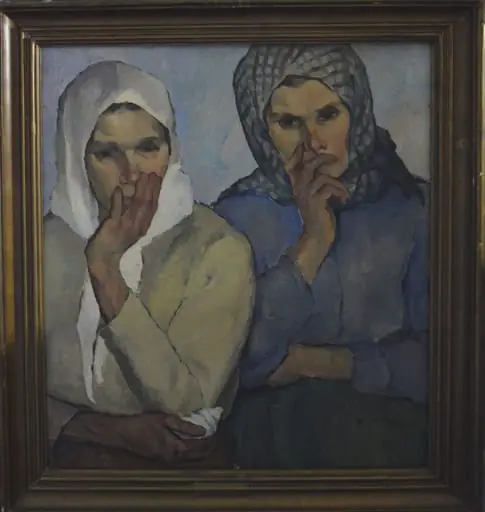
This painting depicts three figures seated closely in a somber, outdoor setting. Dressed in heavy winter garments, they appear still and quiet, their forms rendered with dense, textured brushwork. The palette is muted, dominated by earthy browns, greens, and dull yellows, reinforcing a sense of stillness and cold. The background recedes into shadow, drawing focus to the figures and their shared, unspoken presence.
Subject & Meaning
The figures—a woman and two others, possibly a child and an adult—sit in quiet companionship, their faces partially or fully turned away. The woman holds an object in her hands, though its nature is indistinct. The composition suggests introspection or fatigue, evoking a moment of pause amid hardship. There is no narrative clarity, only an atmosphere of endurance and quiet solidarity.
Technique & Style
The artist employs impasto, applying paint thickly to create a tactile, almost sculptural surface. Visible brushstrokes add texture and rhythm, emphasizing the weight of clothing and the chill of the environment. The rough handling of paint contrasts with the stillness of the subjects, enhancing the emotional gravity of the scene without relying on fine detail.
History & Provenance
The painting’s origin and early ownership are not documented in available records. It is cataloged as a work from the early 20th century, likely produced in Eastern Europe, where such depictions of rural life were common. Its current location and acquisition history remain unverified in public archives.
Context
Created during a period when many artists turned to everyday rural scenes, this work reflects a broader interest in the lives of ordinary people under harsh conditions. The muted tones and lack of idealization align with regional realist traditions, where dignity was found in quiet resilience rather than grandeur or spectacle.
Legacy
Though not widely exhibited or studied, the painting contributes to a lesser-known body of work that prioritizes emotional tone over narrative. Its use of impasto and subdued palette resonates with regional modernist tendencies, offering a quiet counterpoint to more celebrated movements of the era.
Artist & collection
Artist
Corneliu Baba made prints and paintings that feel like quiet stories, often borrowing from older art.