Artwork
Mahala din Iași
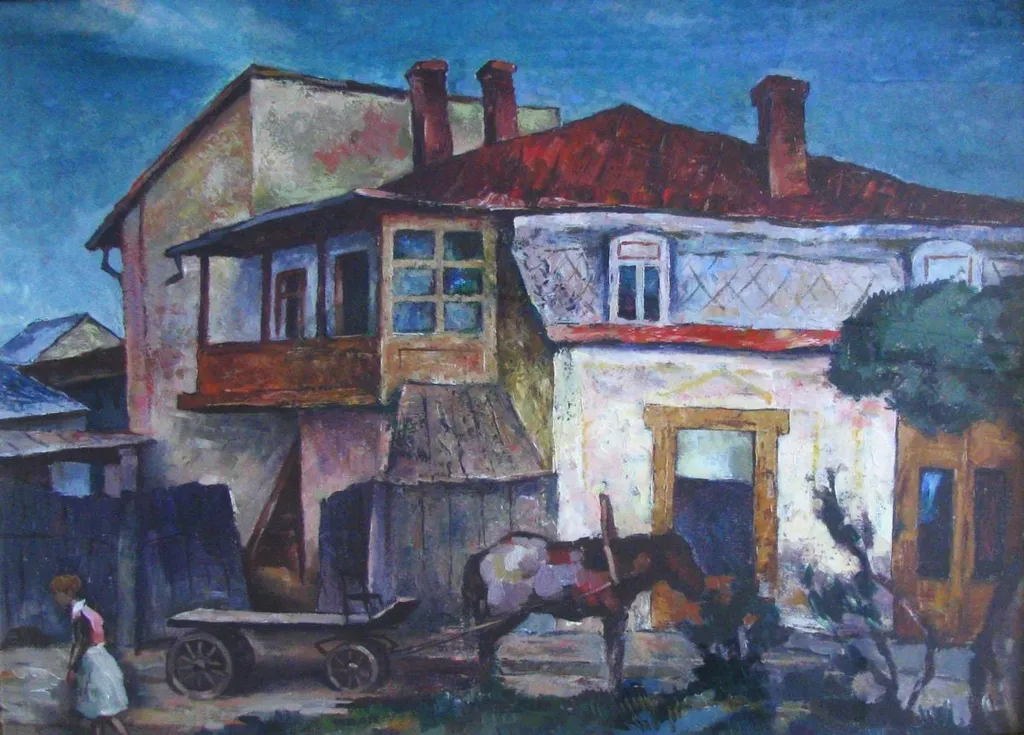
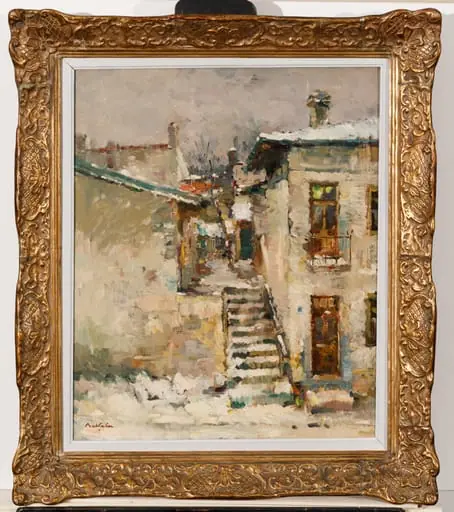
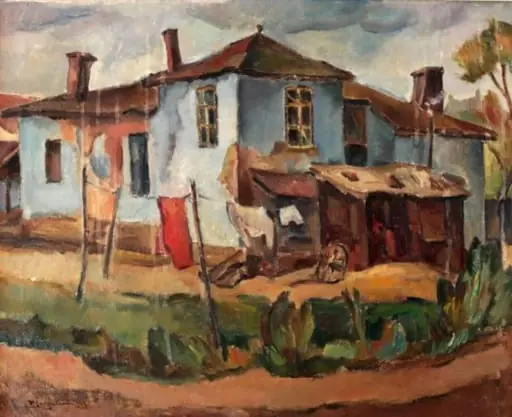
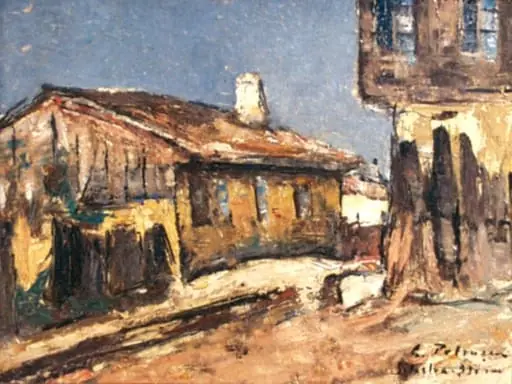
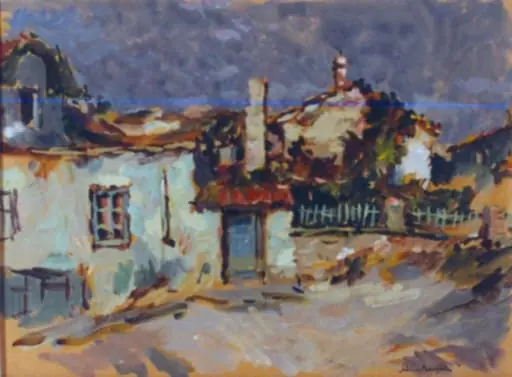
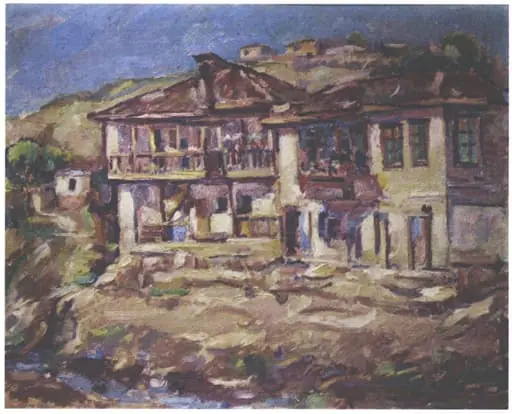
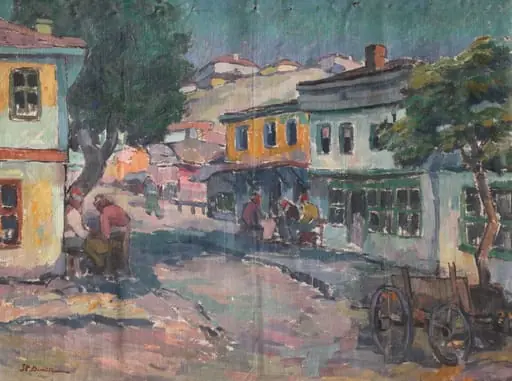
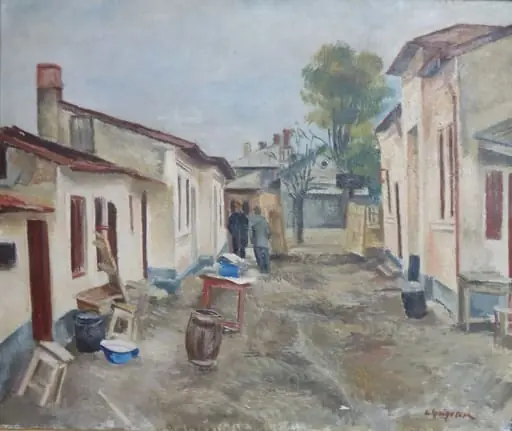
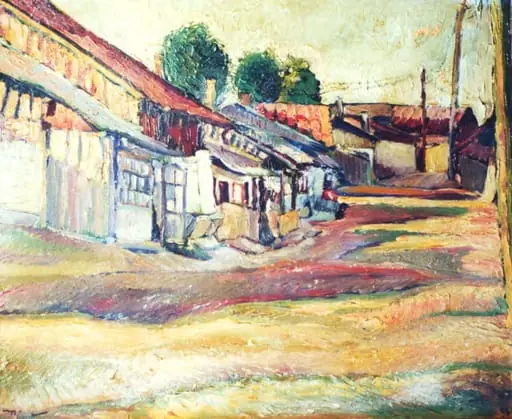
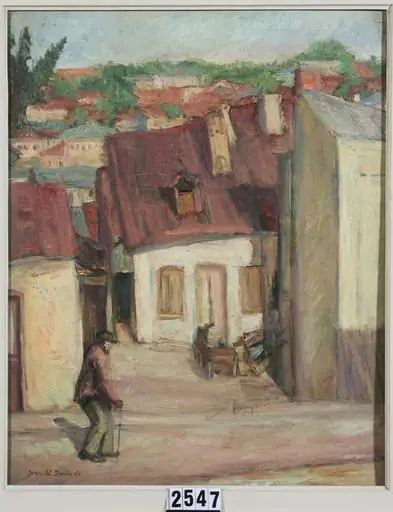
Mahala din Iași is a print by Adam Bălțatu. It dates from 1939 and is held in the collection of the Ion Irimescu Art Museum.
About this work
Overview
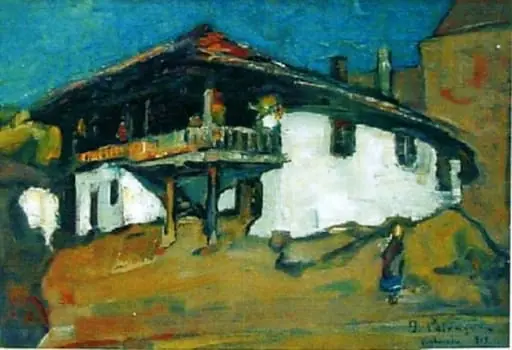
Painted around 1939 by Adam Bălțatu, Mahala din Iași depicts a modest dwelling in the outskirts of Iași, Romania. The work is part of the Museum of Ethnography’s collection and reflects the artist’s interest in everyday urban life during the interwar period. Its quiet composition and textured surface distinguish it as a study of domestic resilience rather than a formal portrait of place.
Subject & Meaning
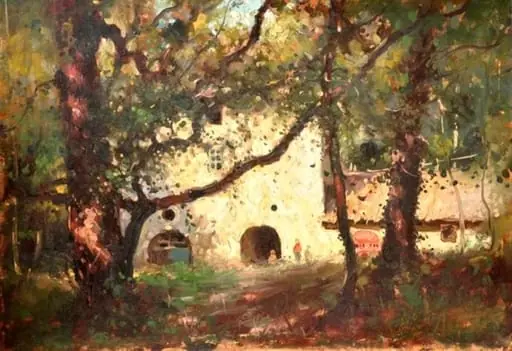
The scene centers on a weathered two-story house, its peeling plaster and uneven balcony suggesting years of use.
The scene centers on a weathered two-story house, its peeling plaster and uneven balcony suggesting years of use. A horse and cart, along with a solitary woman in a light dress, imply routine labor and domestic presence. The contrast between the cool night sky and the warm interior lights hints at private life unfolding behind worn facades, evoking dignity in ordinary existence without overt sentiment.
Technique & Style
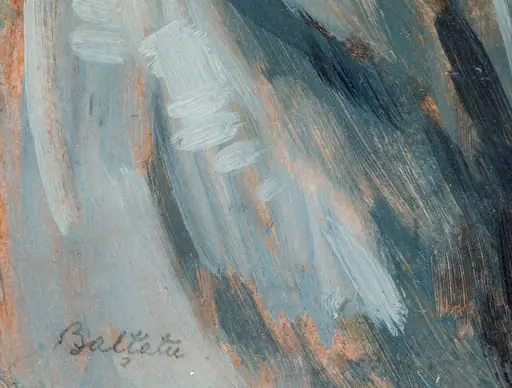
Bălțatu employed thick, deliberate brushstrokes to build texture, particularly in the walls and roof, using impasto to catch light and emphasize material decay. Colors are applied with variation—some areas are layered and opaque, others blended softly to suggest atmospheric glow. The interplay of warm interior hues against the cool exterior creates a subtle emotional tension between inside and outside worlds.
History & Provenance
The painting entered the Museum of Ethnography’s holdings in the mid-20th century, likely acquired through state-sponsored cultural preservation efforts. Its survival through political transitions in Romania speaks to its recognition as a document of vernacular life. No earlier exhibition or private ownership records are widely documented, suggesting it was intended for public rather than private display.
Context
Created during Romania’s interwar modernization, the painting quietly resists idealized rural or urban narratives. Iași’s mahala districts—working-class neighborhoods—were undergoing change, yet Bălțatu chose to record their unvarnished reality. This aligns with broader regional trends in art that valued ethnographic observation over romanticism, capturing the texture of daily life amid shifting social structures.
Legacy
Mahala din Iași remains a quiet reference in Romanian art history for its unembellished portrayal of urban vernacular architecture. It is not widely reproduced, but its presence in the Museum of Ethnography anchors it as a visual record of pre-industrial domestic life. Scholars occasionally cite it in studies of interwar Romanian realism, valuing its restraint and attention to material detail.