Artwork
Balcic
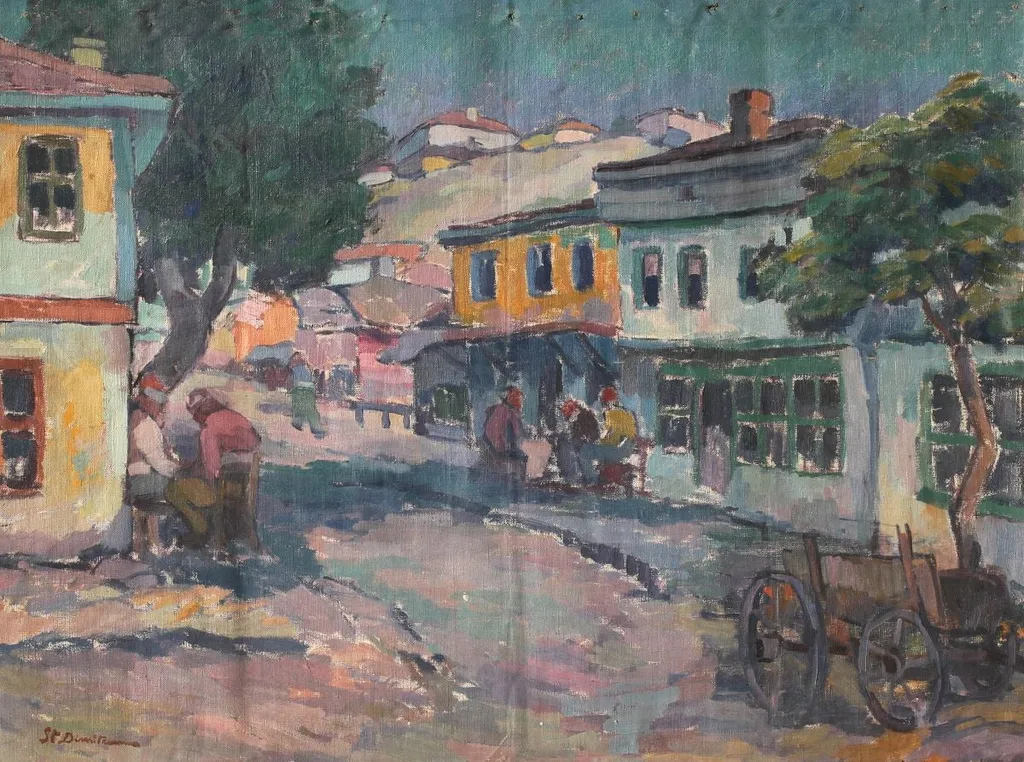
Balcic is an unspecified painting by Ștefan Dimitrescu. It dates from 1919 and is held in the collection of the Museum of Art Cluj-Napoca.
About this work
Overview
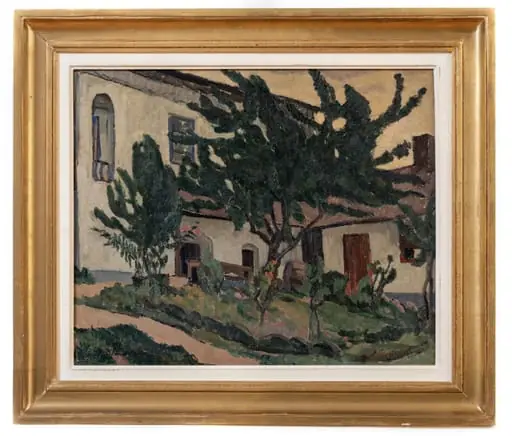
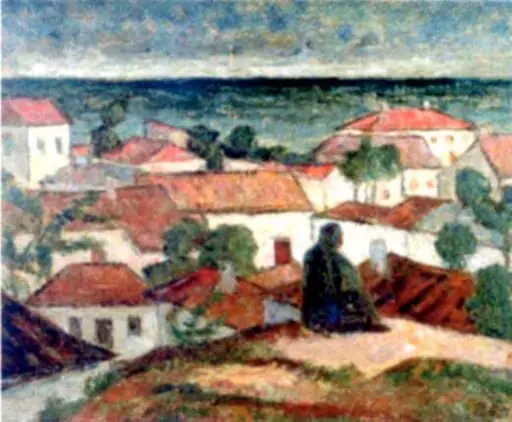
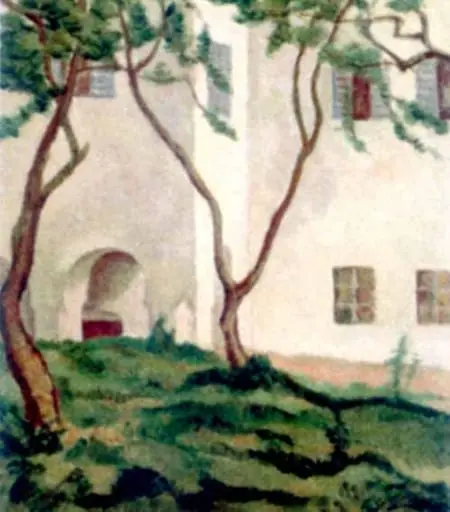
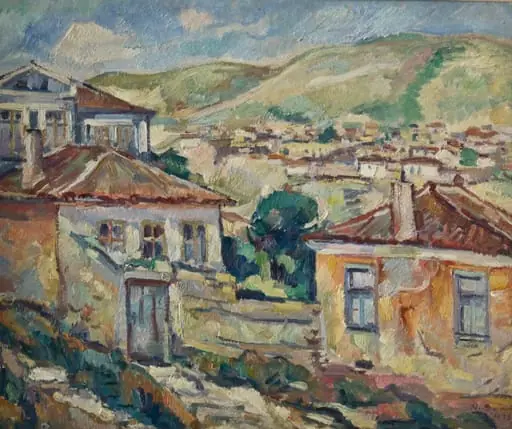
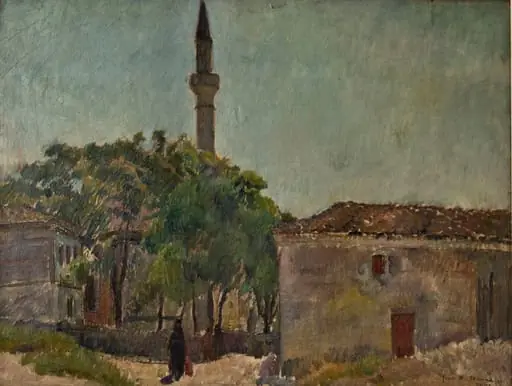
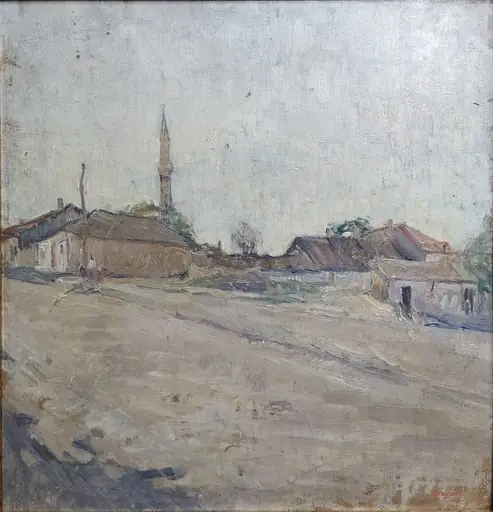
Painted around 1919 by Ștefan Dimitrescu, Balcic is a quiet depiction of a rural Romanian streetscape.
Painted around 1919 by Ștefan Dimitrescu, Balcic is a quiet depiction of a rural Romanian streetscape. Executed in oil, the work captures an unassuming moment in daily life, free from dramatic tension. Its modest scale and unidealized subject reflect the artist’s interest in ordinary environments, aligning with broader trends in early 20th-century Romanian art that valued authenticity over grandeur.
Subject & Meaning
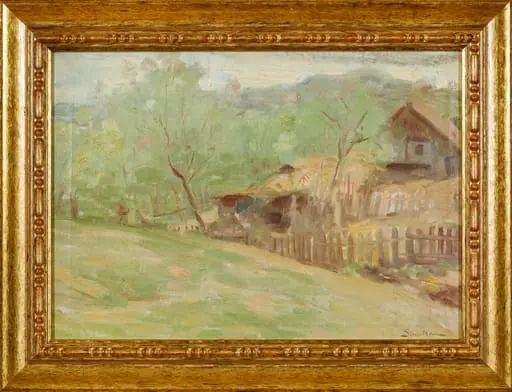
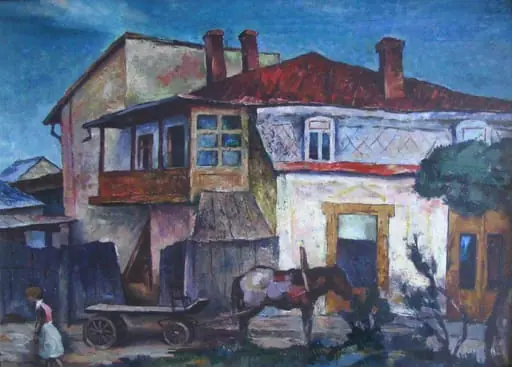
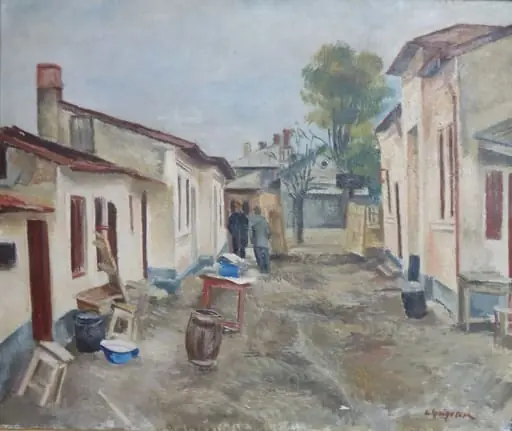
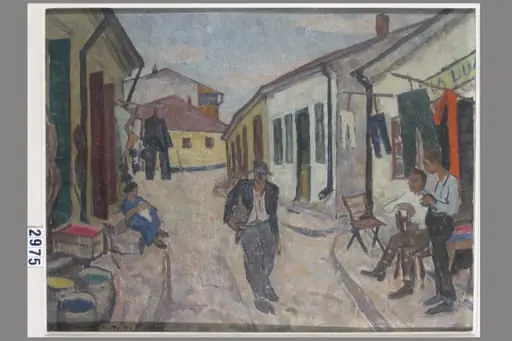
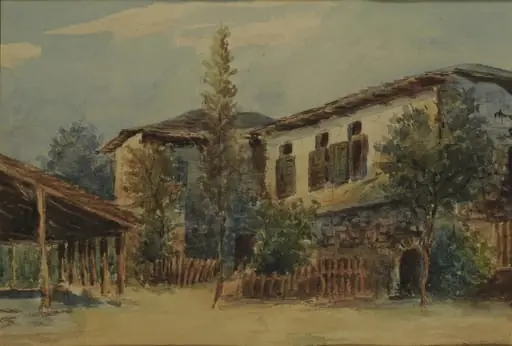
The scene portrays a tranquil village street with modest buildings, a closed shop with green shutters, and a lone farm wagon. A handful of figures move or pause, their presence unremarkable yet grounding the composition in lived experience. There is no narrative climax—only the rhythm of routine. The painting suggests a quiet reverence for the rhythms of rural life, observed without sentimentality.
Technique & Style
Dimitrescu employed loose, rapid brushwork, suggesting an en plein air approach. Colors—warm yellows, muted greens, and earthy tones—are applied with visible texture, avoiding polished finish. The sketchy quality conveys immediacy, as if the scene was recorded in a single sitting. Light and shadow are suggested rather than modeled, reinforcing the work’s spontaneous, observational character.
History & Provenance
The painting has been held by the Museum of Ethnography since at least the mid-20th century, where it remains part of a collection focused on Romanian cultural life. Its acquisition likely followed the artist’s death in 1933, as institutions began systematically preserving works by key figures of the interwar period. No earlier ownership records are widely documented.
Context
Created shortly after World War I, Balcic reflects a national turn toward documenting local identity amid political upheaval. While urban centers modernized, artists like Dimitrescu turned to rural subjects as anchors of cultural continuity. His style, influenced by Post-Impressionism and local folk traditions, diverged from academic norms, favoring emotional resonance over technical precision.
Legacy
Balcic exemplifies Dimitrescu’s role in shaping a distinctly Romanian modernism rooted in everyday observation. Though not widely reproduced, the work is recognized in scholarly circles for its quiet integrity and contribution to the country’s pictorial record of rural life. It continues to inform exhibitions on interwar Romanian art, valued for its unembellished truthfulness.
Artist & collection