Artwork
Peisaj cu case
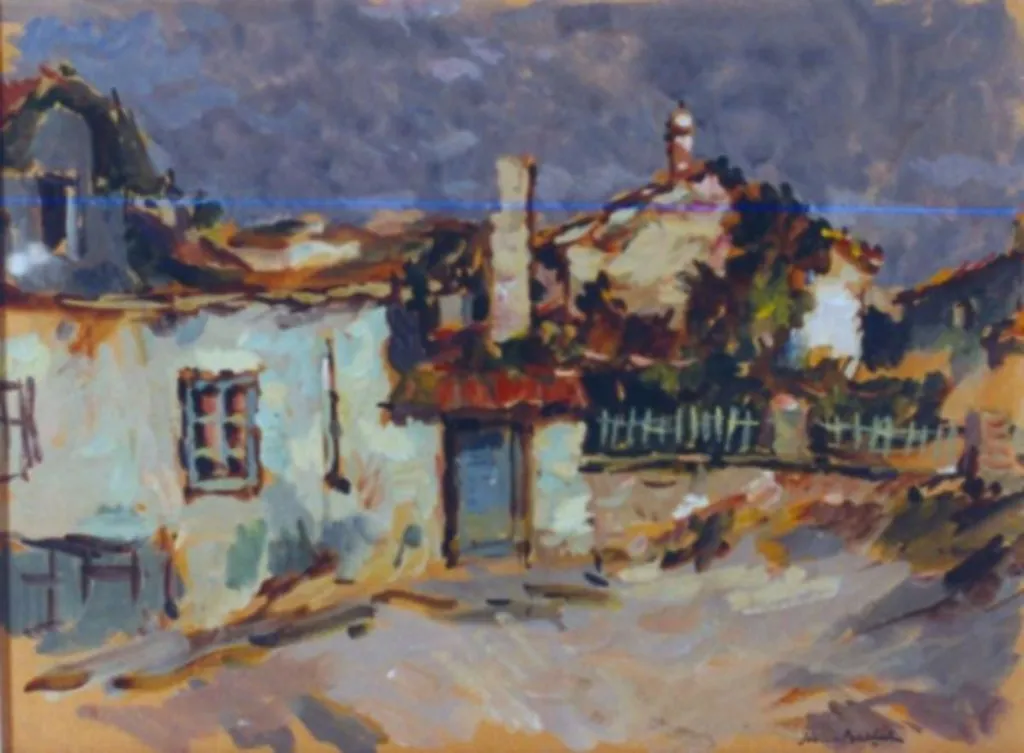
Peisaj cu case is an unspecified painting by Adam Bălțatu. It dates from 1949 and is held in the collection of the Cotroceni National Museum.
About this work
Overview
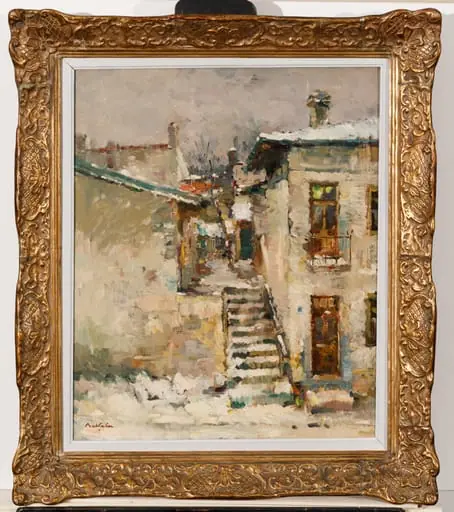
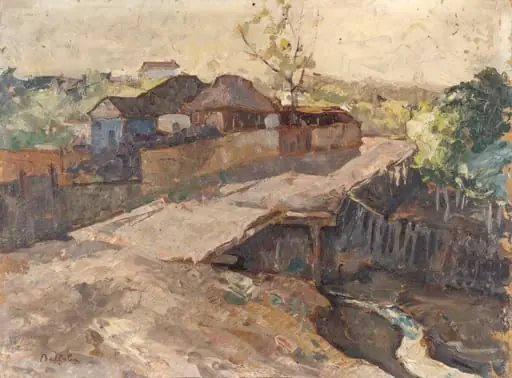
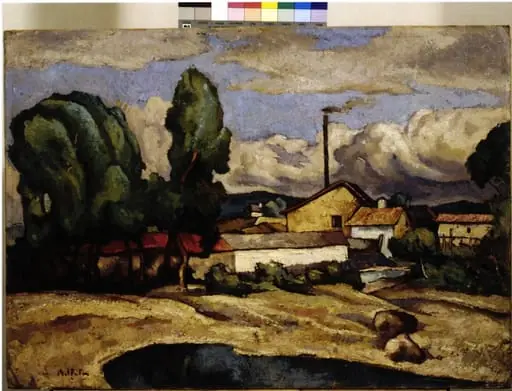
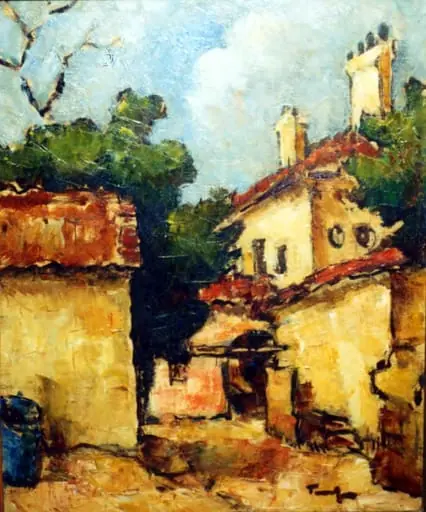
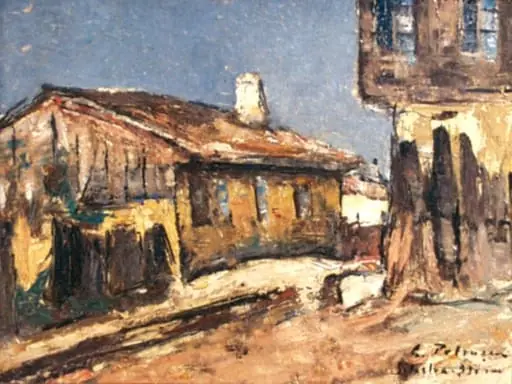
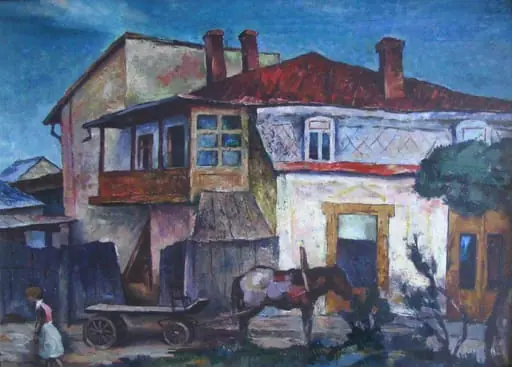
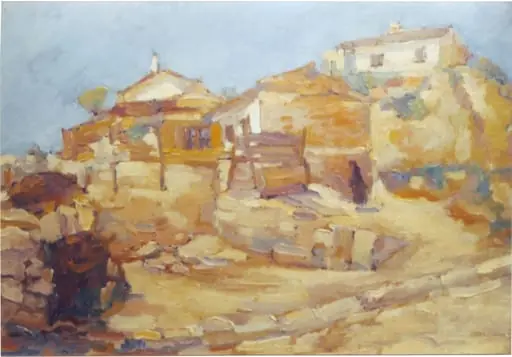
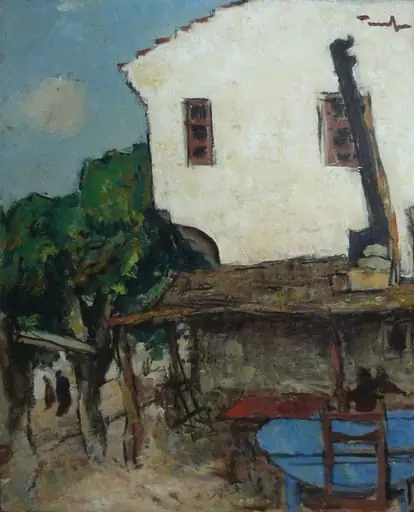
Created around 1949 by Romanian painter Adam Bălțatu, this work depicts a modest rural scene that has been preserved in the collection of the Museum of Ethnography. The composition centers on two adjacent dwellings, rendered in muted tones that suggest the waning light of an early evening.
Subject & Meaning
The painting presents two aging houses positioned side by side, their weathered façades hinting at the passage of time and the endurance of everyday life. The left structure, with its plain white wall and dark window trims, contrasts with the right building’s faded beige‑gray walls, sagging porch, and modest fence, evoking a quiet, lived‑in atmosphere.
Technique & Style
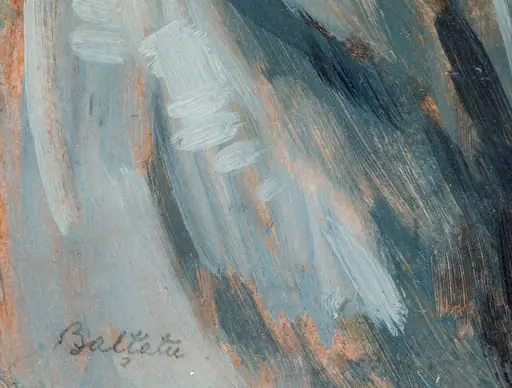
Bălțatu employs thick, uneven brushstrokes that give the walls a palpable texture, a technique reminiscent of impasto. The application is swift and expressive, emphasizing the interplay of light and shadow over precise detailing. Soft, muddy colors dominate, reinforcing the sense of a scene caught in fleeting, diffused illumination.
History & Provenance
The artwork entered the Museum of Ethnography’s holdings shortly after its creation, becoming part of the institution’s effort to document Romanian rural architecture through visual art. Its dating to the late 1940s places it within a period of post‑war cultural reflection, when artists often turned to familiar, local subjects.