Artwork
Peisaj la Balcic
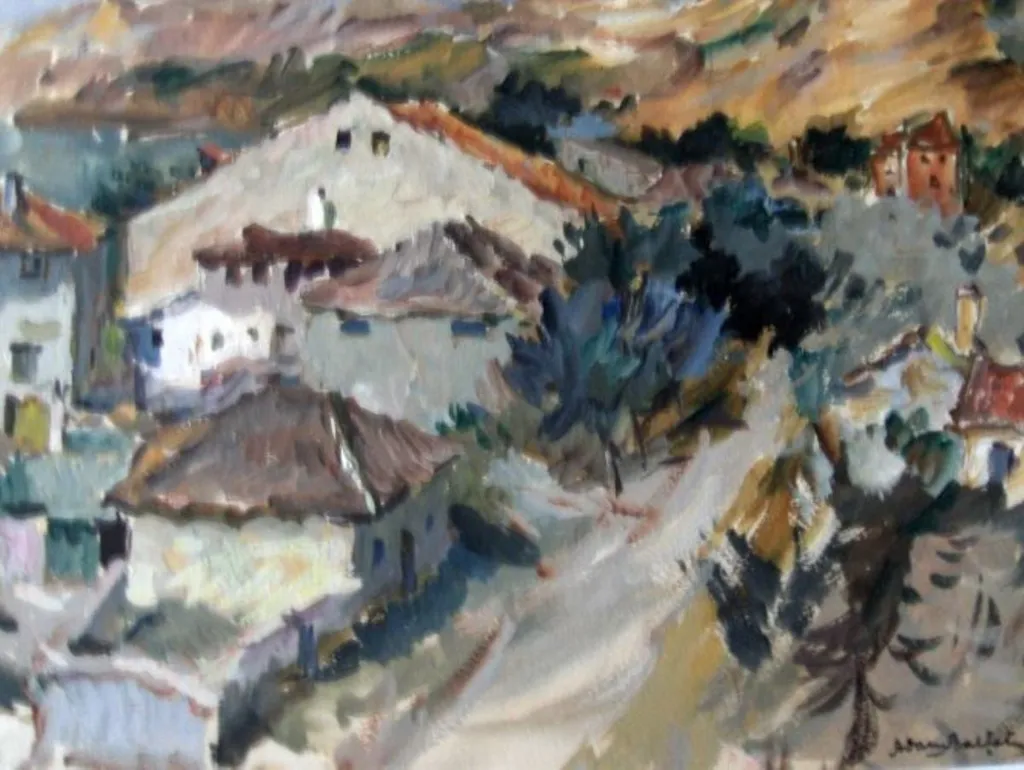
Peisaj la Balcic is an unspecified painting by Adam Bălțatu. It dates from 1939 and is held in the collection of the Art Museum of Constanta.
About this work
Overview
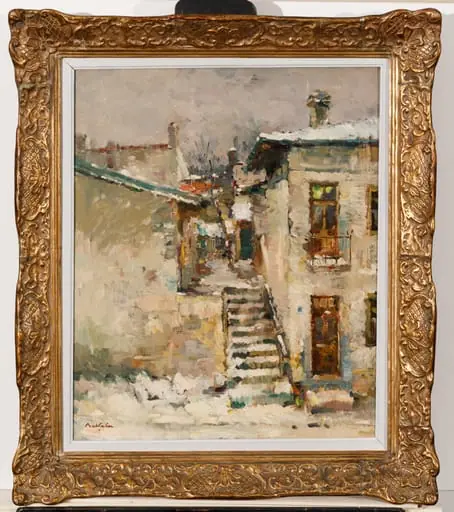
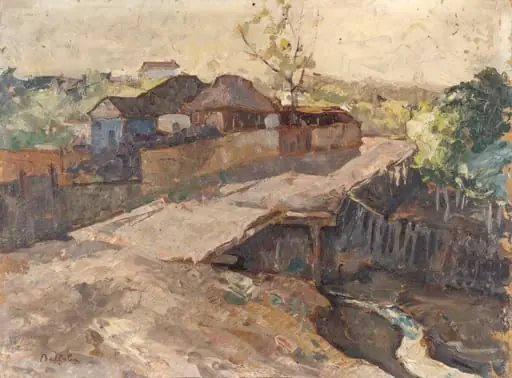
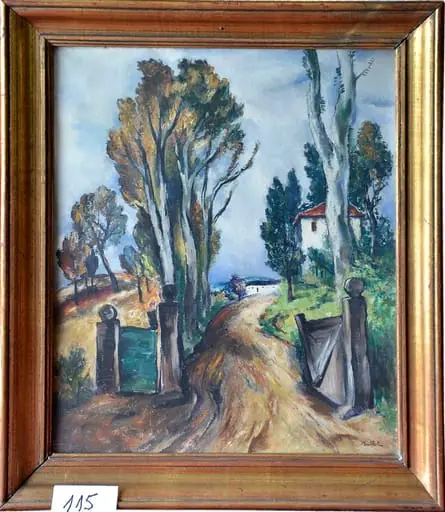
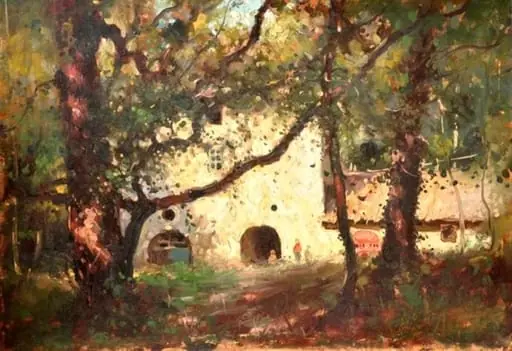
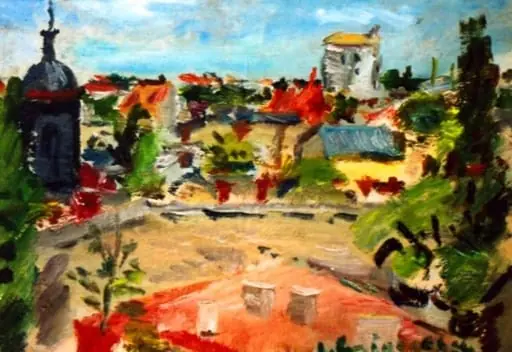
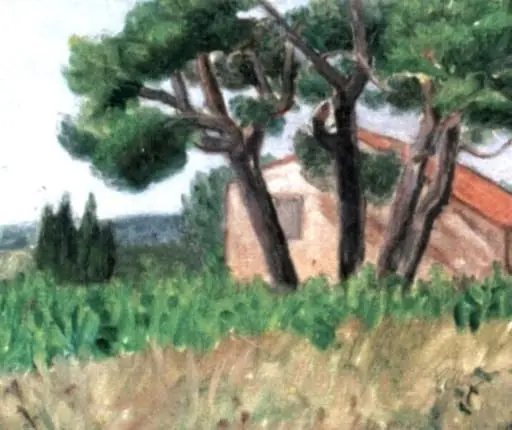
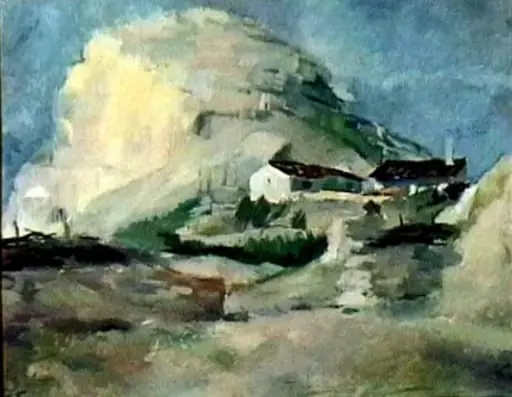
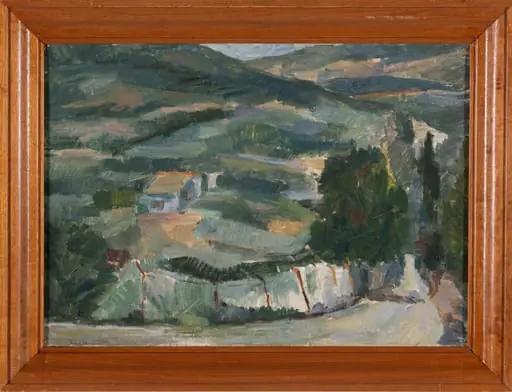
Painted around 1939 by Adam Bălțatu, this landscape captures the Romanian Black Sea coast village of Balchik. Executed in oil, the work is part of the Museum of Ethnography’s collection. Its energetic application of paint and informal composition suggest an en plein air approach, reflecting a direct engagement with the natural environment rather than a studio-polished rendering.
Subject & Meaning
The composition avoids idealization, instead conveying a sense of place rooted in everyday observation rather than romanticized nostalgia.
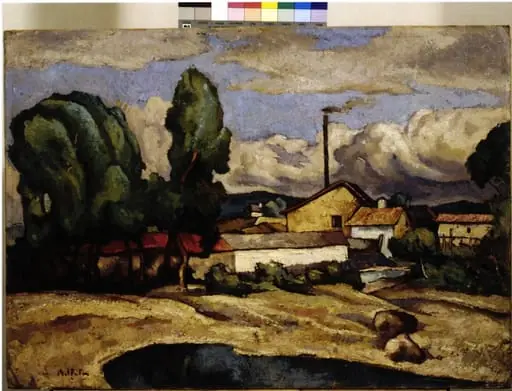
The scene depicts a quiet cluster of rural dwellings nestled among undulating hills, their white walls and terracotta roofs contrasting with the earthy tones of the surrounding vegetation. No human figures are present, emphasizing solitude and the quiet rhythm of village life. The composition avoids idealization, instead conveying a sense of place rooted in everyday observation rather than romanticized nostalgia.
Technique & Style
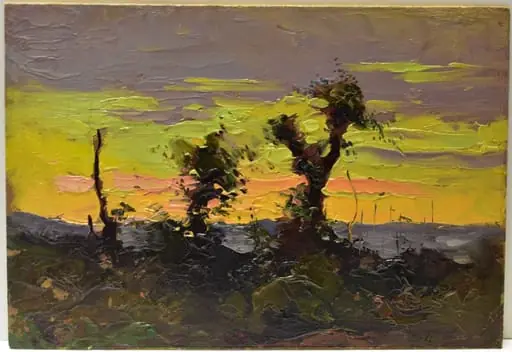
Bălțatu employed thick, tactile brushwork, applying paint with visible urgency and physicality. The impasto technique builds texture across the canvas, particularly in the hills and sky, where layers of pigment catch light unevenly. This method conveys movement and atmosphere, suggesting fleeting moments of light and wind rather than static representation.
History & Provenance
The painting entered the Museum of Ethnography’s holdings in the mid-20th century, likely through acquisition or donation tied to Romanian cultural preservation efforts. Its survival and cataloging reflect an institutional interest in documenting regional vernacular landscapes during a period of national artistic consolidation.
Context
Created on the eve of World War II, the work aligns with a broader Romanian interest in rural identity amid rapid modernization. While urban centers transformed, artists like Bălțatu turned to peripheral villages as subjects of authenticity. The loose handling contrasts with academic traditions, signaling a shift toward expressive realism in interwar Romanian painting.
Legacy
Though not widely exhibited beyond regional collections, the painting remains a representative example of mid-century Romanian landscape painting that prioritized sensory immediacy over formal precision. Its preservation underscores the value placed on regional visual records, influencing later generations interested in the emotional resonance of place.
Artist & collection