Artwork
Portretul lui Gheorghe Orăscu
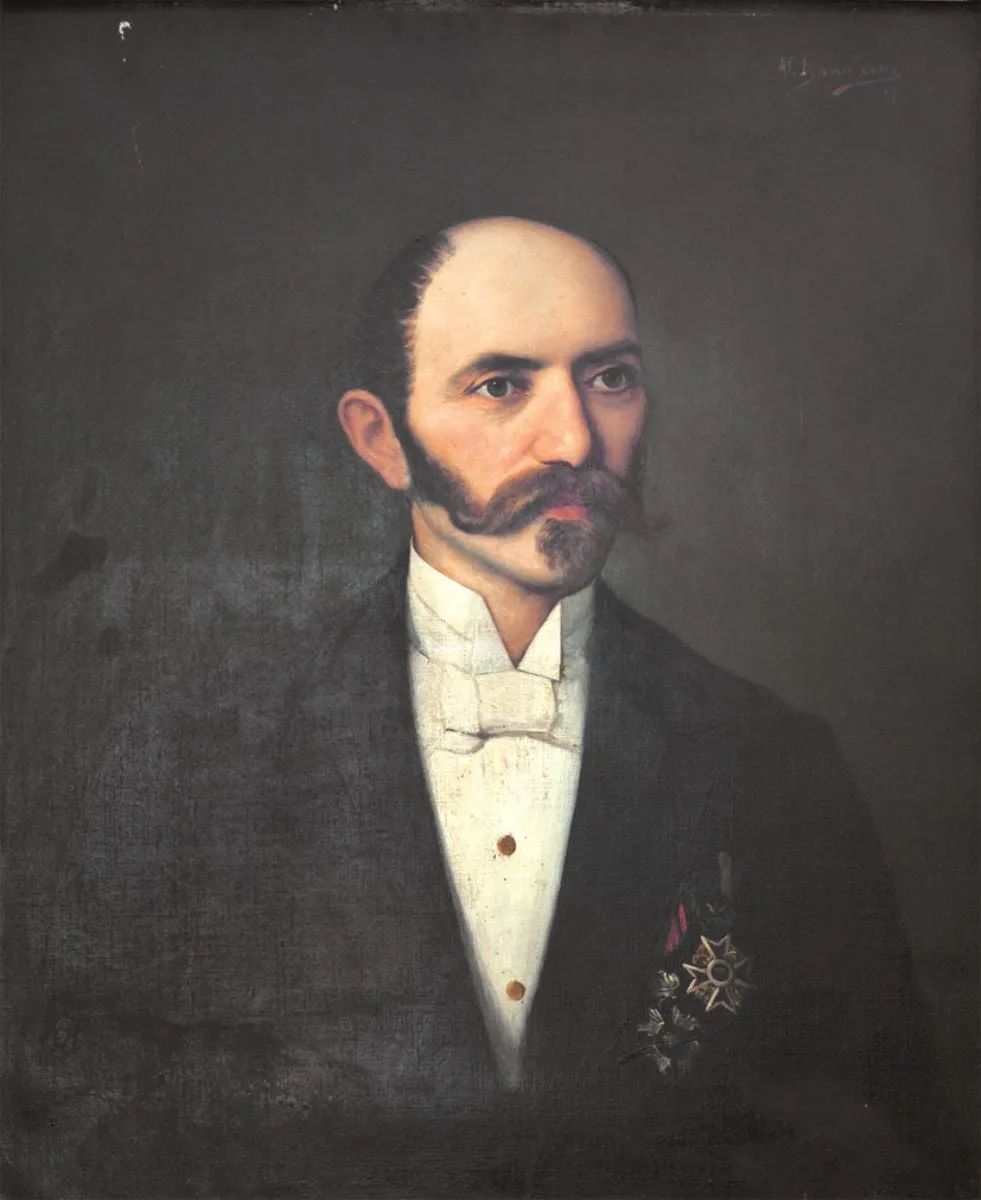
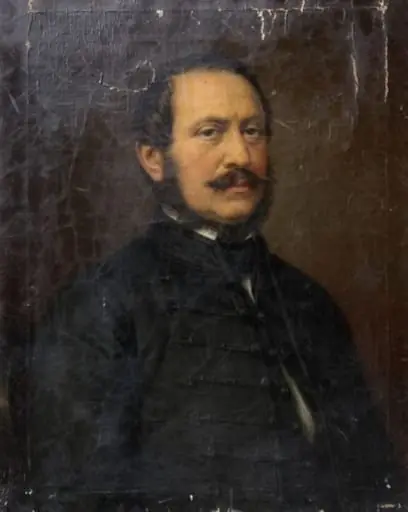
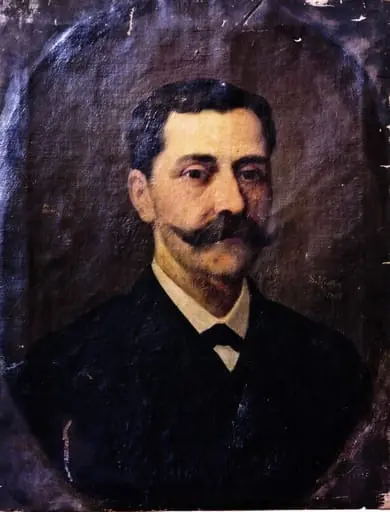
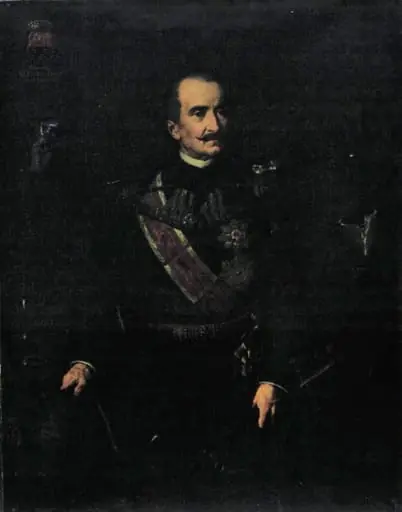
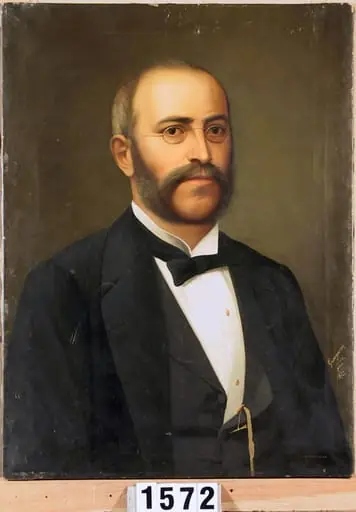
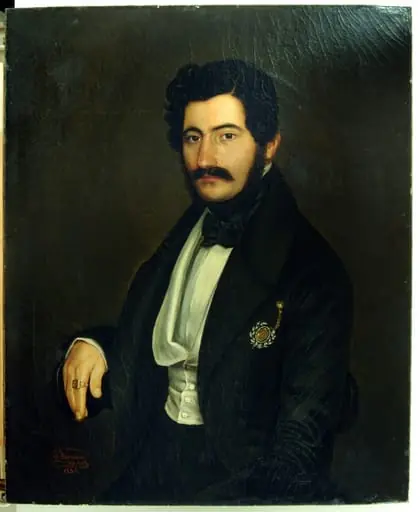
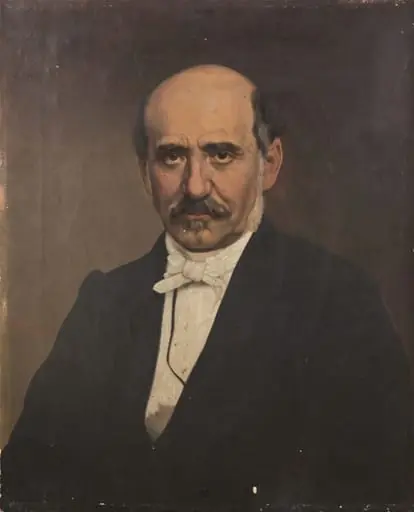
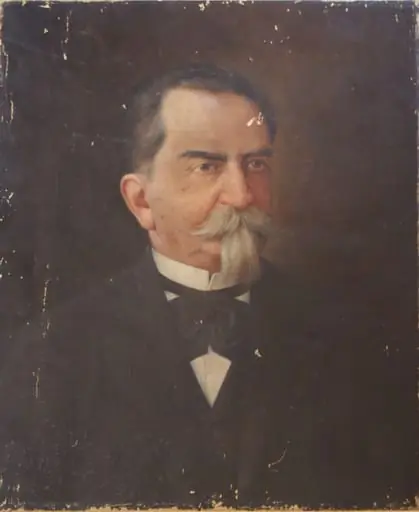
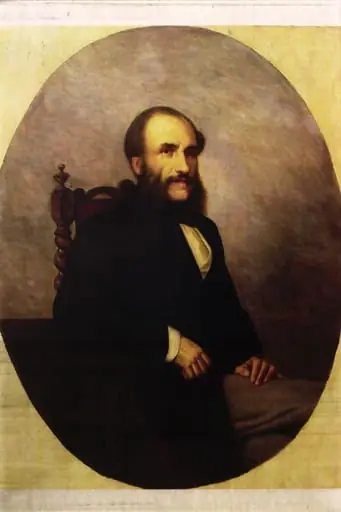
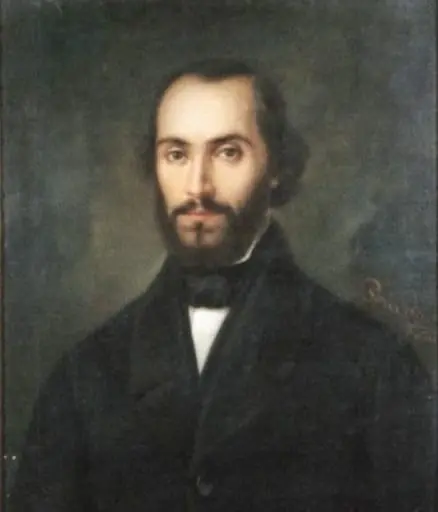
Portretul lui Gheorghe Orăscu is a print by the Academic Art artist Alexandru Bănulescu. It is held in the collection of the Bucharest Municipality Museum. This portrait depicts Gheorghe Orăscu, a Romanian figure of the 19th century, rendered in a straightforward, focused composition.
About this work
Overview
His formal clothing and the medal on his lapel signal social or official standing, while the cigar in his hand adds a touch of personal demeanor.
This portrait depicts Gheorghe Orăscu, a Romanian figure of the 19th century, rendered in a straightforward, focused composition. The subject is shown full-length against a dark, unadorned background, emphasizing his presence through deliberate lighting and attire. His formal clothing and the medal on his lapel signal social or official standing, while the cigar in his hand adds a touch of personal demeanor.
Subject & Meaning
Gheorghe Orăscu is portrayed with dignity and quiet authority. The star-shaped medal implies recognition by an institution, possibly related to public service or cultural contribution, though its specific origin remains undocumented. The cigar, held naturally in his right hand, suggests informality amid formality, hinting at a man comfortable in his status yet not ostentatious.
Technique & Style
The artist employs strong chiaroscuro to model the face and clothing, using sharp contrasts between light and shadow to define volume and texture. The dark background isolates the figure, directing attention to facial expression and the sheen of fabric. Brushwork is controlled, with attention to the crispness of the bow tie and the softness of the beard, enhancing realism without embellishment.
History & Provenance
The portrait’s origin is tied to Orăscu’s life in mid-19th century Romania, likely commissioned during a period of national cultural consolidation. Its survival suggests it remained in private or institutional hands, though its exact provenance prior to modern documentation is unclear. No record confirms the artist’s identity or the date of execution.
Context
In the context of Romanian art during the 1800s, portraiture often served to affirm emerging national identity through depictions of intellectuals, officials, and cultural figures. Orăscu’s image aligns with this trend—his attire and insignia reflect a society in transition, where personal distinction was visually coded through dress and accoutrements.
Legacy
The portrait endures as a representative example of Romanian academic portraiture, valued for its restrained realism and psychological presence. While not widely exhibited, it contributes to the visual record of Romania’s 19th-century elite. Its use of chiaroscuro reflects broader European influences, adapted to local sensibilities of dignity and understatement.
Artist & collection
Artist
Alexandru Bănulescu liked to sneak into print shops after hours, leaving his copper-plate portraits on the press like unsigned love notes.