Artwork
Untitled
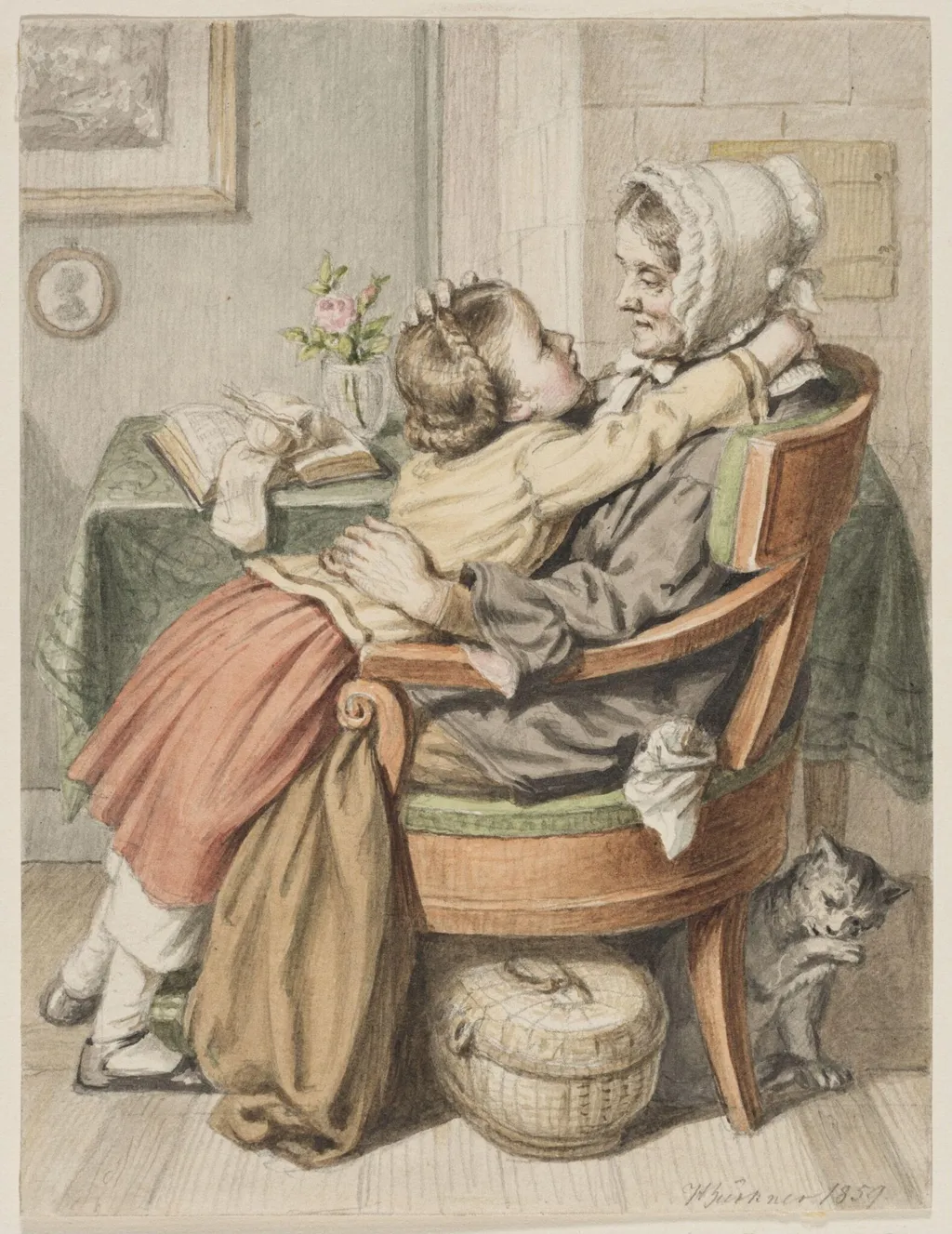
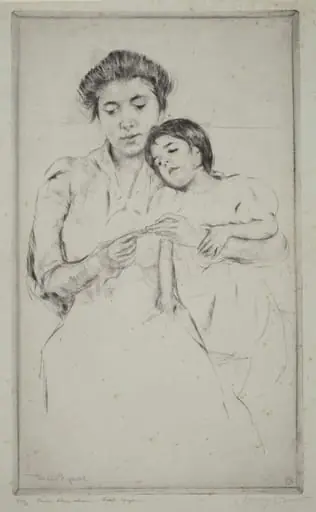
Untitled is a drawing by the Impressionist artist Hugo Bürkner. It dates from 1859 and is held in the collection of the Victoria and Albert Museum. A quiet interior scene captures three figures in a domestic setting, rendered with delicate pencil work.
About this work
Overview
The composition centers on an elderly woman seated in an armchair, a child on her lap, and another child standing nearby with a book.
A quiet interior scene captures three figures in a domestic setting, rendered with delicate pencil work. The composition centers on an elderly woman seated in an armchair, a child on her lap, and another child standing nearby with a book. A dog rests at their feet, while modest furnishings—a basket and a vase—anchor the floor. The atmosphere is intimate, sustained by subtle tonal gradations and careful line work.
Subject & Meaning
The drawing portrays an unassuming moment of familial closeness, emphasizing tenderness across generations. The seated elder, cradling one child, shares space with another absorbed in reading, suggesting continuity and quiet companionship. The presence of the dog and everyday objects reinforces a sense of routine and warmth, without narrative drama or symbolic flourish.
Technique & Style
The artist employs fine, controlled lines to model form and suggest texture, particularly in the fabric of clothing and the upholstery of the chair. Cross-hatching builds shadow and volume, giving depth to folds and contours. Light appears to emanate from a nearby source, softly illuminating faces and surfaces, while the background remains muted to focus attention on the figures.
History & Provenance
The drawing remains undated and unsigned, with no documented exhibition or ownership history prior to its current acquisition. Its modest scale and intimate subject suggest it was likely a private study or personal work, rather than a commissioned piece. No records link it to broader artistic movements or public display during the artist’s lifetime.
Context
Created in a period when domestic scenes were common in graphic art, the work reflects a quiet realism common among illustrators and draftsmen focused on everyday life. Unlike grand historical or mythological themes, this drawing finds value in stillness and routine, aligning with a broader 19th-century interest in intimate, unidealized moments within the home.
Legacy
Though not widely reproduced or studied, the drawing exemplifies the expressive potential of linear drawing in capturing emotional nuance without color or elaborate composition. Its enduring quietude invites sustained observation, offering a quiet counterpoint to more dramatic portrayals of family life in the same era.
Artist & collection
Artist

 Mother and Child
 Sketch for the oil painting 'Vaulting Ambitions'
 Mother and Child
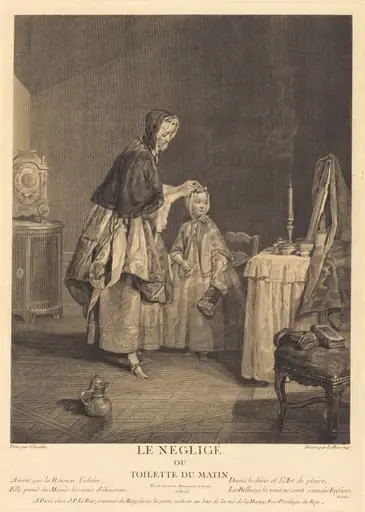 Le neglige, ou la toilette du matin
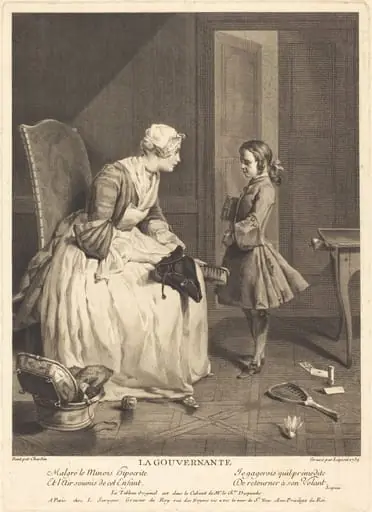 La Gouvernante
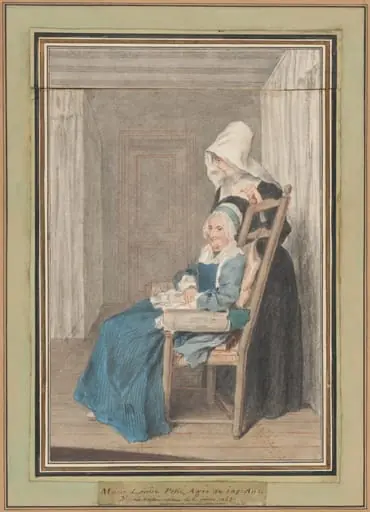 Marie Louise Petit at the Age of 105, with Her Young Nurse
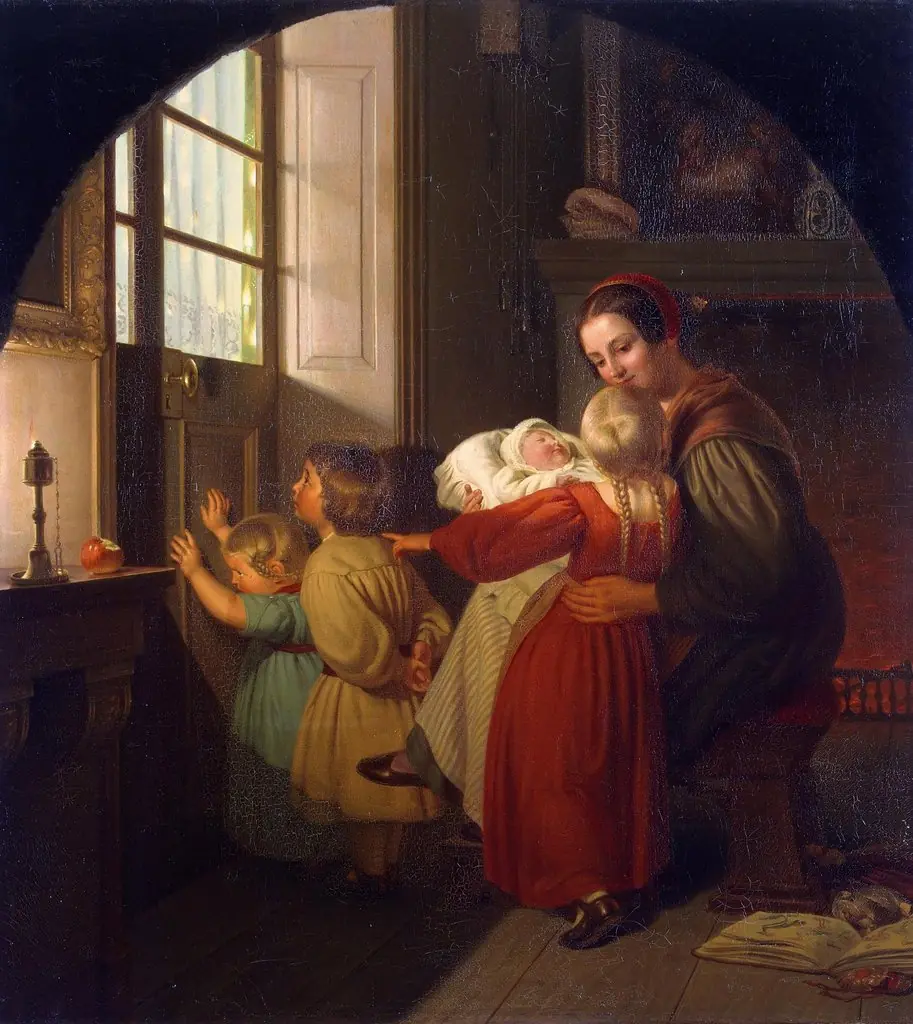 Children Expecting the Christmas Feast
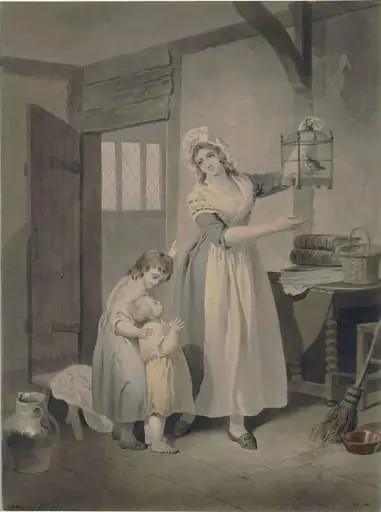 Interior with a woman showing a bird cage to two children
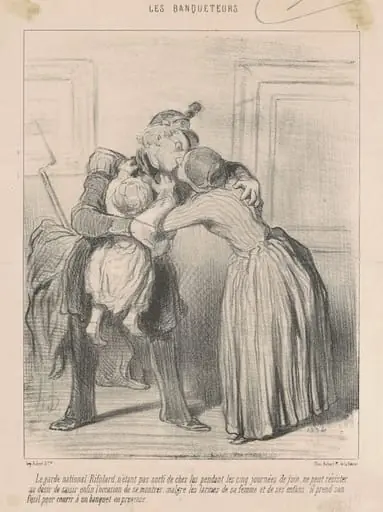 Le garde national Rifolard ...
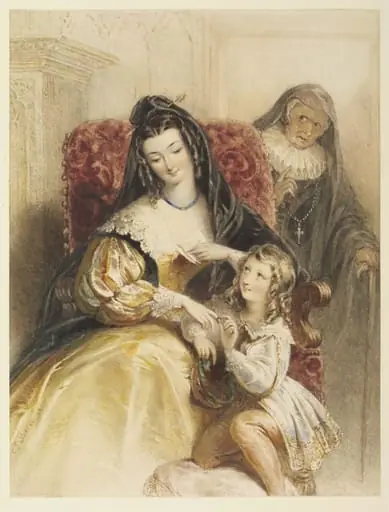 The Topaz
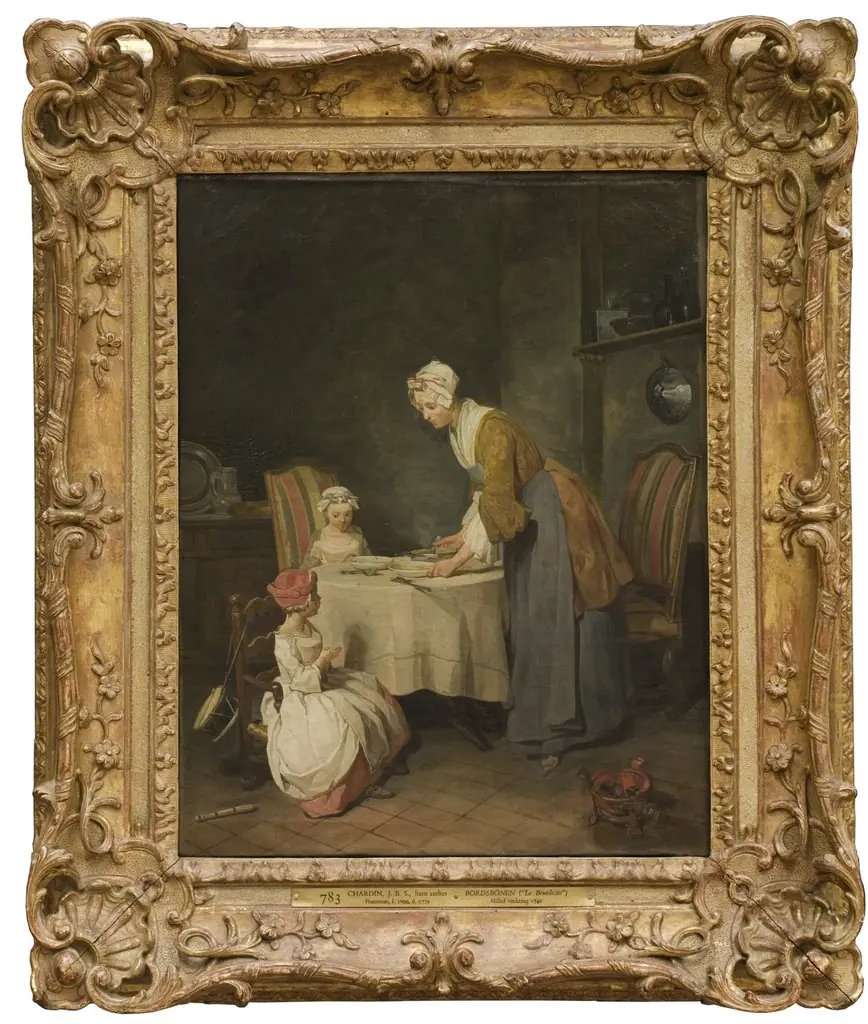 Saying Grace
 The Crocheting Lesson