Artwork
Marie Louise Petit at the Age of 105, with Her Young Nurse
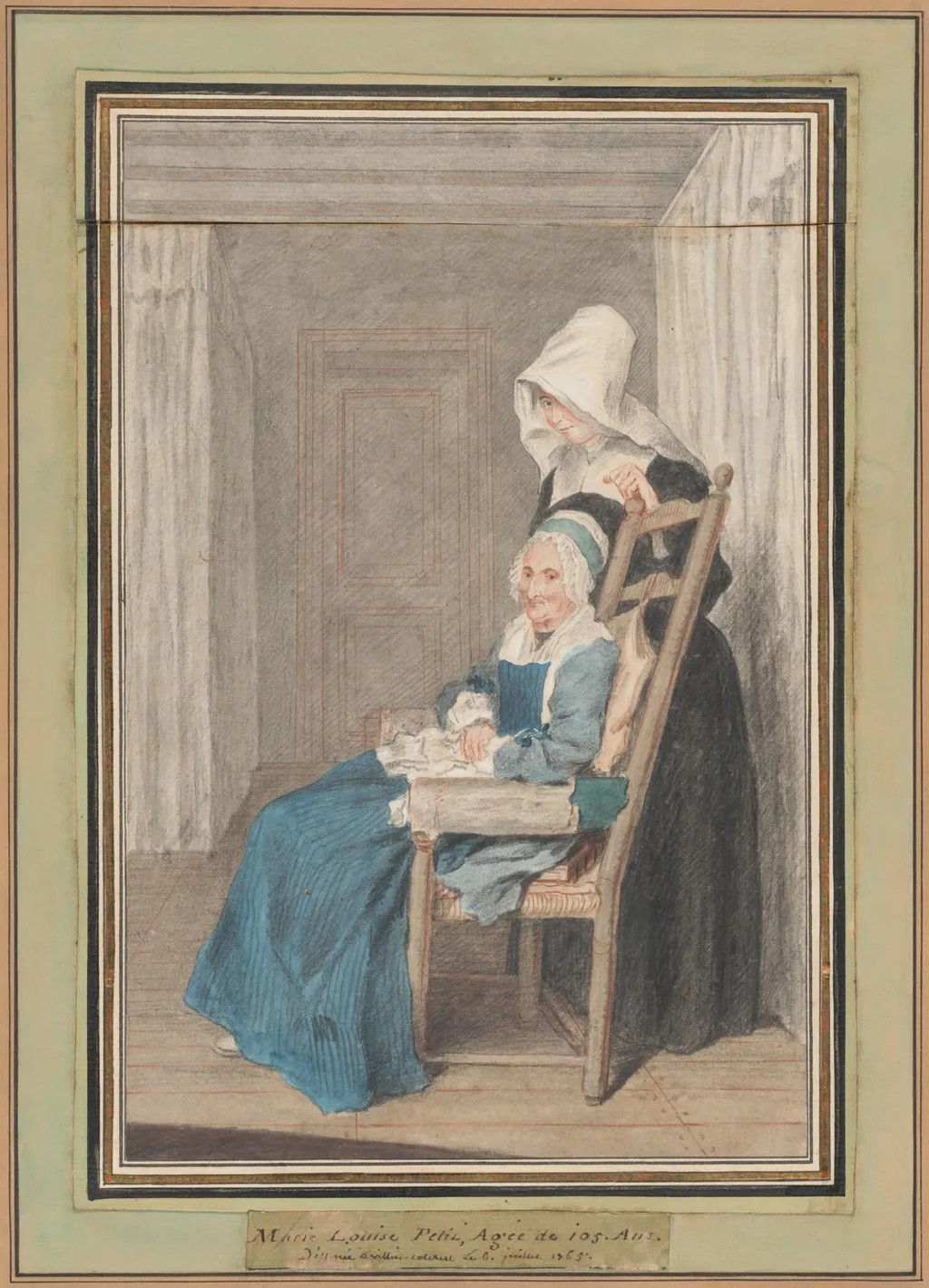
Marie Louise Petit at the Age of 105, with Her Young Nurse is a watercolor drawing by the Romanticist artist Carrogis, Louis de, called Carmontelle. It dates from 1765 and is held in the collection of the National Gallery of Art.
About this work
Overview
Created in 1765, this drawing by Louis de Carrogis, known as Carmontelle, records the centenarian Marie Louise Petit at the remarkable age of one hundred and five, seated beside a youthful attendant. Executed on cream‑coloured laid paper, the work combines watercolor with chalk underdrawings, presenting a quiet, intergenerational scene.
Subject & Meaning
The composition focuses on Petit, whose advanced years are rendered through fine lines that map the texture of her skin, while the nurse’s hand rests gently on her arm, suggesting care and continuity. The juxtaposition of the elderly figure and the young caregiver underscores themes of longevity, dependence, and the passage of time within a domestic setting.
Technique & Style
Carmontelle employed a layered approach: initial sketches in black and red chalk were later intensified with white chalk highlights, then sealed with watercolor washes. The paper, originally cut at the top and reattached, bears the subtle grain of laid stock, contributing to the drawing’s tactile quality and its delicate tonal range.
History & Provenance
The portrait was produced during the mid‑eighteenth century, a period when watercolor drawings were often used for personal documentation rather than public exhibition. Its survival on a repaired sheet suggests careful handling, and it remains attributed to Carmontelle, whose oeuvre includes numerous intimate studies of contemporary figures.
Context
In the Enlightenment era, interest in individual lives and naturalistic representation grew, especially among French aristocratic circles. Portraits such as this one served both as records of notable longevity and as reflections on the human condition, aligning with contemporary curiosities about age and health.
Legacy
While not widely reproduced, the drawing offers scholars a rare visual account of a centenarian in the 1700s, illustrating both the technical skill of Carmontelle and the period’s fascination with documenting extraordinary personal milestones.
Artist & collection

Artist
Carrogis, Louis de, called Carmontelle
Carrogis, Louis de, called Carmontelle (1760–1770) was an artist.

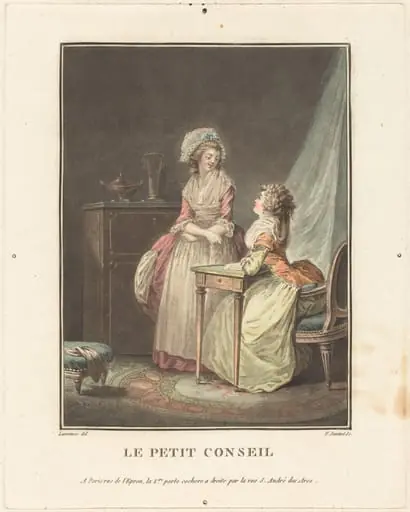 Le petit conseil
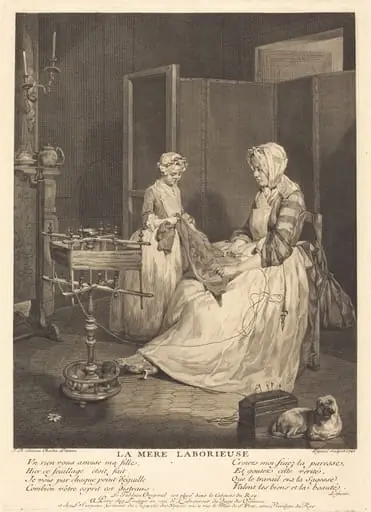 La Mere laborieuse
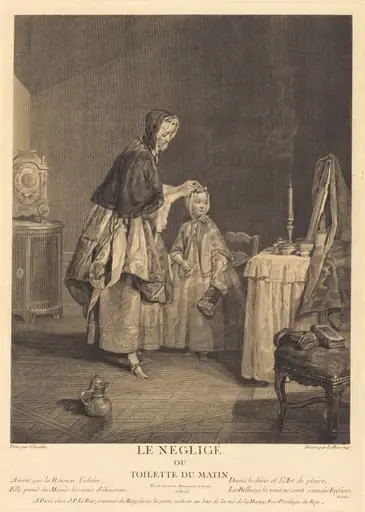 Le neglige, ou la toilette du matin
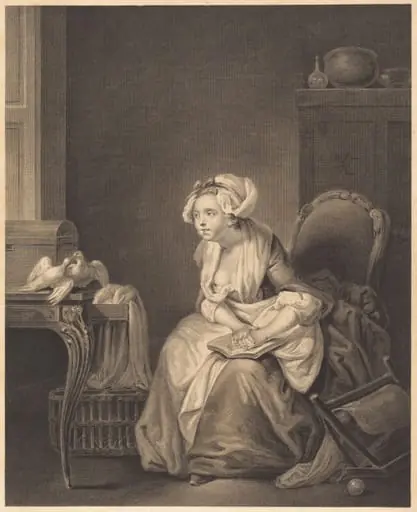 La premiere lecon d'amour
 Sketch for the oil painting 'Vaulting Ambitions'
 Elegant Couple Lunching in a Country Cottage
 Untitled
 Drinking a Toast
 The Indiscretion
 L'aveu difficile (The Difficult Confession)
 Interior with a woman showing a bird cage to two children
 Old Woman and Child