Artwork
The Topaz
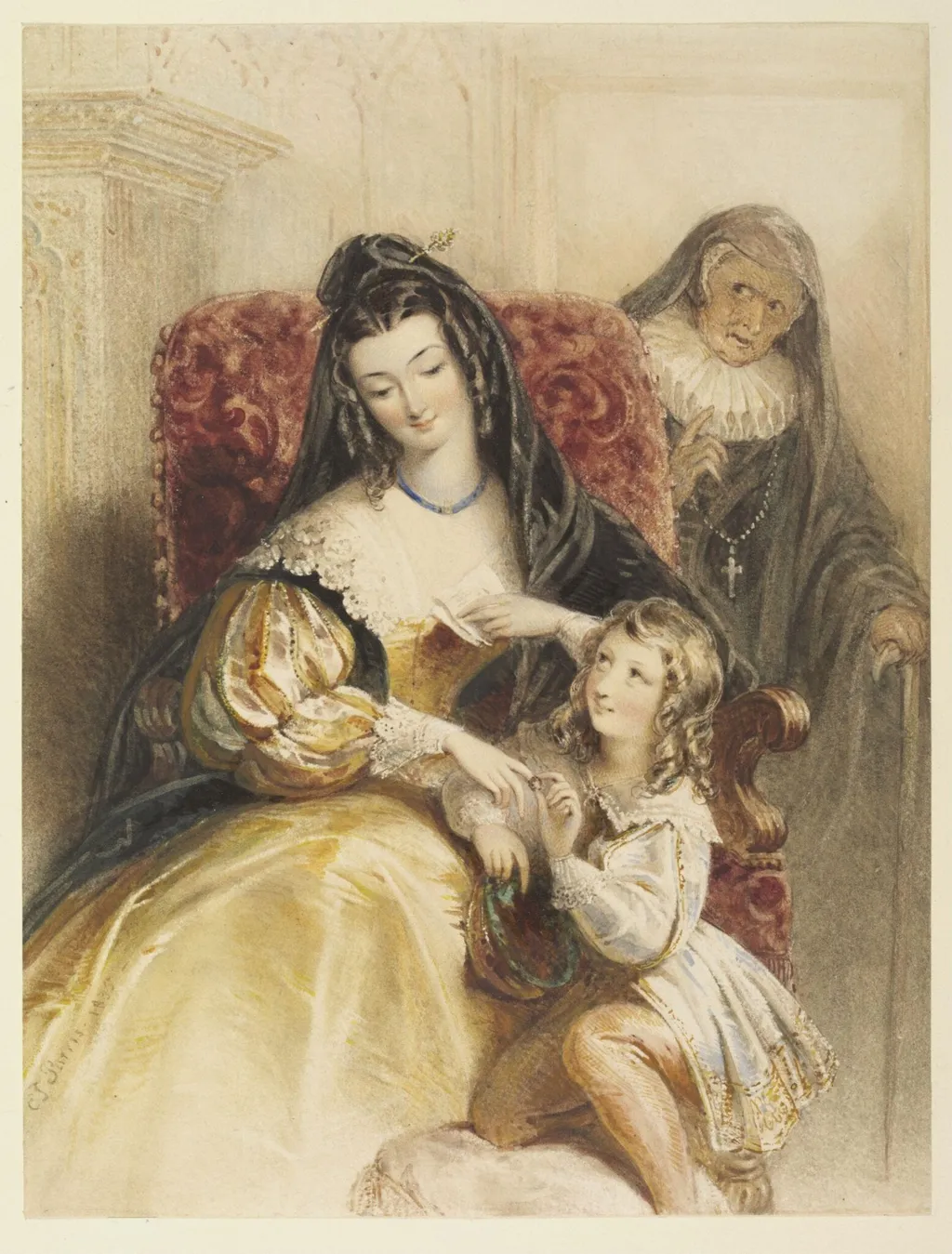
The Topaz is a watercolor work on paper by the British Romanticist artist Edmond Thomas Parris. It dates from 1835 and is held in the collection of the Victoria and Albert Museum.
About this work
Overview
Painted in 1835 by Edmond Thomas Parris, this watercolour depicts a quiet domestic moment involving three women. The scene unfolds in a softly rendered interior, where the interplay of light and muted tones creates a tender, intimate atmosphere. The medium’s transparency allows for subtle gradations, enhancing the emotional restraint of the moment without overt drama.
Subject & Meaning
An older woman, cloaked in dark fabric and holding a cross, observes silently, introducing a note of spiritual or moral reflection.
A seated woman, dressed in ornate attire, holds an open letter, suggesting personal correspondence. A young attendant kneels before her, gently removing a ring—possibly symbolizing the end of a relationship or a rite of passage. An older woman, cloaked in dark fabric and holding a cross, observes silently, introducing a note of spiritual or moral reflection. The gesture implies transition, loss, or resignation.
Technique & Style
Parris employed loose, fluid brushwork typical of watercolour’s spontaneity, avoiding rigid definition in favor of suggestive forms. Warm hues of red and gold dominate, but are deliberately faded, lending the scene a nostalgic quality. Light falls gently across faces and hands, modeling features without harsh contrast, reinforcing the quiet, introspective mood.
History & Provenance
Created in 1835, the work is one of several watercolours by Parris documenting private, emotionally charged moments. Its survival suggests it was kept within private collections, possibly among patrons interested in domestic narratives. No public exhibition record from the period is known, indicating it was likely intended for intimate viewing rather than public display.
Context
In the 1830s, watercolour was increasingly used for personal and literary subjects, moving beyond topographical use. Parris’s focus on emotional nuance aligns with Romantic-era interests in interiority and fleeting sentiment. The presence of a religious symbol amid a domestic scene reflects broader cultural tensions between secular emotion and spiritual duty in early Victorian society.
Legacy
Though not widely exhibited in its time, the painting exemplifies how watercolour could convey psychological depth with minimal means. Parris’s approach influenced later artists who favored intimate, emotionally resonant scenes over grand historical narratives. The work remains a quiet testament to the potential of the medium in capturing private human moments.
Artist & collection
Artist
Edmond Thomas Parris made detailed prints and watercolors in early-19th-century London.