Artwork
Seated Male Nude
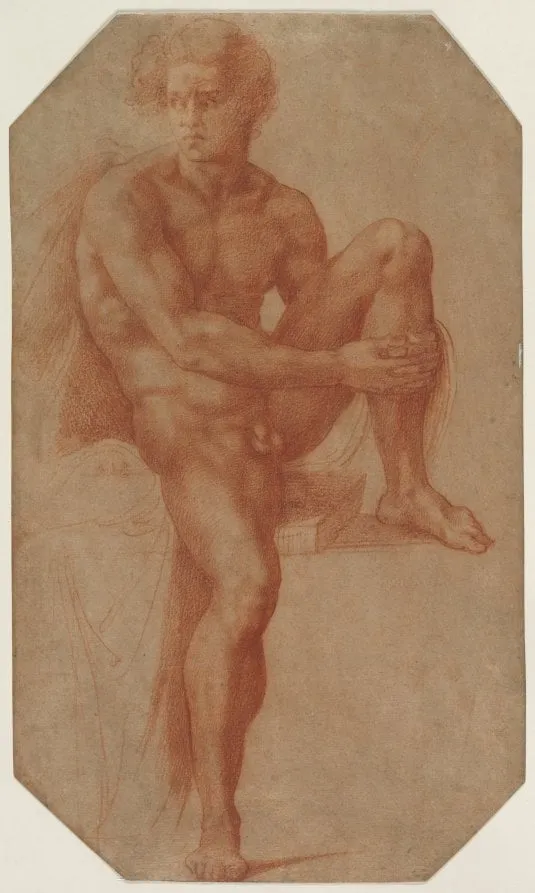
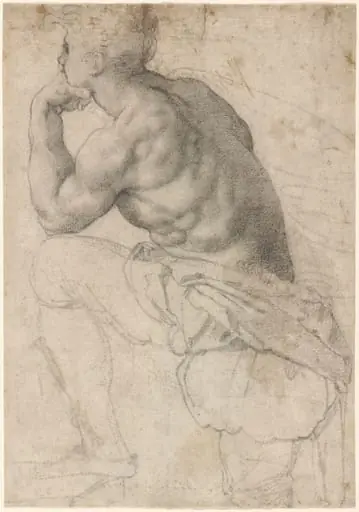
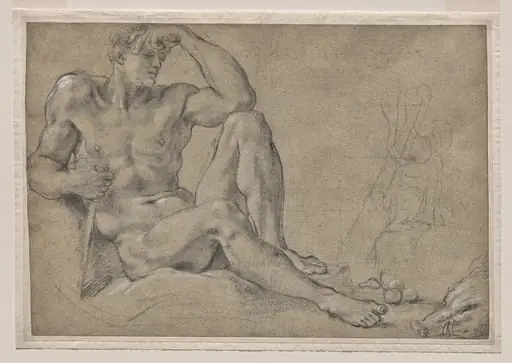
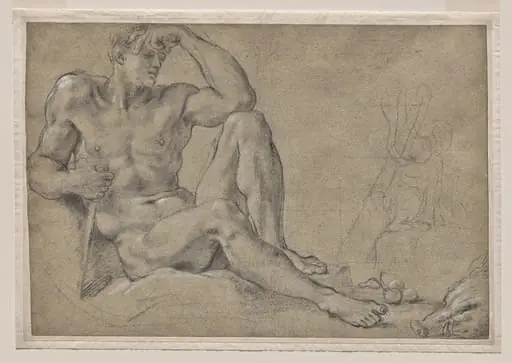
Seated Male Nude is a drawing by the Renaissance artist Baccio Bandinelli. It dates from 1518 and is held in the collection of the Cleveland Museum of Art.
About this work
Bandinelli drew this after seeing Michelangelo’s *ignudi*—the nude figures on the Sistine Chapel ceiling.
A muscular man sits on a block, twisting his body to show every curve of his back and arms. The lines are sharp in some places, smudged in others, like the artist changed his mind halfway.
Bandinelli drew this after seeing Michelangelo’s *ignudi*—the nude figures on the Sistine Chapel ceiling. He wanted to match their power but make it his own. The smudges soften the edges, almost like the body is still moving.
To see how Michelangelo did it, look up the subject *italy, 16th century*.
Overview
This red chalk drawing by Baccio Bandinelli presents a seated male nude, reworking a figure type from Michelangelo’s Sistine Chapel ceiling. Bandinelli engaged directly with Michelangelo’s legacy, using the same medium and anatomical focus to assert his own command of the human form. The drawing reflects a study rooted in observation, blending live modeling with classical reference.
Subject & Meaning
The figure, seated on a block and contorted in a twisting pose, echoes Michelangelo’s ignudi but is rendered with Bandinelli’s distinct emphasis on bulk and tension. Rather than idealized grace, the form conveys muscular density and physical presence. The pose suggests an attempt to capture movement mid-motion, grounding the figure in a tangible, almost tactile reality.
Technique & Style
Bandinelli employed red chalk with deliberate variation: sharp, precise lines define musculature, while smudged areas suggest shadow and fluidity. The contrast between defined contours and softened edges reveals a process of revision, as if the artist refined his vision through successive strokes. This technique mirrors Michelangelo’s approach but with a more tactile, less polished handling.
History & Provenance
Created in the early 16th century, the drawing emerged from a period of intense artistic rivalry in Florence. Bandinelli, a contemporary and rival of Michelangelo, produced this work as both homage and challenge. It likely served as a study to measure his skill against the dominant master, reflecting the competitive environment of Florentine draftsmanship at the time.
Context
In early 16th-century Italy, figure drawing was central to artistic training and reputation. Michelangelo’s ignudi had redefined the male nude as a vehicle for anatomical mastery and classical allusion. Bandinelli’s drawing responds to this shift, situating himself within a tradition he sought to join—not merely imitate—by adapting its forms to his own visual language.
Legacy
The drawing stands as evidence of how artists engaged with dominant models without surrendering individuality. Bandinelli’s reinterpretation of the ignudo reveals a methodical, self-aware practice: one that absorbed influence while asserting technical autonomy. It remains a quiet testament to the role of drawing as both learning tool and artistic assertion.
Artist & collection
Artist
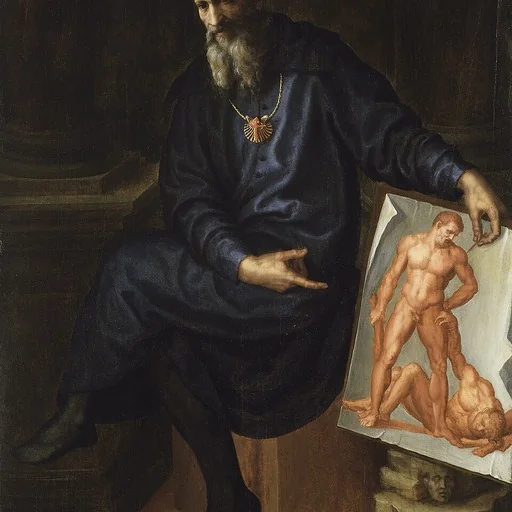
Baccio Bandinelli (also called Bartolomeo Brandini; 12 November 1493 – shortly before 7 February 1560) was an Italian Renaissance sculptor, draughtsman, and painter.