Artwork
Seated Male Nude with Raised Right Hand
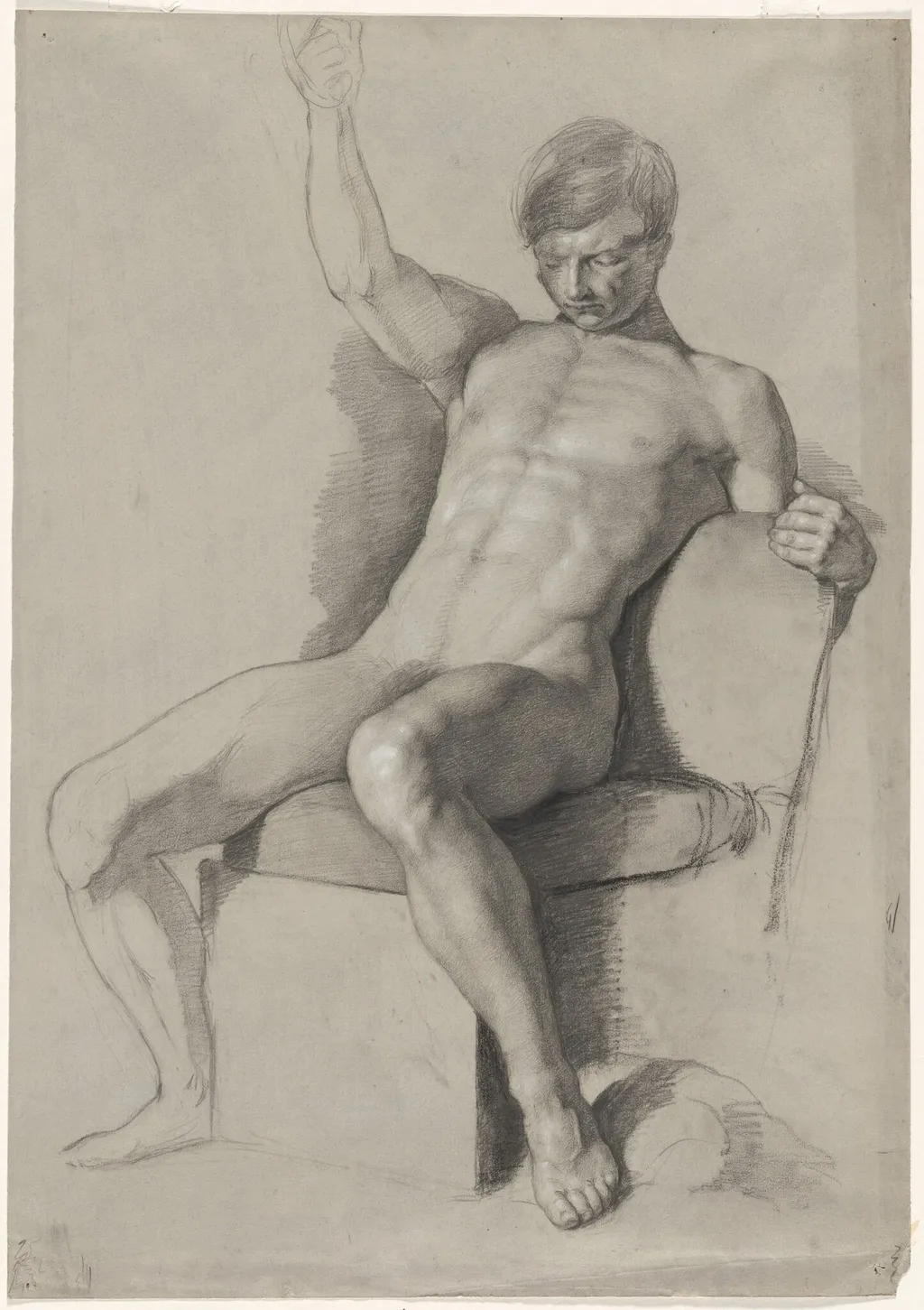
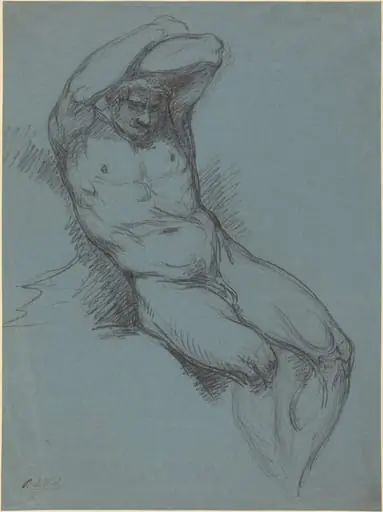
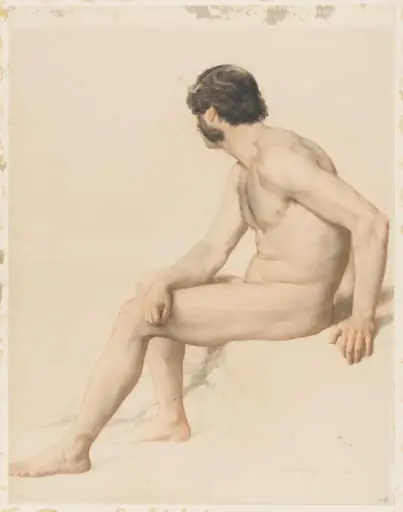
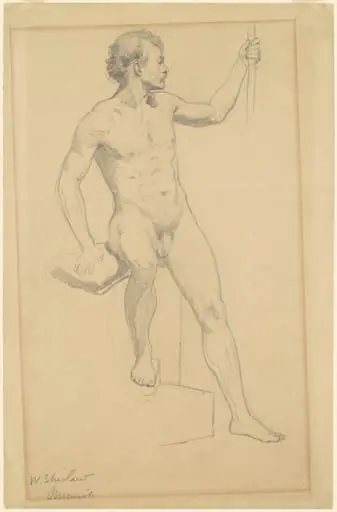
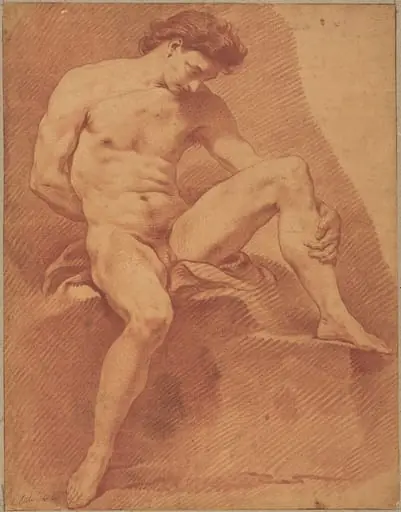
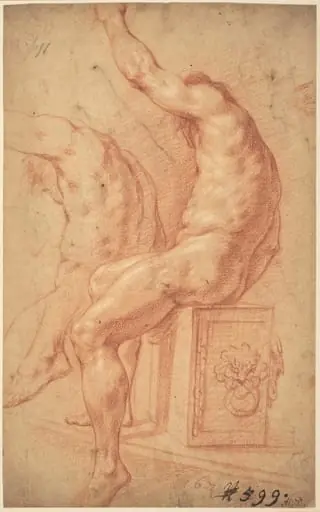
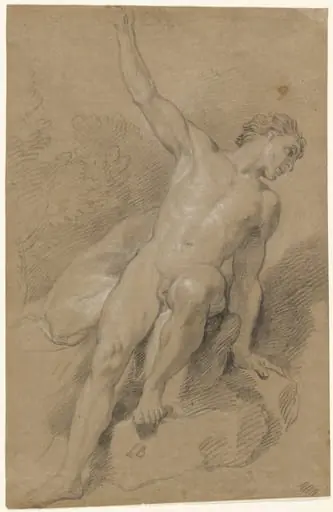
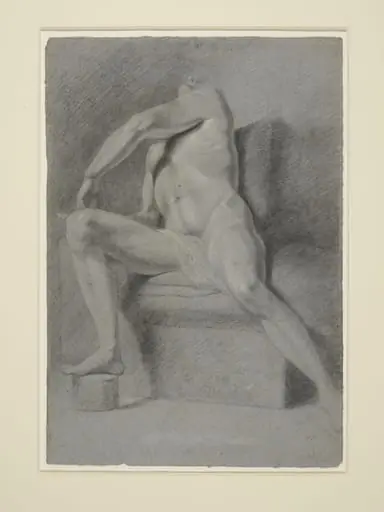
Seated Male Nude with Raised Right Hand is a graphite drawing by the Romanticist artist William Linnell. It dates from 1848 and is held in the collection of the National Gallery of Art.
About this work
Overview
Its unfinished appearance suggests it was made as a preparatory sketch rather than a finished piece, emphasizing immediacy over polish.
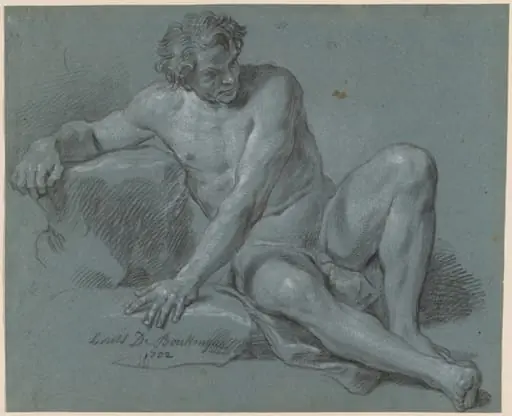
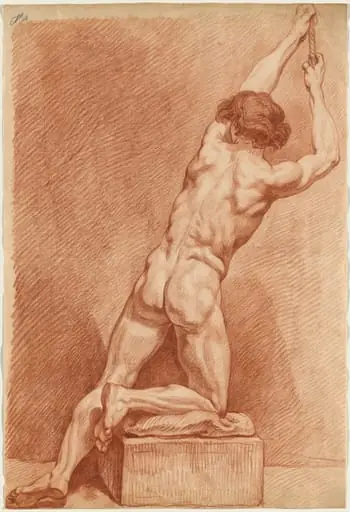
Created around 1848, this drawing by William Linnell depicts a seated male nude in a candid, observational mode. Executed in graphite, black chalk, and white chalk on gray paper, the work reflects the artist’s focus on anatomical study. Its unfinished appearance suggests it was made as a preparatory sketch rather than a finished piece, emphasizing immediacy over polish. The drawing is held in the National Gallery of Art’s collection in Washington, D.C.
Subject & Meaning
The figure sits with legs parted, left arm resting on a bent knee, and right arm raised with an open hand—suggesting motion or reach without narrative context. The pose is neither mythological nor allegorical but appears grounded in direct observation. Linnell’s interest lies in the body’s structure and balance, not storytelling. The gesture may imply physical exertion or a moment of pause, leaving interpretation open to the viewer’s perception.
Technique & Style
Linnell employed loose, rapid strokes in graphite and chalk to define musculature and volume. The gray paper serves as a mid-tone, with black chalk deepening shadows and white chalk lifting highlights to model form. The technique is economical, avoiding fine detail in favor of dynamic contrast and gesture. The sketchy quality reveals the artist’s process, capturing the body’s weight and tension without idealization.
History & Provenance
William Linnell, born in London in 1826, trained under his father, the painter John Linnell, and developed a practice centered on figure studies. This drawing aligns with his earlier work, such as the 1840 study of *Smugglerius*, which referenced classical sculpture through anatomical dissection. The drawing entered the National Gallery of Art’s collection as part of a broader acquisition of 19th-century British drawings, reflecting institutional interest in academic study practices.
Context
In mid-19th-century Britain, life drawing was central to artistic training, particularly within academies and private studios. Linnell’s work reflects this tradition, where sketches of the nude served as exercises in observation and technique. Unlike grand historical paintings, such studies were often private, intended for the artist’s own development. His focus on the unadorned body aligns with broader trends in British art that valued empirical study over romanticized ideals.
Legacy
Linnell’s drawings, including this one, remain valuable for understanding the pedagogical practices of Victorian artists. They document a shift toward direct observation and anatomical accuracy in British art education. Though not widely exhibited during his lifetime, his studies have since been recognized for their clarity and restraint, offering insight into the quiet, methodical work underpinning more public artistic achievements.
Artist & collection
Artist
Willian Linnell (1826 – 1906) was a British painter and draftsmen. London born, he was the son of the painter John Linnell (1792-1882). Linnell is particularly noted for his 1840 drawing of Smugglerius, which is an…