Artwork
Mies Marrakechista
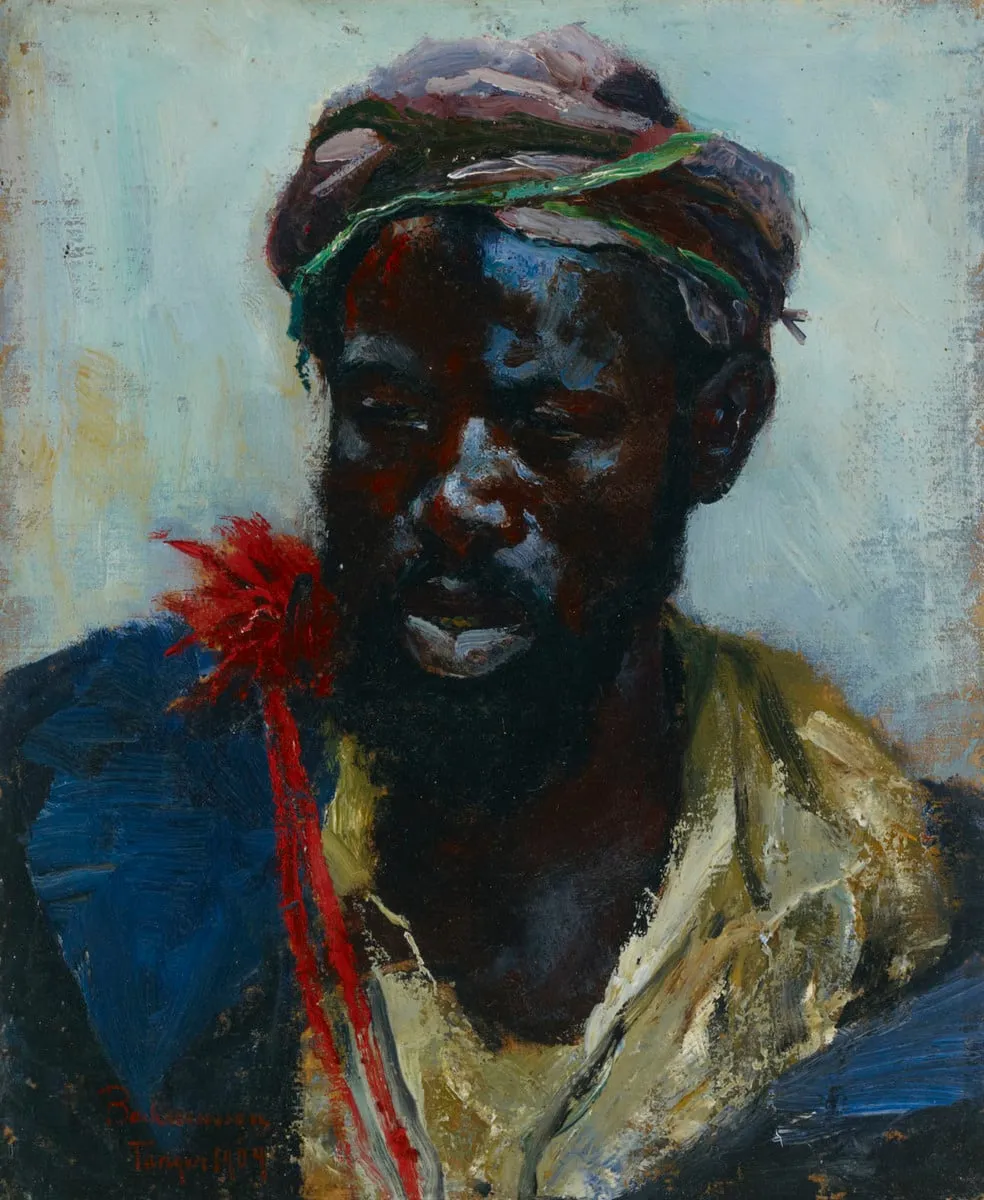
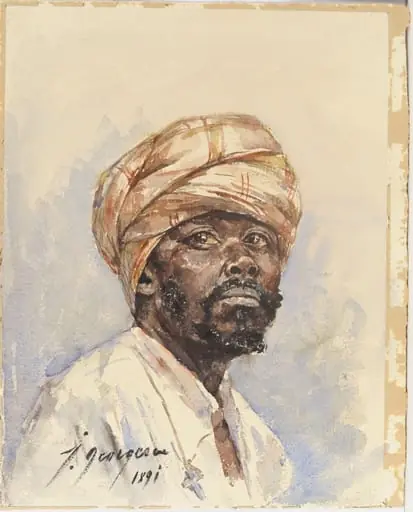
Mies Marrakechista is an unspecified painting by Hugo Backmansson. It is held in the collection of the Finnish National Gallery. This portrait depicts a figure with a red-and-green headwrap and a single bright red feather behind the ear.
About this work
Overview
The paint is applied thickly and unevenly, particularly on the clothing and skin, giving the surface a raw, tactile quality.
This portrait depicts a figure with a red-and-green headwrap and a single bright red feather behind the ear. The face is rendered in dark tones with a subtle, quiet smile, while the background is a soft, pale blue. The paint is applied thickly and unevenly, particularly on the clothing and skin, giving the surface a raw, tactile quality. The overall impression is of a work completed rapidly, with deliberate areas left unrefined.
Subject & Meaning
The subject’s identity remains unspecified, but their attire and adornment suggest cultural or ceremonial significance. The feather, vivid against the muted palette, may symbolize status, ritual, or personal expression. The serious yet slightly smiling expression invites contemplation rather than narrative, avoiding overt emotion in favor of quiet dignity. The ambiguity of context leaves interpretation open to the viewer.
Technique & Style
Thick, textured brushstrokes dominate the composition, especially in the depiction of fabric and skin, using impasto to create physical depth. The paint is applied with urgency, leaving visible strokes and uneven edges. The pale blue background contrasts with the saturated reds and dark tones of the figure, enhancing the feather’s prominence. The unfinished quality is not accidental but integral to the work’s expressive intent.
History & Provenance
The painting’s origin and early ownership are undocumented. It was likely created in a context where rapid, expressive mark-making was valued over polished finish. No exhibition history or collector records are publicly available, and its current location is not confirmed. The work remains in private hands or an unlisted collection, with limited scholarly attention.
Context
The style aligns with early 20th-century movements that embraced rawness and immediacy, such as Expressionism or certain post-impressionist practices. The use of bold color and visible brushwork reflects a broader interest in emotional authenticity over realism. Cultural references in the attire may point to North African or diasporic traditions, though no specific regional link is established in available records.
Legacy
Though not widely exhibited or reproduced, the painting contributes to discussions on portraiture that prioritize gesture and materiality over idealization. Its unfinished state has influenced later artists exploring the aesthetic of incompleteness. It remains a quiet example of how personal expression can emerge through deliberate imperfection rather than technical refinement.
Artist & collection
Artist
A painter from Finland’s late 19th century, Hugo Backmansson left self-portraits and scenes of daily life in oils and metalwork.