Artwork
Adam and Eve
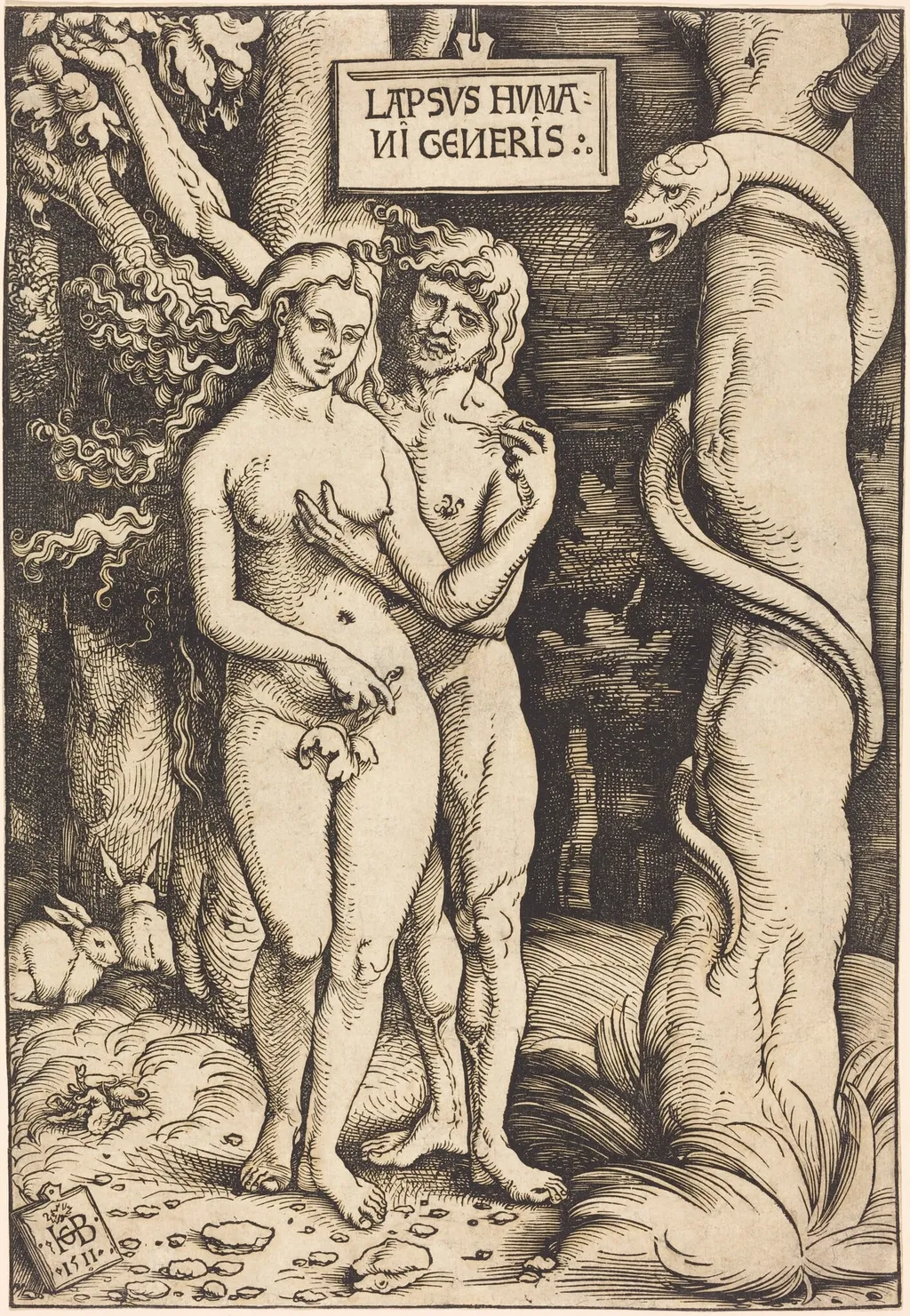
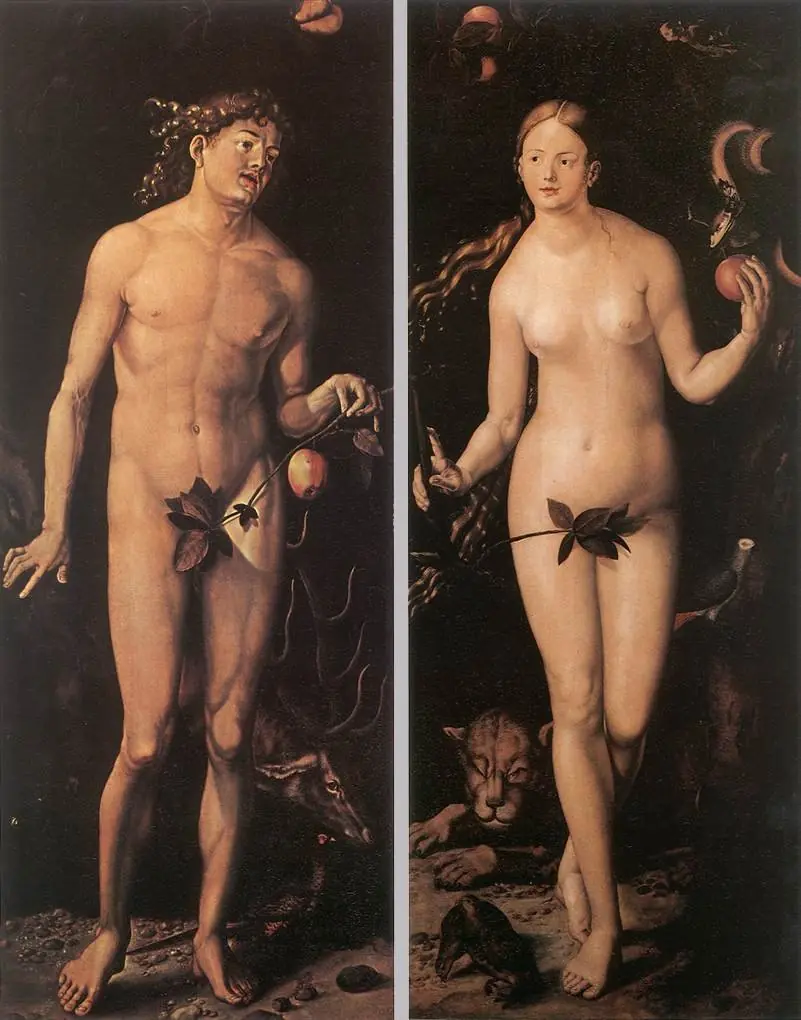
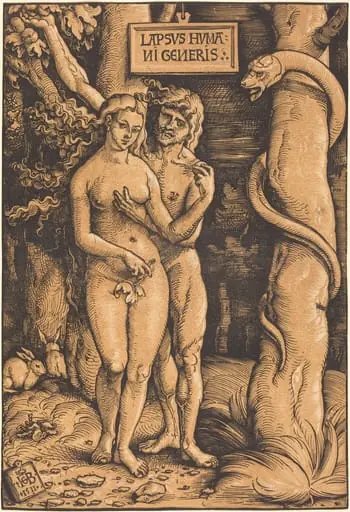
Adam and Eve is an ink print by the Renaissance artist Hans Baldung Grien. It dates from 1511 and is held in the collection of the National Gallery of Art.
About this work
Overview
Adam and Eve is a 1511 chiaroscuro woodcut by Hans Baldung Grien, a German Renaissance and Mannerist artist. The work showcases his technical versatility across mediums.
Subject & Meaning
The print illustrates the biblical narrative of Adam and Eve, set amidst a dense, shadowed forest. Key elements include the figures' nudity, a serpent coiled around a tree, and a lurking dark figure, symbolizing the Fall of Man. The Latin title 'Lapsus Huma Ni Generis' (The Fall of the Human Race) reinforces this theme.
Technique & Style
Executed in chiaroscuro, the woodcut employs deep light-and-dark contrasts to create drama. Baldung's style, influenced by his mentor Albrecht Dürer, emphasizes expressive detail, though this particular work is rendered in black and white.
History & Provenance
Created in 1511, Adam and Eve reflects Baldung's diverse output, which spanned religious subjects, portraits, and decorative arts, highlighting his adaptability as an artist.
Context
As a student of Dürer, Baldung's work sits within the broader German Renaissance and emerging Mannerist movements, characterized by innovative printmaking techniques and emotive storytelling.
Legacy
While specific lasting impacts of Adam and Eve are not detailed, the piece contributes to Baldung's reputation for technical skill and imaginative detail across various artistic disciplines.
Artist & collection
Artist
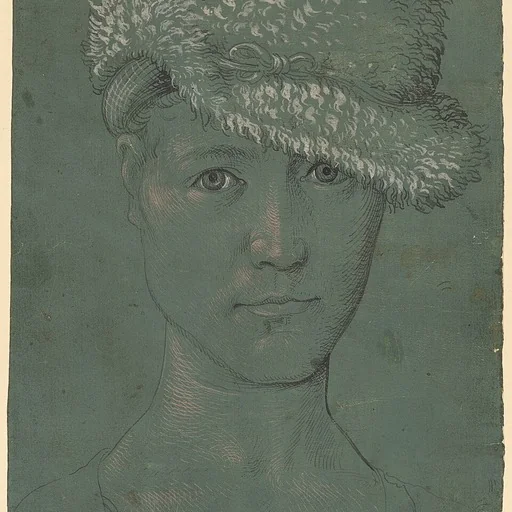
Hans Baldung (1484 or 1485 – September 1545), called Hans Baldung Grien, (being an early nickname, because of his predilection for the colour green), was a painter, printer, engraver, draftsman, and stained glass…