Artwork
Adam and Eve
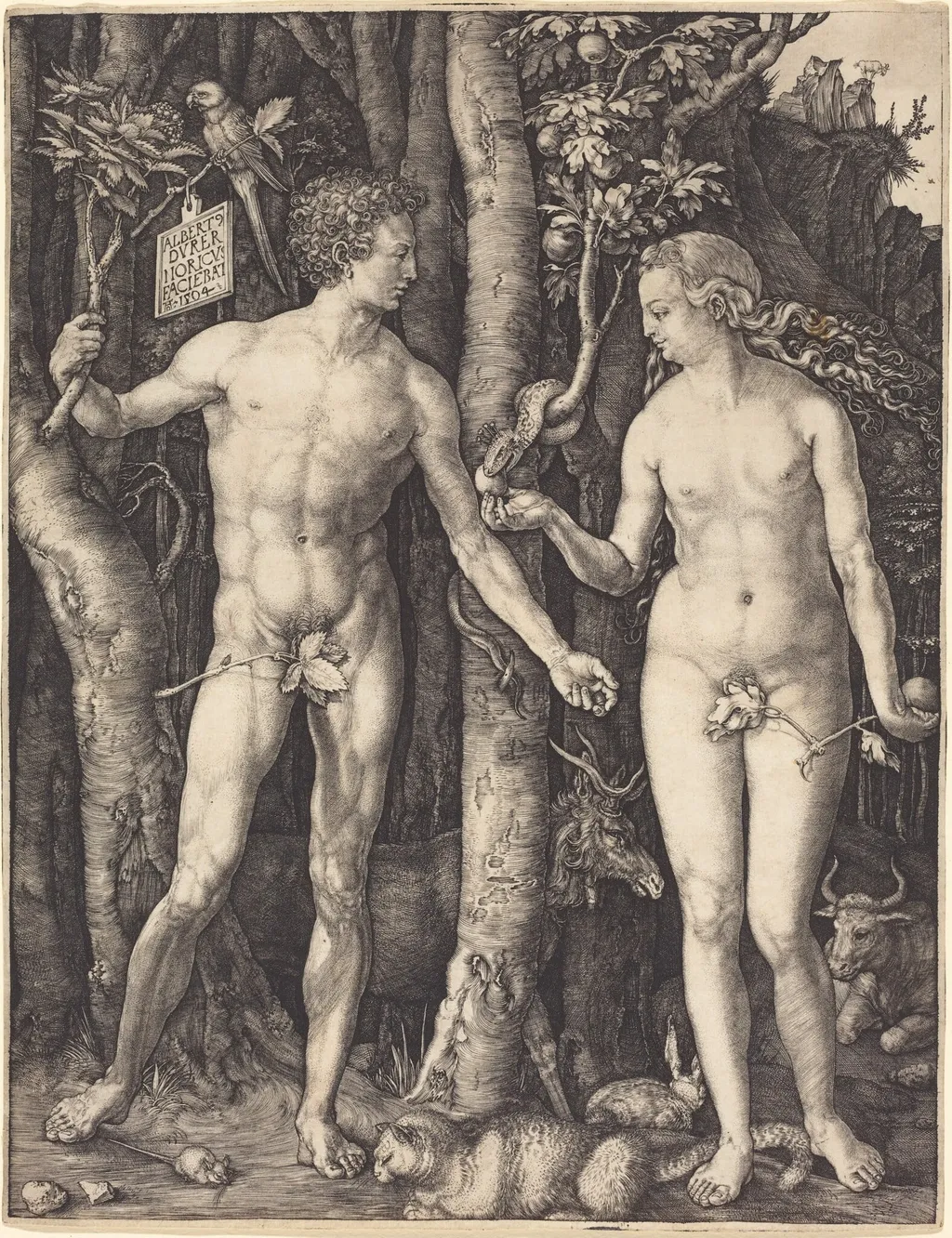
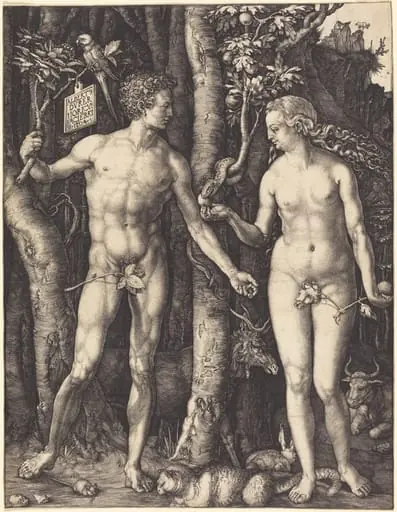
Adam and Eve is an ink print by the Northern Renaissance artist Albrecht Dürer. It dates from 1504 and is held in the collection of the National Gallery of Art.
About this work
Overview
Albrecht Dürer’s 1504 engraving titled Adam and Eve presents the biblical pair in a natural setting, rendered on laid paper. The work resides in the collection of the National Gallery of Art in Washington, where it exemplifies Dürer’s early mastery of printmaking and his engagement with humanist themes.
Subject & Meaning
The image shows the first humans standing unclothed amid a gently rolling landscape. Adam rests his weight against a tree trunk, while Eve stands nearby, both appearing at ease despite their nakedness. The composition emphasizes the innocence and vulnerability of the figures before the fall, inviting contemplation of their mythic status.
Technique & Style
Executed with fine engraving lines, Dürer builds form through delicate hatching and cross‑hatching, giving the skin, foliage and bark a tactile quality. Simple geometric shapes outline the bodies, while subtle gradations of line create a convincing sense of volume and spatial recession, reflecting the artist’s rigorous approach to detail.
History & Provenance
Created in 1504, the print entered the National Gallery of Art’s holdings in the twentieth century, joining a broader corpus of Dürer’s early prints. Its presence in a major public institution underscores its role in tracing the development of Northern Renaissance print culture.
Own this work as a print
Artist & collection
Artist
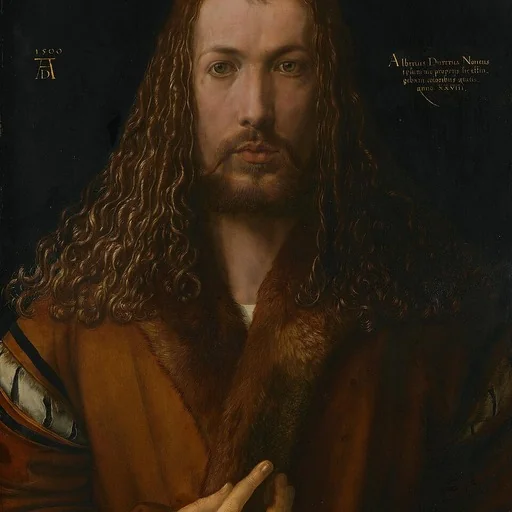
Albrecht Dürer spent his life in Nuremberg, a busy German city where artists traded prints like currency.

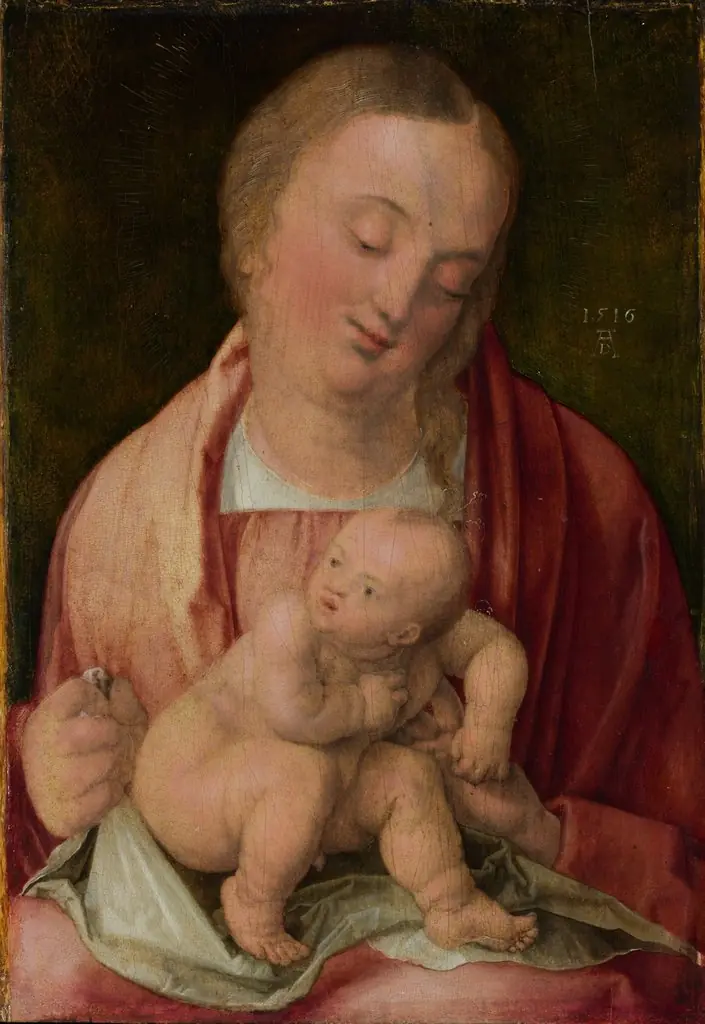
![Madonna and Child [obverse], by Albrecht Dürer](https://artifactworldgallery.com/img/albrecht-durer--madonna-and-child-obverse--d7b8ebf05d22ebe5-w320.webp)
![Lot and His Daughters [reverse], by Albrecht Dürer](https://artifactworldgallery.com/img/albrecht-durer--lot-and-his-daughters-reverse--b4ebf9b282faa17a-w320.webp)