Artwork
Christ Nailed to the Cross
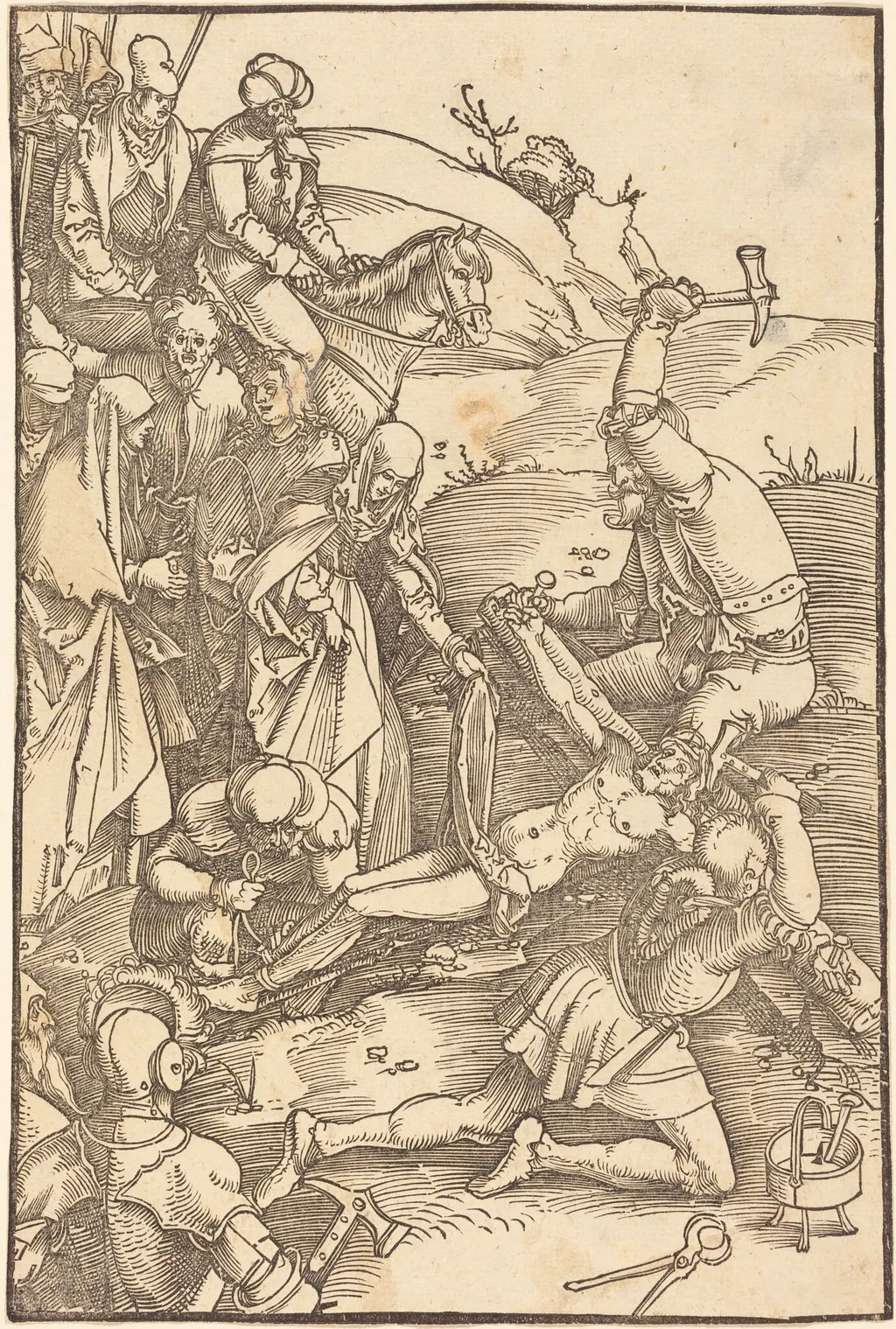
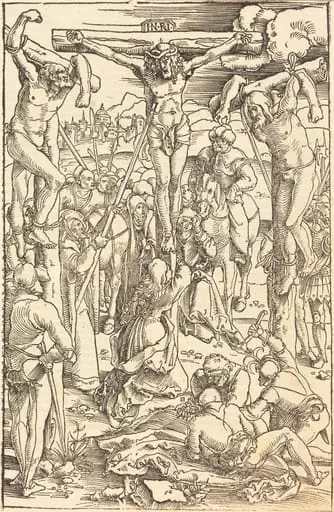
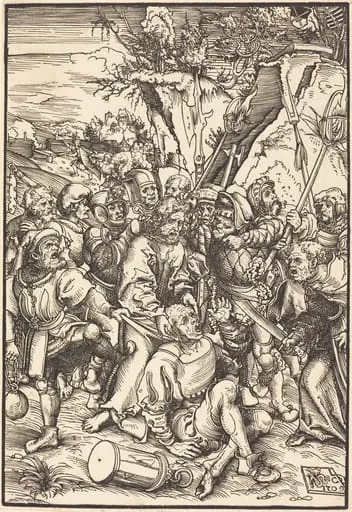
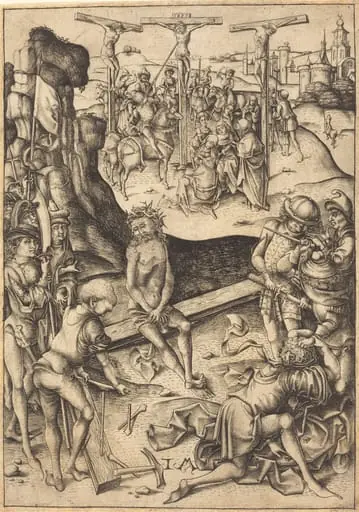
Christ Nailed to the Cross is an ink print by the Renaissance artist Hans Baldung Grien. It dates from 1507 and is held in the collection of the National Gallery of Art.
About this work
Overview
It reflects his apprenticeship under Albrecht Dürer and his evolving style, which incorporated heightened emotional expression alongside technical precision.
Hans Baldung Grien created this 1507 woodcut as part of his engagement with religious subjects during the German Renaissance. Executed in black ink on paper, the print demonstrates his command of the woodcut medium, combining precise line work with dynamic composition. It reflects his apprenticeship under Albrecht Dürer and his evolving style, which incorporated heightened emotional expression alongside technical precision.
Subject & Meaning
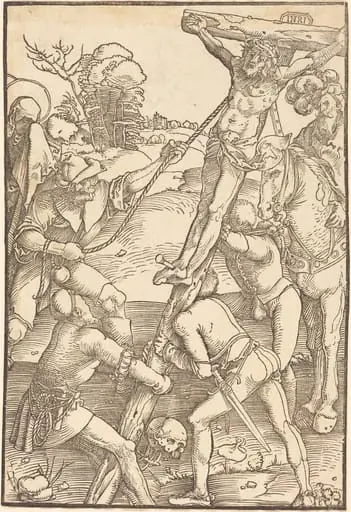
The scene captures the moment of Christ’s crucifixion, focusing on the physical labor of nailing him to the cross. Figures strain with exertion, their faces twisted in concentration, while bystanders observe from behind. The emphasis on human effort underscores the bodily suffering of Christ, aligning with devotional traditions that invited viewers to contemplate the physical reality of the Passion.
Technique & Style
Baldung employed bold, incised lines to define forms and create stark contrasts between light and shadow. The woodcut’s texture is achieved through rhythmic hatching and varied line weight, giving depth to the figures and drapery. Unlike earlier prints, this work avoids idealized forms, instead favoring muscular tension and expressive gestures that anticipate Mannerist tendencies in its emotional intensity.
History & Provenance
Produced in 1507, the woodcut emerged during a period when printed images were widely distributed across Europe, serving both devotional and educational purposes. While its early ownership is undocumented, it was likely circulated among religious communities and collectors in southwestern Germany. The print survives in multiple institutional collections, attesting to its enduring presence in Renaissance print culture.
Context
In early 16th-century Germany, religious imagery was increasingly shaped by humanist thought and a growing interest in emotional realism. Baldung’s work responded to this shift, moving beyond traditional iconography to depict sacred events with psychological immediacy. His prints, alongside those of Dürer, helped redefine how biblical narratives were visually communicated to a broad public.
Legacy
This woodcut exemplifies Baldung’s role in expanding the expressive potential of printmaking beyond mere illustration. His fusion of technical mastery with psychological depth influenced later Northern artists, particularly in their treatment of suffering and human emotion. Though less celebrated than Dürer, Baldung’s prints remain significant for their boldness and narrative force within the Renaissance print tradition.
Artist & collection
Artist
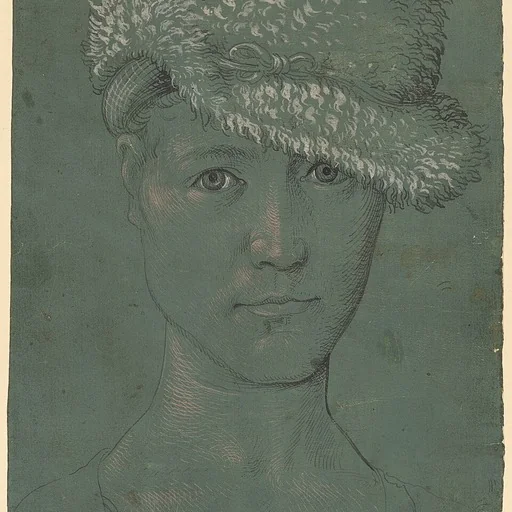
Hans Baldung (1484 or 1485 – September 1545), called Hans Baldung Grien, (being an early nickname, because of his predilection for the colour green), was a painter, printer, engraver, draftsman, and stained glass…