Artwork
The Betrayal
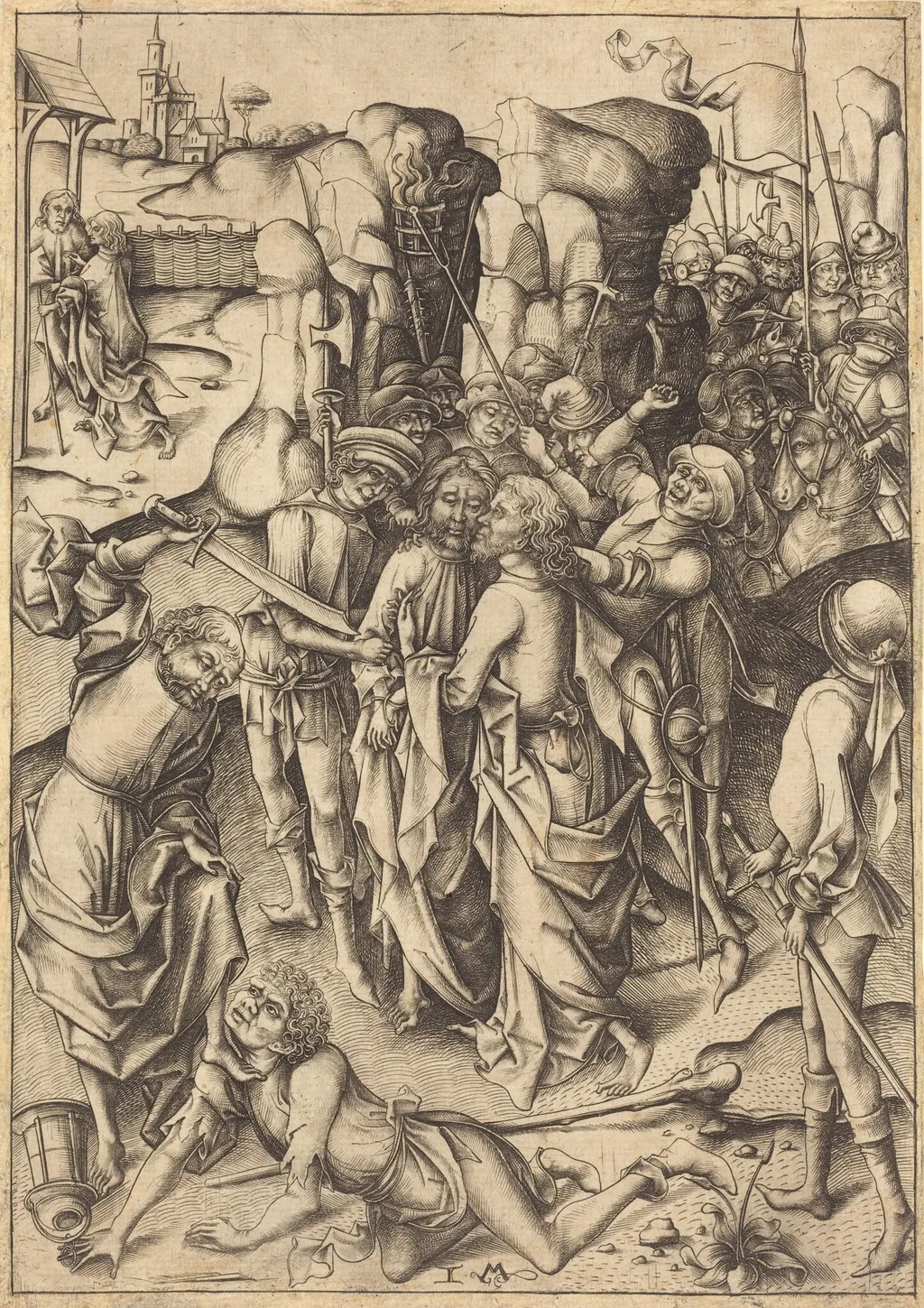
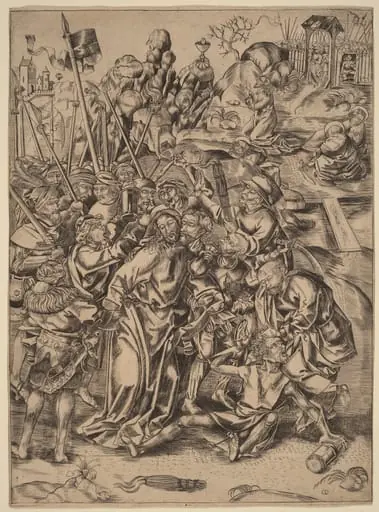
The Betrayal is an ink print by the Renaissance artist Israhel van Meckenem. It dates from 1480 and is held in the collection of the National Gallery of Art.
About this work
Overview
He was among the most productive engravers of the 15th century, often reinterpreting existing compositions to meet growing demand for religious imagery.
Israhel van Meckenem, a German engraver and goldsmith active between 1465 and 1503, produced *The Betrayal* circa 1480 as part of his extensive output of over six hundred prints. He was among the most productive engravers of the 15th century, often reinterpreting existing compositions to meet growing demand for religious imagery. This work exemplifies his technical precision and his role in disseminating visual narratives through print.
Subject & Meaning
The scene illustrates the moment of Christ’s arrest, as described in the Gospels. A central figure, likely Judas, clasps Christ in a gesture of betrayal, while others in the crowd react with urgency—some brandishing weapons, others reaching out in confusion. The inclusion of a child among the figures may allude to innocence caught in violence, deepening the emotional weight of the moment without overt symbolism.
Technique & Style
Van Meckenem employed fine, tightly packed cross-hatching to model form and depth, creating a dense, atmospheric texture. The lines converge to suggest shadow and volume, particularly in the figures’ drapery and the layered architecture behind them. His precise control of the burin allowed for intricate detail across a crowded composition, balancing chaos with orderly structure through rhythmic line work.
History & Provenance
The print circulated widely in late 15th-century Europe, reflecting the commercial success of van Meckenem’s workshop. Though no specific early ownership records survive, its survival in multiple institutional collections suggests it was reproduced and collected during the early decades of print distribution. Its survival underscores the role of engraving in the spread of religious imagery before the Reformation.
Context
Produced in the decades before the invention of movable type’s widespread impact on visual culture, this engraving reflects the demand for portable, reproducible religious scenes. Van Meckenem’s workshop operated in a network of artists and merchants who adapted Italian and Netherlandish models for German audiences, making biblical stories accessible beyond manuscript culture.
Legacy
Van Meckenem’s prolific output helped standardize engraving techniques across Northern Europe. While later artists surpassed him in originality, his methodical approach to composition and line influenced generations of printmakers. *The Betrayal* remains a representative example of how technical skill and repetition shaped the visual landscape of late medieval devotion.
Artist & collection
Artist
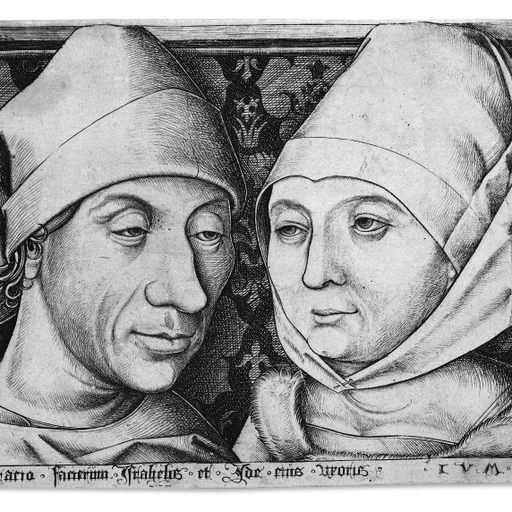
Israhel van Meckenem (c. 1445 – 10 November 1503), also known as Israhel van Meckenem the Younger, was a German printmaker and goldsmith, perhaps of a Dutch family origin. He was the most prolific engraver of the…

 The Betrayal
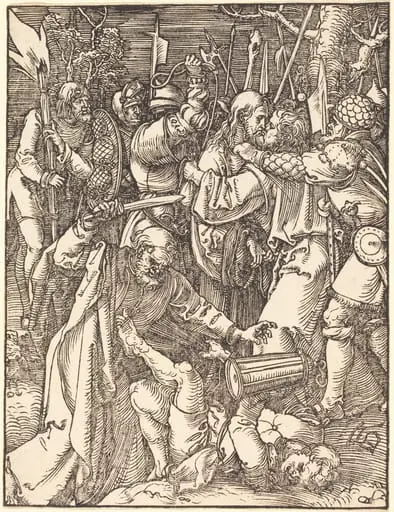 The Betrayal of Christ
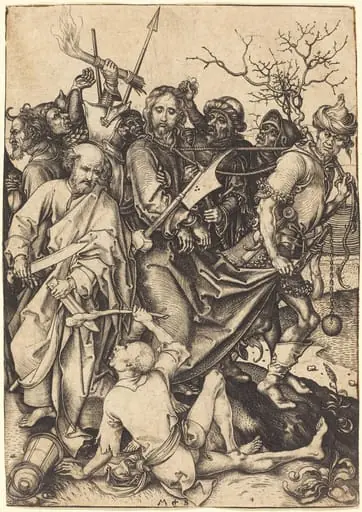 The Betrayal and Capture of Christ
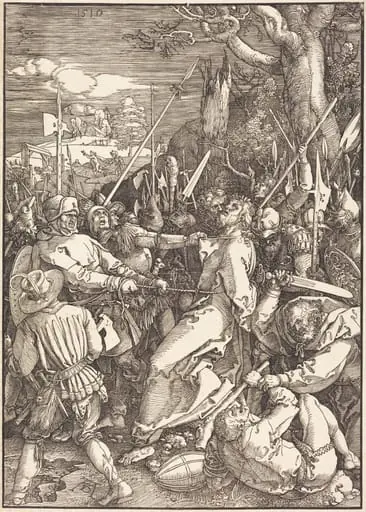 The Betrayal of Christ
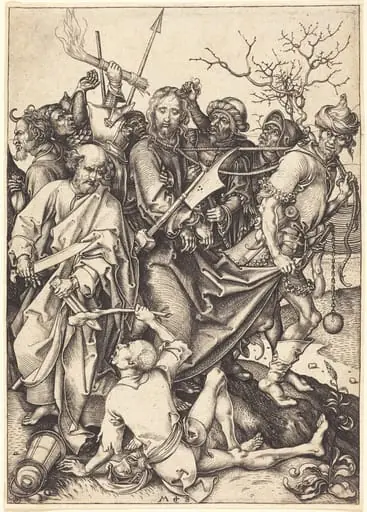 The Betrayal and Capture of Christ
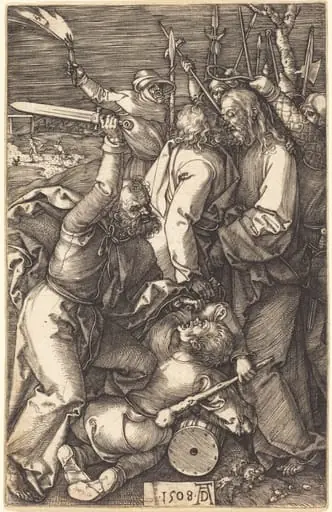 The Betrayal of Christ
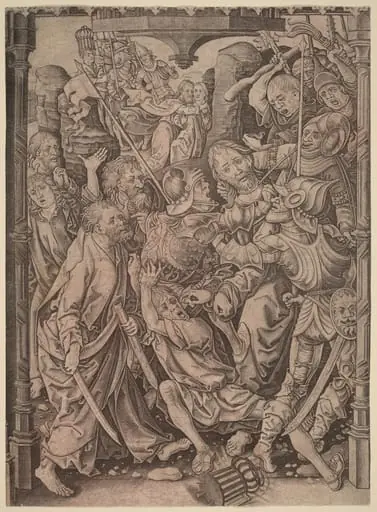 The Betrayal of Christ
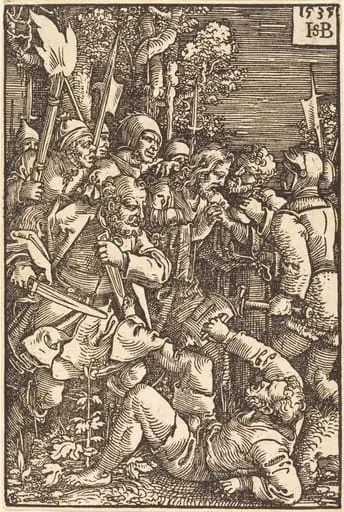 The Betrayal of Christ
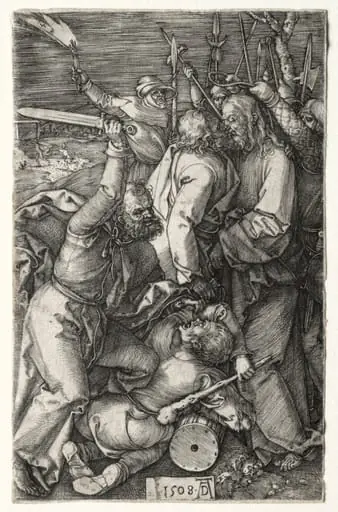 The Betrayal of Christ by Judas
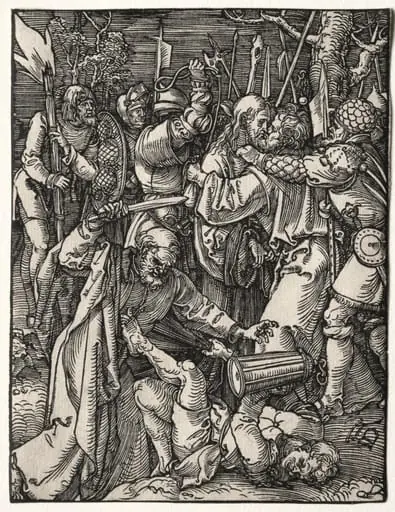 The Small Passion: The Betrayal of Christ
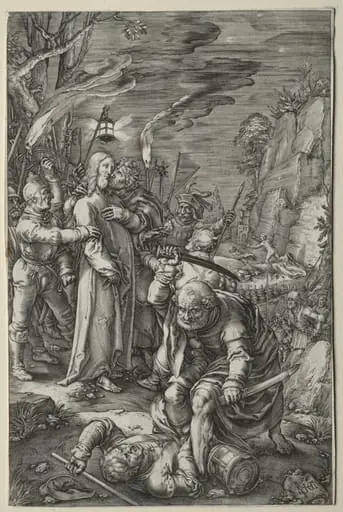 The Passion: The Betrayal of Christ
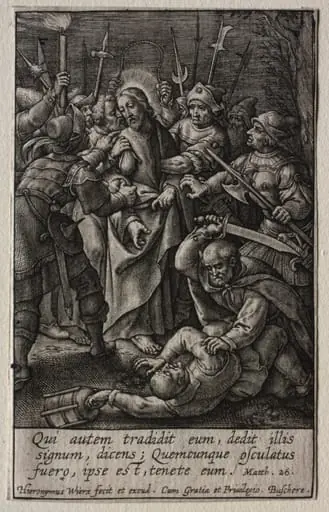 The Passion: The Betrayal of Christ