Artwork
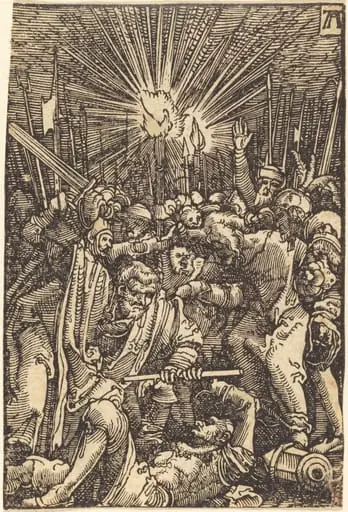
The Betrayal and Capture of Christ
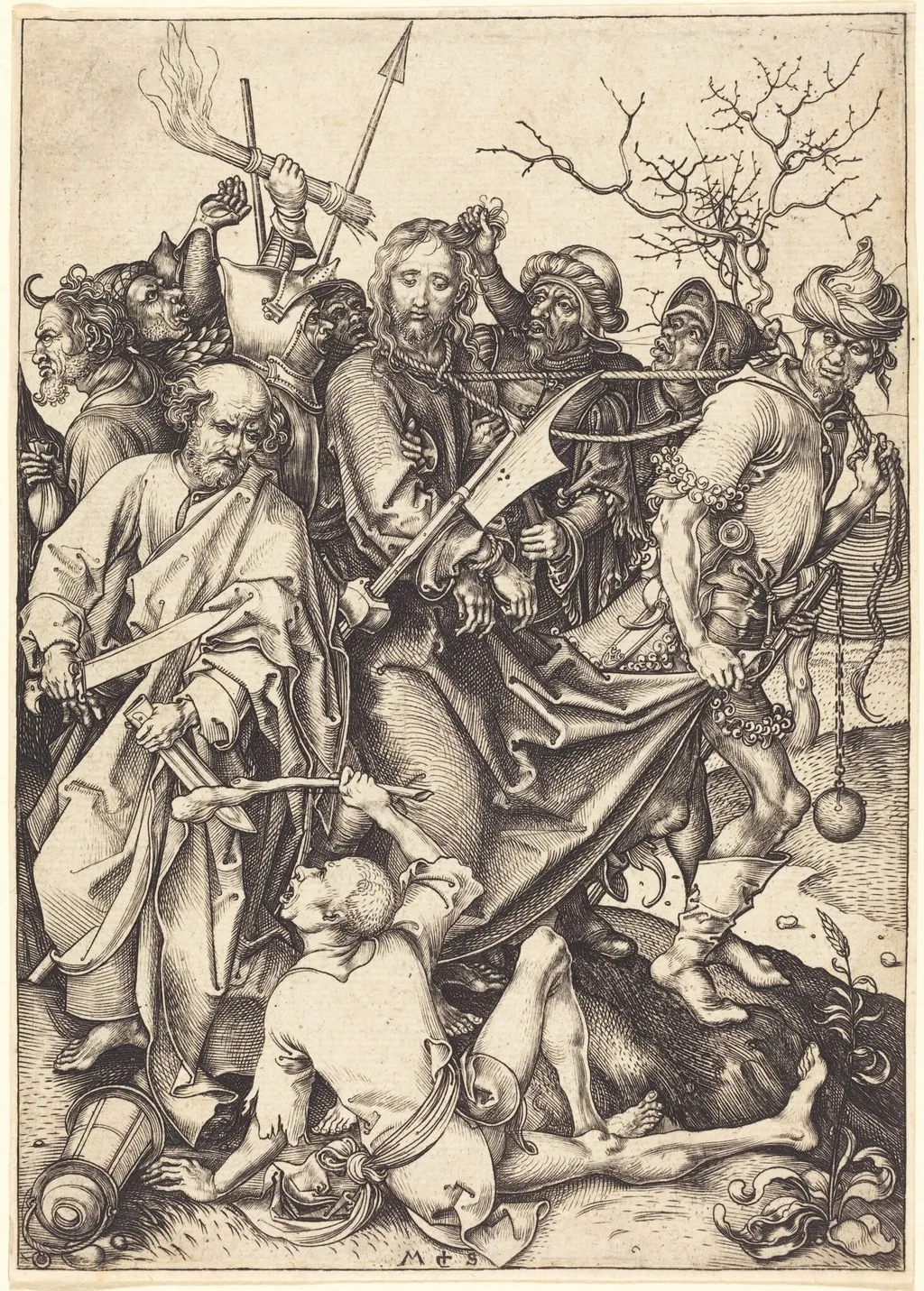
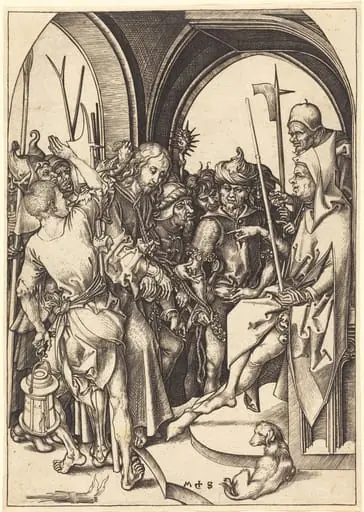
The Betrayal and Capture of Christ is an ink print by the Renaissance artist Martin Schongauer. It dates from 1480 and is held in the collection of the Städel Museum.
About this work
Overview
Schongauer, active in Colmar and Breisach, was among the most influential printmakers in Europe before Dürer, whose own work was shaped by his precedents.
Created around 1480, this engraving on laid paper by Martin Schongauer captures the arrest of Christ in the Garden of Gethsemane. As one of 116 surviving engravings by the artist, it exemplifies the technical sophistication of 15th-century Northern European printmaking. Schongauer, active in Colmar and Breisach, was among the most influential printmakers in Europe before Dürer, whose own work was shaped by his precedents.
Subject & Meaning
The scene depicts Judas identifying Christ with a kiss as armed men close in, fulfilling the biblical account of betrayal. Christ, calm and upward-gazing, contrasts with the agitated figures surrounding him—some clutching weapons, others grasping his robe. The moment conveys both divine resignation and human violence, emphasizing spiritual tension amid physical chaos without overt symbolism.
Technique & Style
Schongauer employed fine, controlled lines to model form, texture, and shadow with unprecedented precision for a print. Fabric folds, armor surfaces, and the gnarled tree are rendered through dense hatching and cross-hatching, creating depth and realism. The swirling background lines enhance motion, while the bare tree and uneven ground anchor the scene in a tangible, earthly space.
History & Provenance
The print was made in Schongauer’s workshop in Alsace, likely for distribution among clergy and wealthy patrons. Though no early ownership records survive, its survival in multiple impressions suggests wide circulation. Dürer later acquired Schongauer’s engravings, acknowledging his influence, and helped preserve his legacy after his death in 1491.
Context
In late 15th-century Europe, religious imagery was central to devotional practice, and prints offered affordable access to sacred scenes. Schongauer’s work emerged alongside rising literacy and demand for personal piety objects. His engravings bridged the gap between manuscript illumination and the emerging print culture, setting standards for detail and emotional nuance.
Legacy
Schongauer’s technical innovations in engraving influenced generations of Northern artists, most notably Dürer, who studied and copied his plates. His ability to convey psychological intensity through line work redefined the expressive potential of the medium. Though overshadowed later by Dürer’s fame, Schongauer’s prints remained foundational to the evolution of printmaking as a serious art form.
Artist & collection

Artist
Martin Schongauer, also known as Martin Schön or Hübsch Martin by his contemporaries, was an Alsatian engraver and painter.

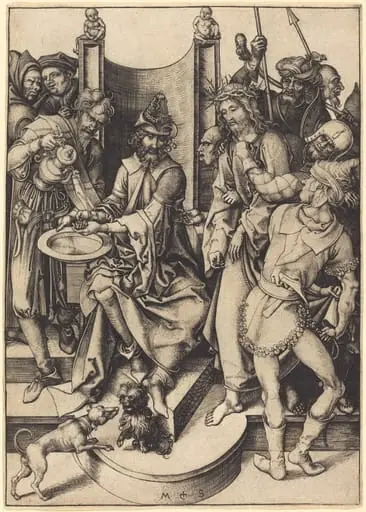
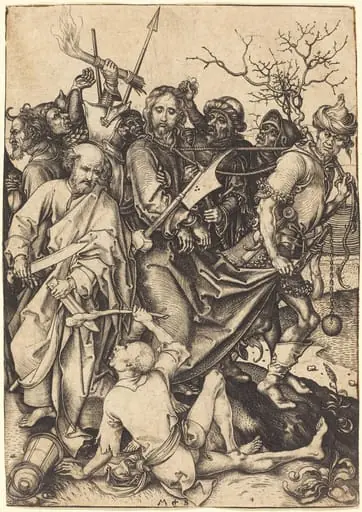 The Betrayal and Capture of Christ
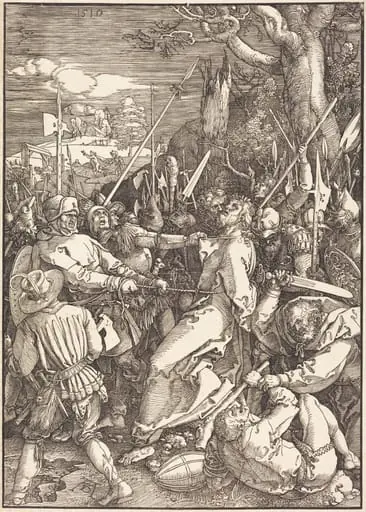 The Betrayal of Christ
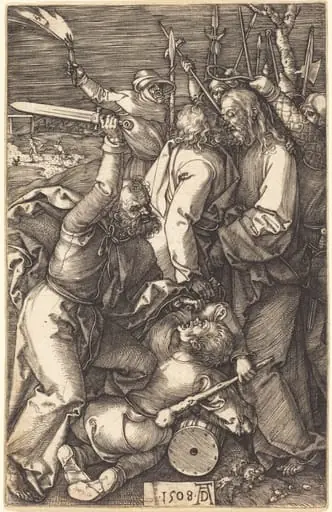 The Betrayal of Christ
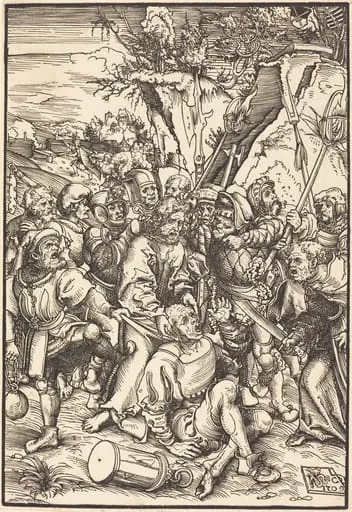 Christ Taken Captive
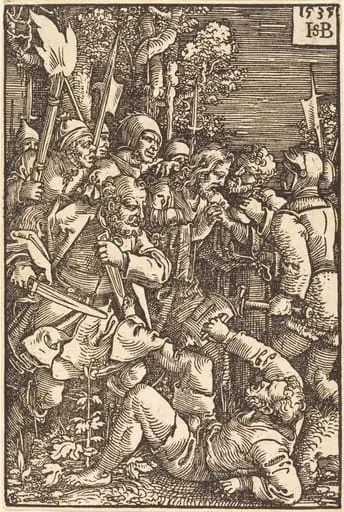 The Betrayal of Christ
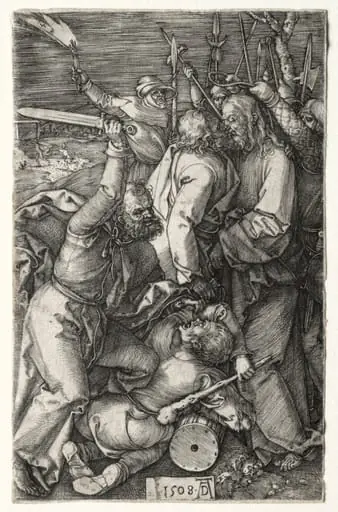 The Betrayal of Christ by Judas
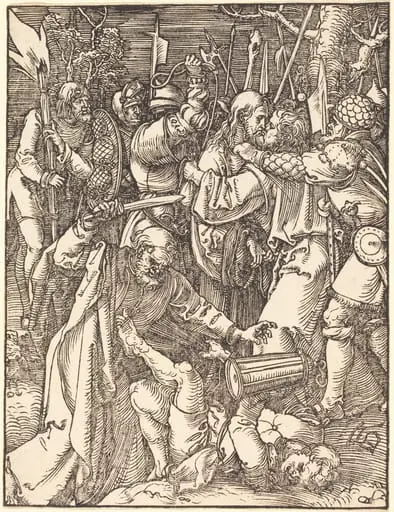 The Betrayal of Christ
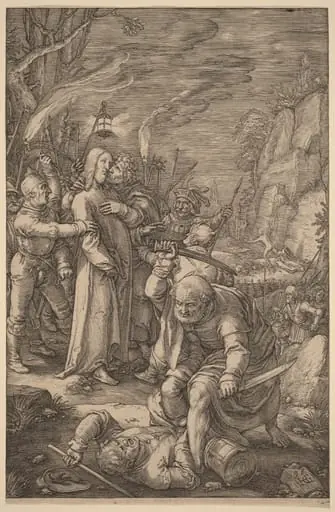 Christ Taken Captive
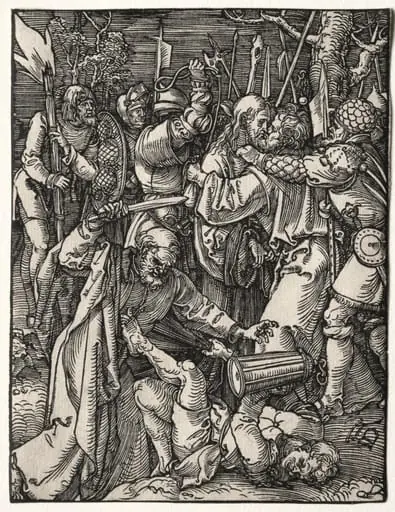 The Small Passion: The Betrayal of Christ
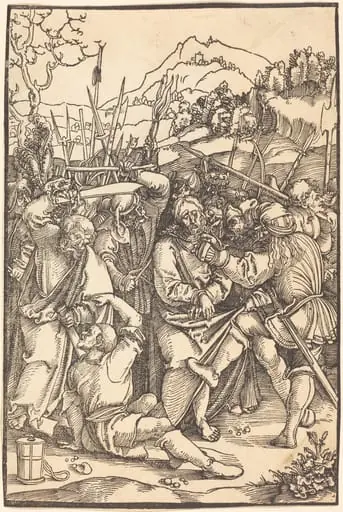 Christ Taken Prisoner
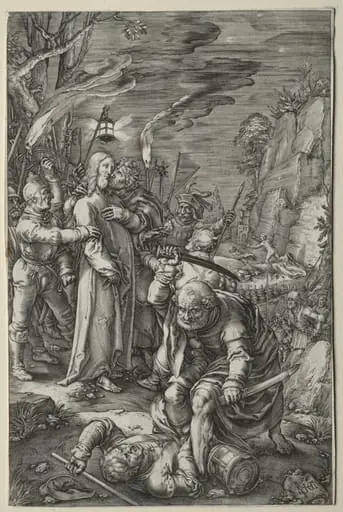 The Passion: The Betrayal of Christ
 The Arrest of Christ