Artwork
Saint Andrew
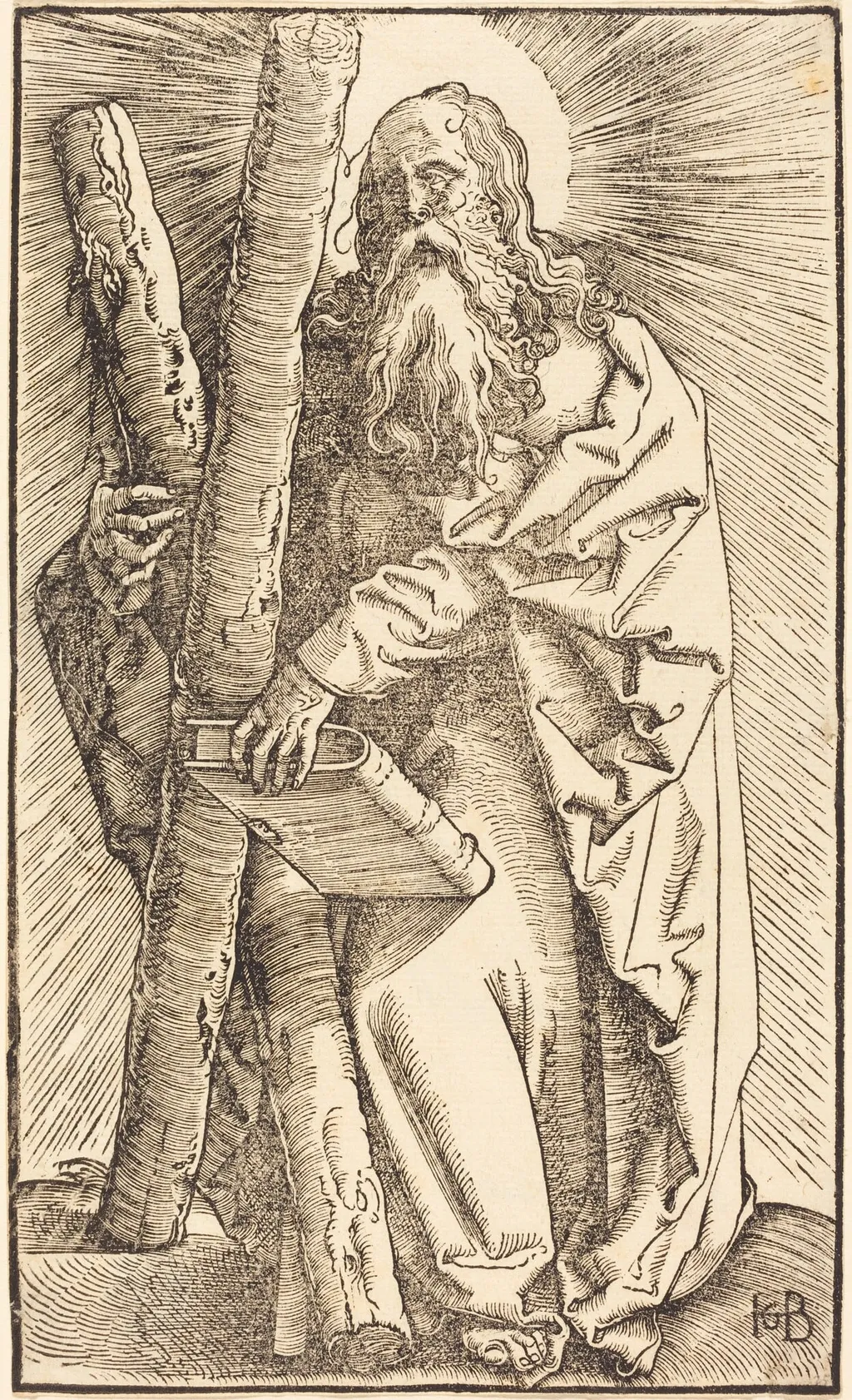
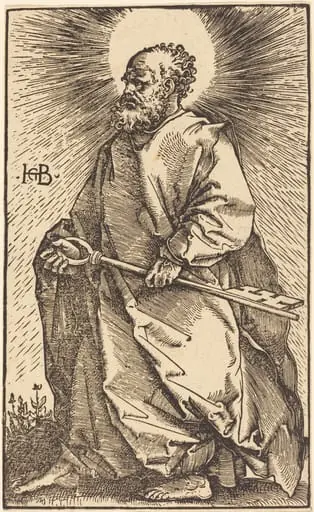
Saint Andrew is an ink print by the Renaissance artist Hans Baldung Grien. It dates from 1519 and is held in the collection of the National Gallery of Art.
About this work
Overview
Hans Baldung Grien’s woodcut *Saint Andrew*, executed in 1519, presents the apostle in a poised stance, clutching the X‑shaped cross of his martyrdom.
Hans Baldung Grien’s woodcut *Saint Andrew*, executed in 1519, presents the apostle in a poised stance, clutching the X‑shaped cross of his martyrdom. The figure is rendered with a flowing beard and long hair, set against a warm, golden backdrop that accentuates the earthy tones of his robe. The composition balances a forward‑facing head with a turned torso, creating a sense of movement within the static medium.
Subject & Meaning
The image portrays Saint Andrew, one of Christ’s earliest disciples, identified by the diagonal cross traditionally linked to his crucifixion. His contemplative expression and upright posture convey both the solemnity of his sacrifice and the devotional focus characteristic of early sixteenth‑century religious prints, intended to inspire piety among viewers.
Technique & Style
Baldung employs bold, sinuous lines and a dynamic arrangement of forms, hallmarks of his expressive approach. The woodcut’s strong contrasts and energetic carving generate a vivid sense of motion, while the careful modulation of tones in the background adds depth. These qualities reflect the artist’s synthesis of Dürer’s precision with a more imaginative, Mannerist sensibility.
History & Provenance
Created during Baldung’s mature period, the print aligns with his prolific output of religious subjects, portraits, and decorative designs. Though specific ownership records are scarce, the work circulated among devotional prints of the German Renaissance, contributing to the broader dissemination of saintly iconography in the early modern period.
Context
*Saint Andrew* emerges from a cultural milieu where printmaking served both artistic and instructional functions. The German Renaissance, influenced by Albrecht Dürer’s technical innovations, encouraged artists like Baldung to explore complex compositions and emotive expression, positioning this woodcut within the transitional currents toward Mannerist experimentation.
Artist & collection
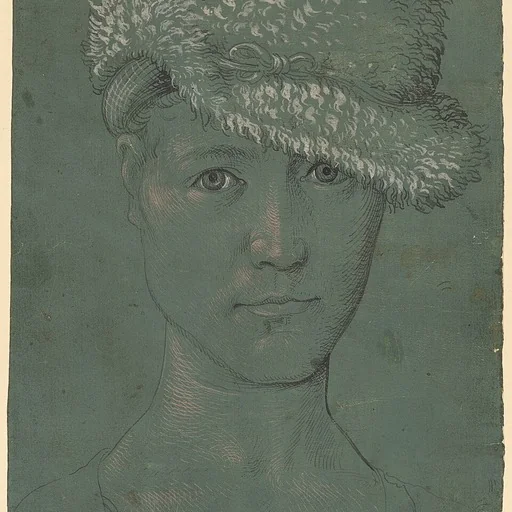
Artist
Hans Baldung (1484 or 1485 – September 1545), called Hans Baldung Grien, (being an early nickname, because of his predilection for the colour green), was a painter, printer, engraver, draftsman, and stained glass…