Artwork
Saint Matthew
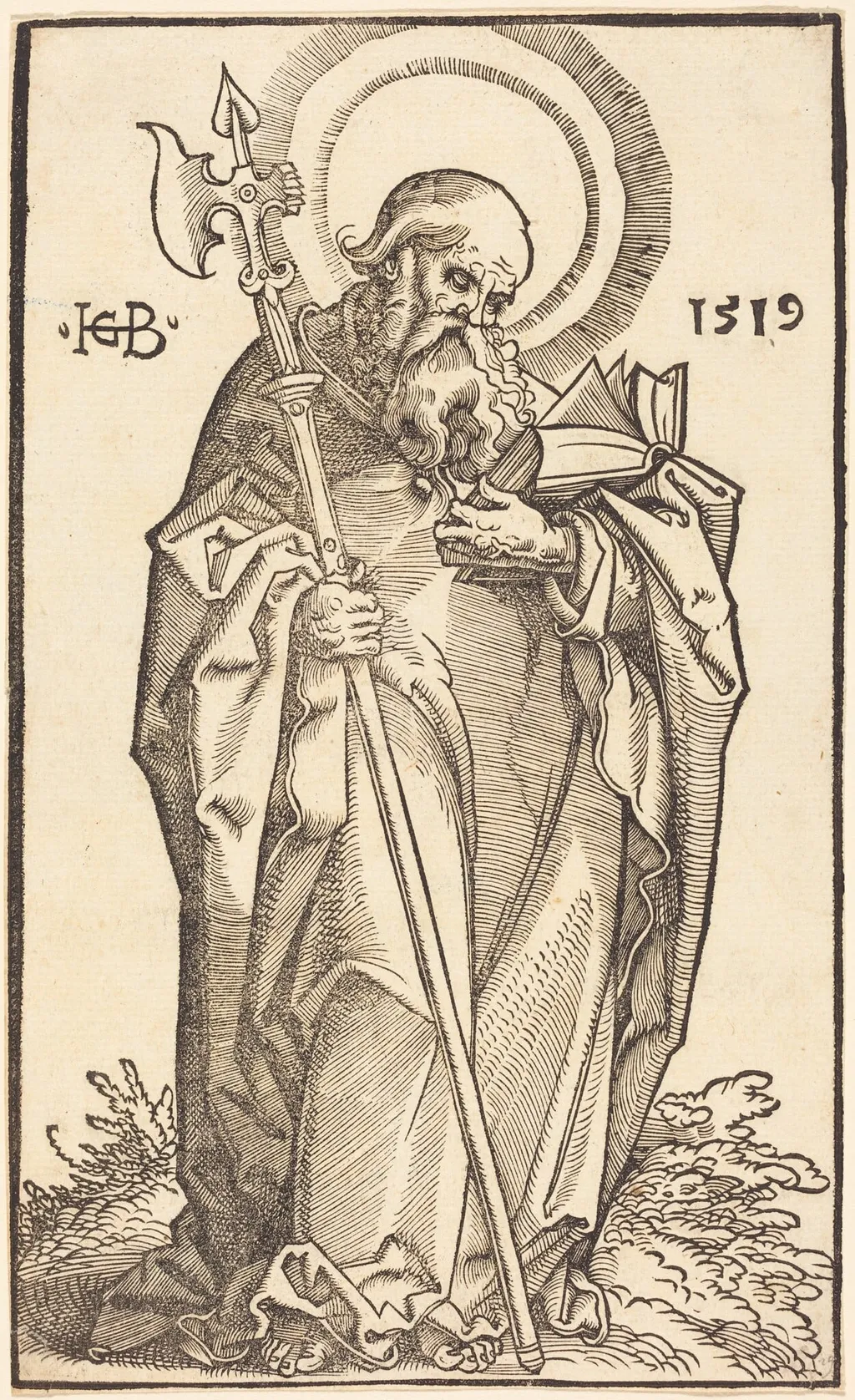
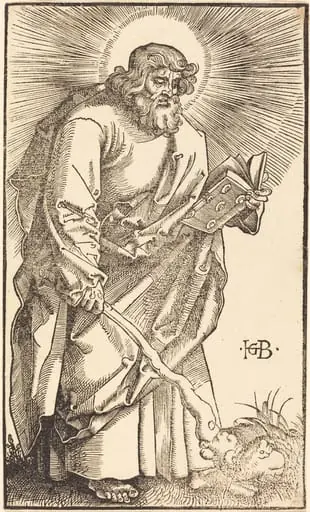
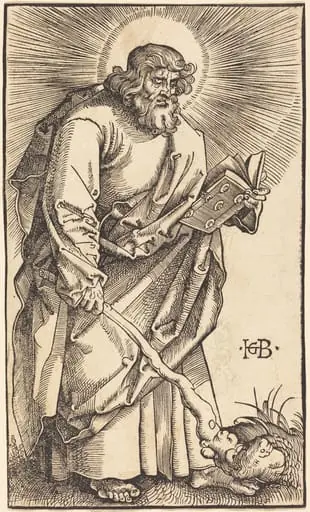
Saint Matthew is an ink print by the Renaissance artist Hans Baldung Grien. It dates from 1519 and is held in the collection of the National Gallery of Art.
About this work
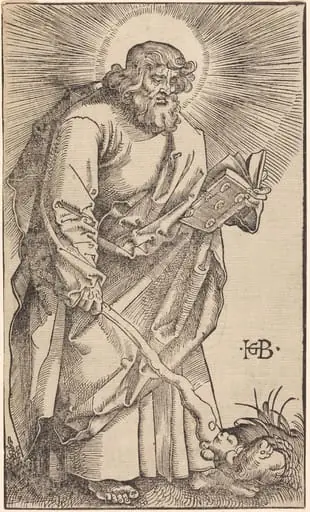
Below his feet, a small figure lies on the ground, and the background shows some bushes and clouds.
This is a black-and-white woodcut of a bearded man with curly hair and a halo. He’s holding a book in one hand and a scroll in the other, dressed in flowing robes. Below his feet, a small figure lies on the ground, and the background shows some bushes and clouds.
The date "1519" is written in the top right corner, and the letters "I.G.B." appear on the left. This was made as a single carved block of wood, pressed onto paper.
Next, look up woodcut to see how artists like this made prints before photography.
Overview
Saint Matthew is a 1519 woodcut by Hans Baldung Grien, showcasing his artistic range within the German Renaissance and Mannerist styles. Executed in black and white, the print depicts a bearded Saint Matthew with a halo, holding a book and a scroll, set against a background of bushes and clouds, with a small figure at his feet.
Subject & Meaning
The subject, Saint Matthew, is portrayed in traditional attire with symbolic attributes: a book (likely the Gospel) and a scroll, emphasizing his role as an apostle and writer. The inclusion of a figure at his feet may allude to his martyrdom or spiritual guidance.
Technique & Style
Crafted from a single carved wood block, this print demonstrates Baldung’s skill in woodcut technique, characteristic of early 16th-century German printmaking. The expressive lines and detailed rendering reflect his training under Albrecht Dürer, blending Renaissance clarity with Mannerist expressiveness.
History & Provenance
Created in 1519, the woodcut bears the artist’s initials “I.G.B.” and the date in the top right corner, attesting to its authenticity. While specific ownership histories are not detailed here, its style and date place it firmly within Baldung’s oeuvre of the time.
Context
This work was produced during a period of significant artistic experimentation in Germany. As a print, it contributed to the widespread dissemination of religious imagery, making saintly figures more accessible to a broader audience.
Artist & collection
Artist
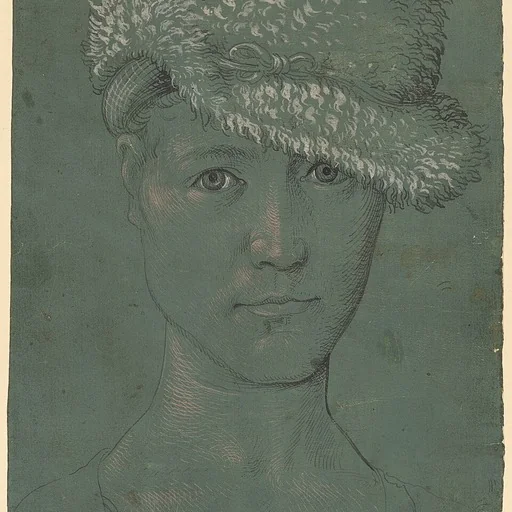
Hans Baldung (1484 or 1485 – September 1545), called Hans Baldung Grien, (being an early nickname, because of his predilection for the colour green), was a painter, printer, engraver, draftsman, and stained glass…