Artwork
Saint Paul
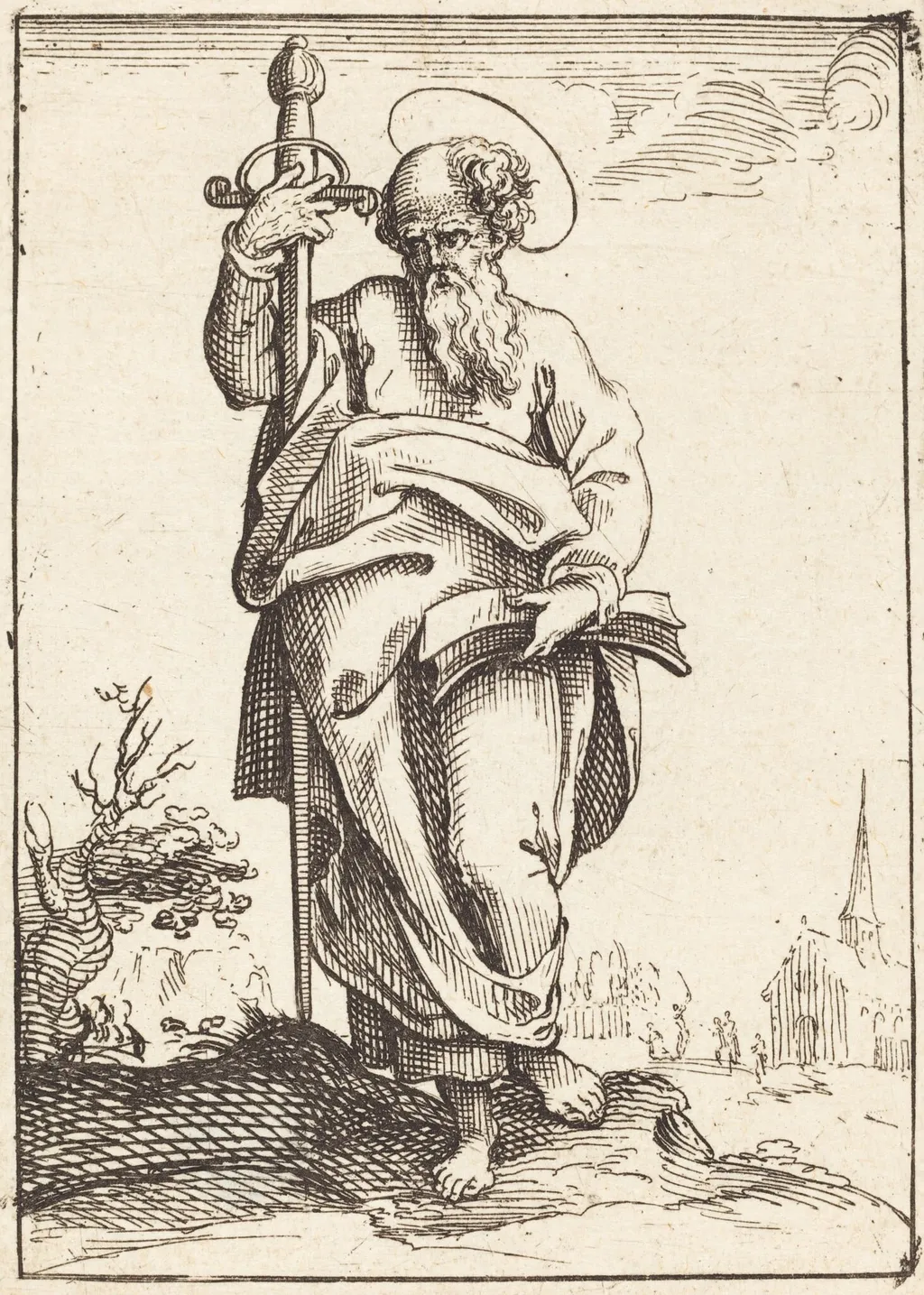
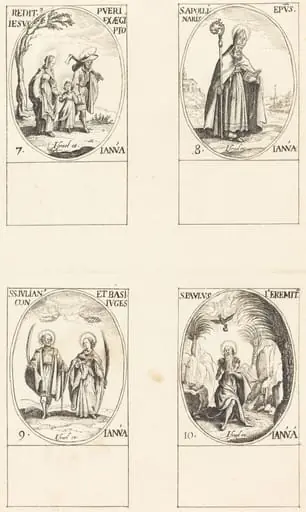
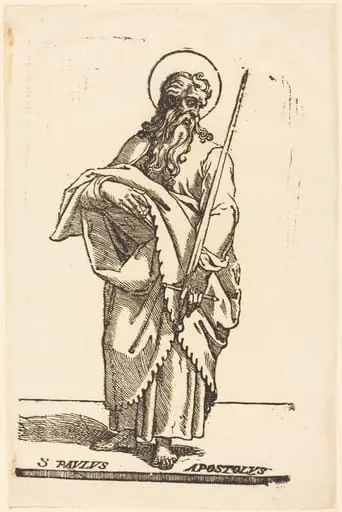
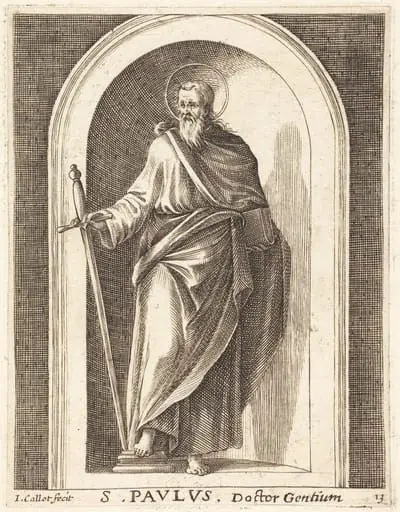
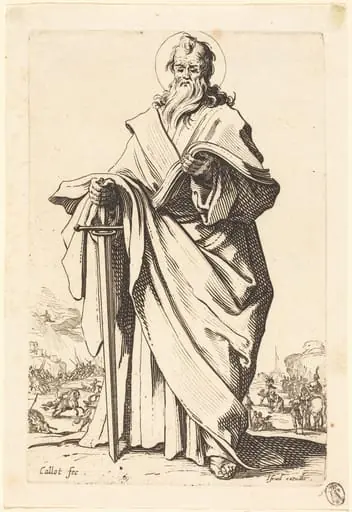
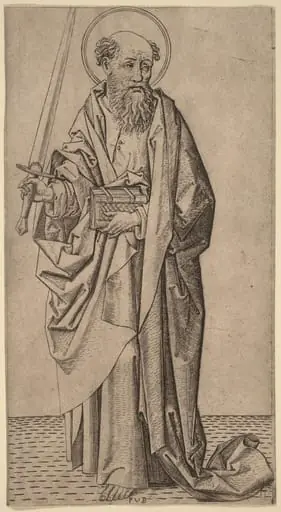
Saint Paul is an ink print by the Baroque artist French 17th Century. It dates from 1650 and is held in the collection of the National Gallery of Art.
About this work
Overview
The figure holds a sword in his right hand, dressed in a flowing robe and wide-brimmed hat, with a long beard framing his face.
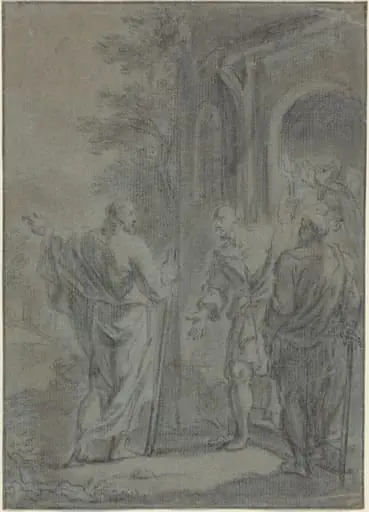
This etching depicts Saint Paul standing on a rocky outcrop, rendered in fine linear strokes on laid paper. The figure holds a sword in his right hand, dressed in a flowing robe and wide-brimmed hat, with a long beard framing his face. The background is softly suggested by minimal lines, evoking a distant landscape without detailed rendering. The composition emphasizes stillness and introspection, achieved through controlled contrast and delicate shading.
Subject & Meaning
The figure represents Saint Paul, the apostle and martyr, identified by his traditional attributes: the sword symbolizing his execution and the word of God, and the robe denoting his role as a teacher. His calm posture and focused gaze reflect inner conviction rather than action, aligning with his theological writings and quiet endurance. The barren setting underscores his spiritual solitude and unwavering resolve.
Technique & Style
The artist employed etching to create fine, precise lines that model form through hatching and cross-hatching. The paper’s laid texture subtly enhances the tactile quality of the robe and rock. Light areas contrast with darker, densely worked zones to suggest volume and depth. The restrained use of tone avoids dramatic chiaroscuro, favoring a quiet, contemplative atmosphere consistent with Northern print traditions of the period.
History & Provenance
The print likely dates to the late 16th or early 17th century, a time when religious subjects remained common in printmaking despite Reformation shifts. Though the artist’s identity is unconfirmed, the style suggests a Northern European origin, possibly influenced by Dutch or Flemish engravers. No documented early ownership is recorded, but similar prints circulated among scholars and clergy as devotional aids.
Context
Produced during the Baroque era, this work reflects a quieter strand of religious imagery that prioritized personal piety over theatricality. While contemporaries like Caravaggio emphasized emotional intensity, this etching aligns with the introspective tone found in prints by artists such as Rembrandt or Lucas van Leyden. It served as a portable image for private meditation, not public display.
Legacy
As a modest print, it contributes to the broader tradition of religious portraiture in early modern Europe, where apostles were depicted not as heroes but as contemplative figures. Its survival offers insight into how spiritual ideals were visually communicated beyond grand altarpieces. Though not widely reproduced, it exemplifies the enduring appeal of understated, line-based devotional art.
Artist & collection

Artist
Seventeenth-century French printmakers turned ink into story. Their tools were burin and acid, paper their stage. Look at the Beggar Woman with Rosary (1622), etched on laid paper, her hands folded around faith, or The…