Artwork
The Dissolute Household
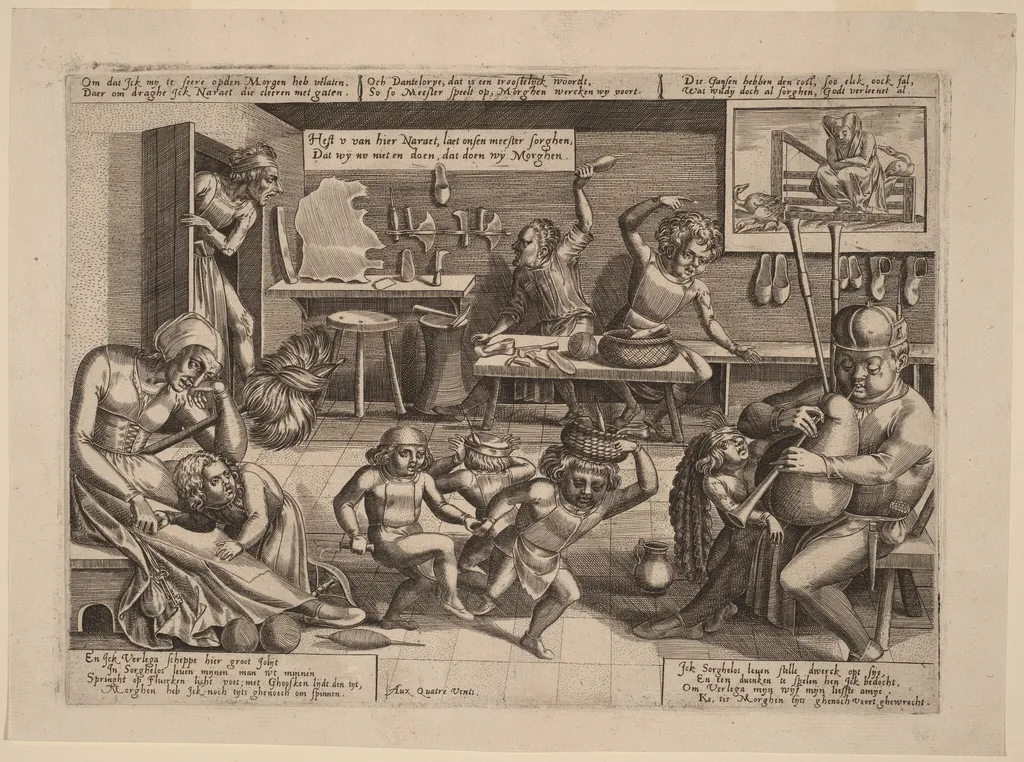
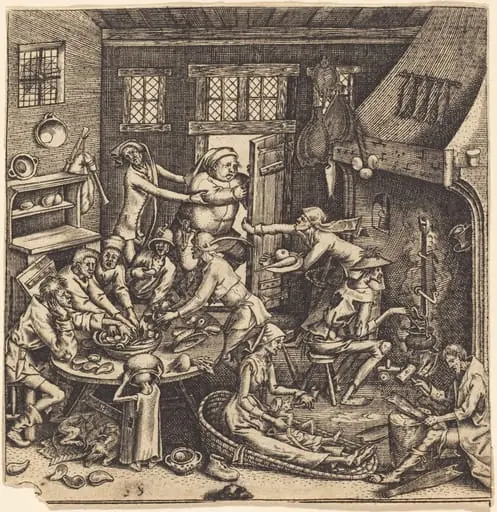
The Dissolute Household is an ink print by the Renaissance artist Pieter Balten. It dates from 1559 and is held in the collection of the National Gallery of Art.
About this work
Overview
Pieter Balten’s 1559 engraving, titled The Dissolute Household, is a densely composed scene rendered on laid paper. Executed in black‑and‑white, the print captures a cluttered interior where numerous figures engage in various activities, creating a vivid tableau of domestic disorder.
Subject & Meaning
The composition depicts a raucous household filled with drinkers, musicians, and quarrelling individuals. A man leans out of a window clutching a placard, while a child holds a cat and strikes a pose. The abundance of chaotic behavior serves as a moral commentary on the consequences of licentious conduct within the home.
Technique & Style
Balten employed fine line engraving to achieve intricate detail across the crowded space. The use of laid paper provides a subtle texture that enhances the contrast between the densely packed figures and the surrounding objects, allowing each element—from musical instruments to scattered shoes—to be distinctly rendered.
History & Provenance
Created in the mid‑sixteenth century, The Dissolute Household reflects the period’s interest in genre scenes that combined humor with didactic intent. The print has been documented in several early collections of Northern European engravings, though its precise ownership trail prior to modern museum acquisition remains limited.
Context
The work belongs to a tradition of moralizing genre prints popular in the Low Countries during the Renaissance. Such images often used exaggerated domestic chaos to critique social vices, aligning with contemporary concerns about temperance and household order.
Artist & collection


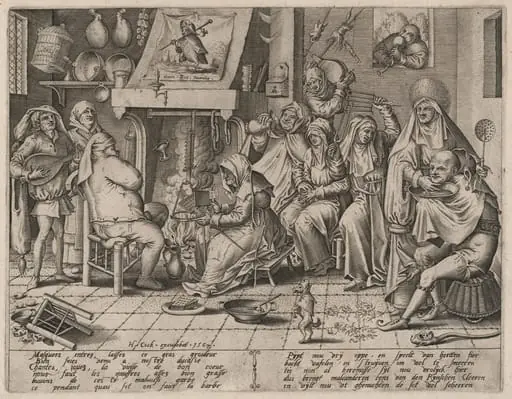 Shrove Tuesday
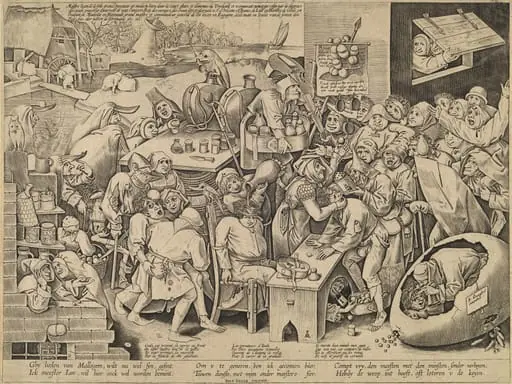 The Witch of Malleghem
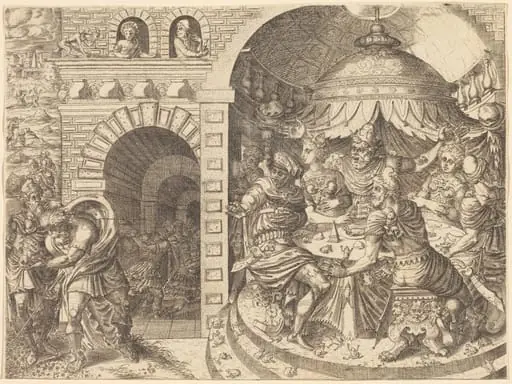 Pharaoh and the Plague of Frogs
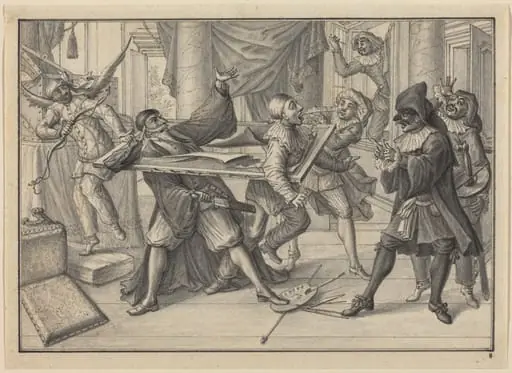 Mezzetin and Harlequin Use the Picture Frame to Catch Pantaloon and Pierrot
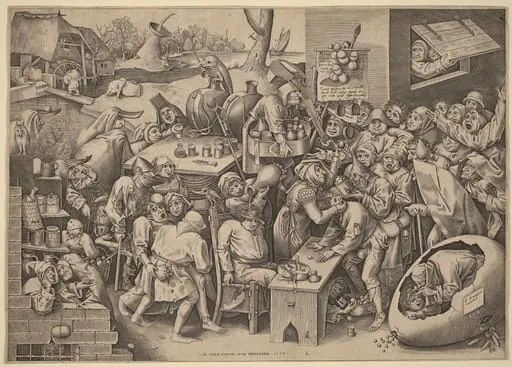 The Witch of Malleghem
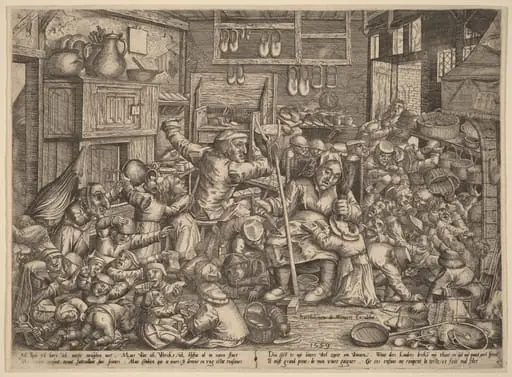 The Cobbler's Unruly Family
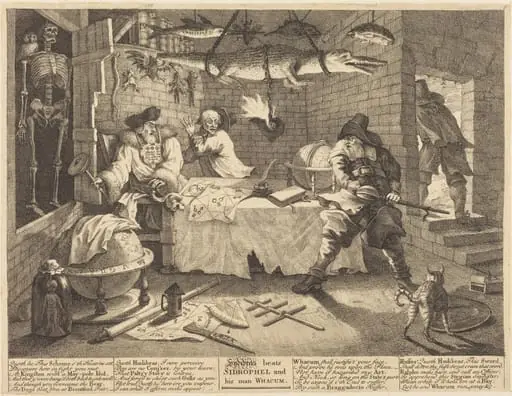 Hudibras beats Sidrophel and his man Whacum
 Exempel und Lehr Jetziger Welt Lauf
 The Healing of Eneas by Saint Peter
 The Ball