Artwork
Pharaoh and the Plague of Frogs
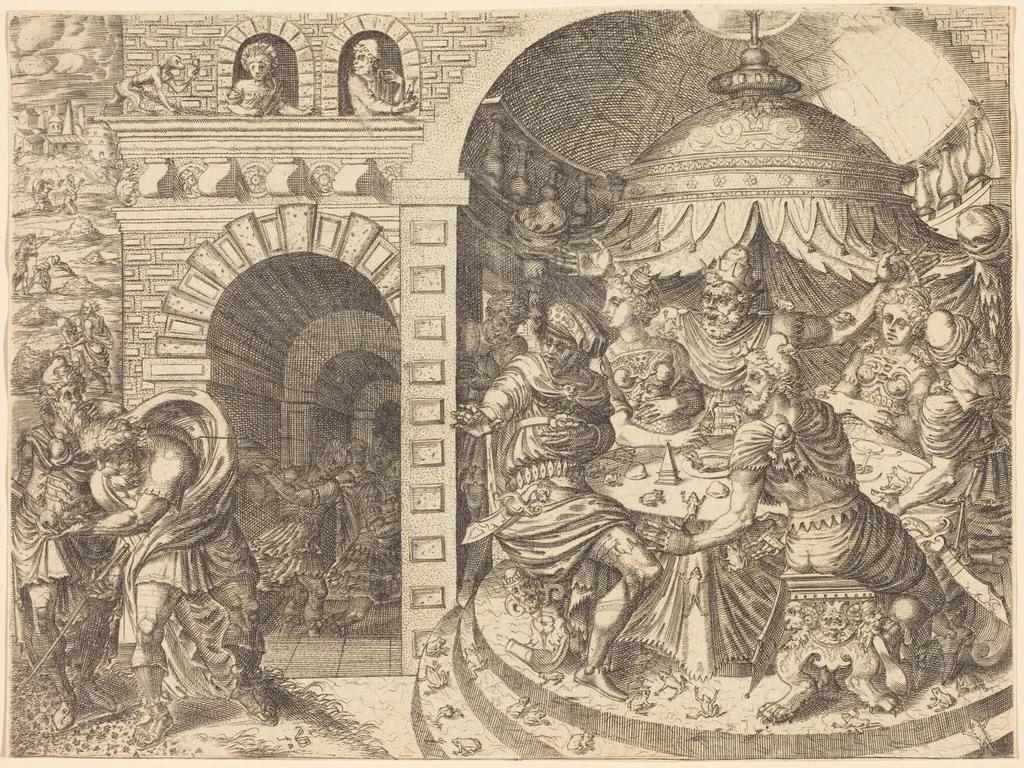
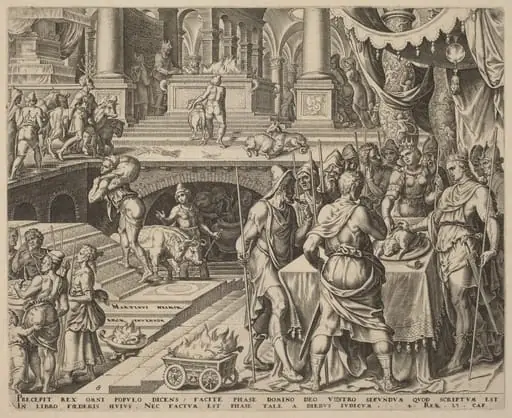
Pharaoh and the Plague of Frogs is an ink print by the Renaissance artist Pierre II Woeiriot de Bouzey. It dates from 1566 and is held in the collection of the National Gallery of Art.
About this work
Overview
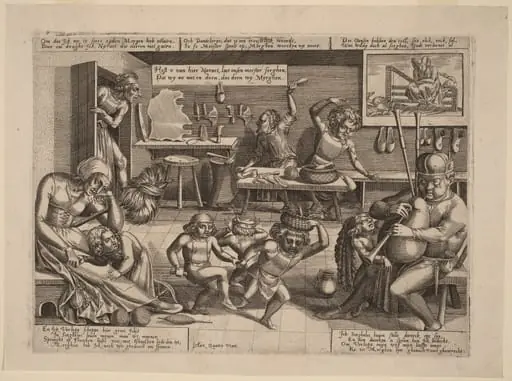
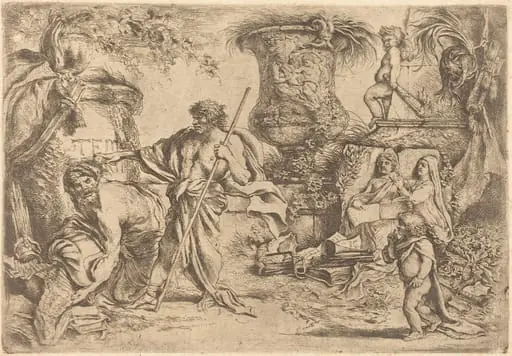
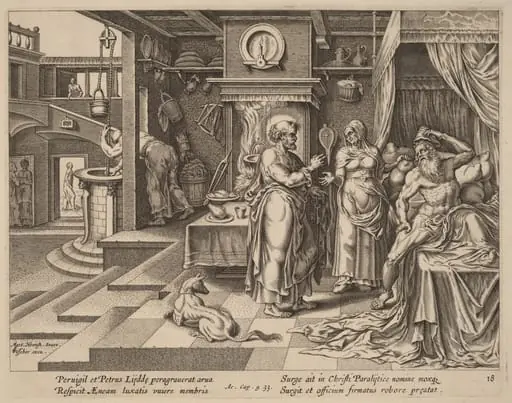
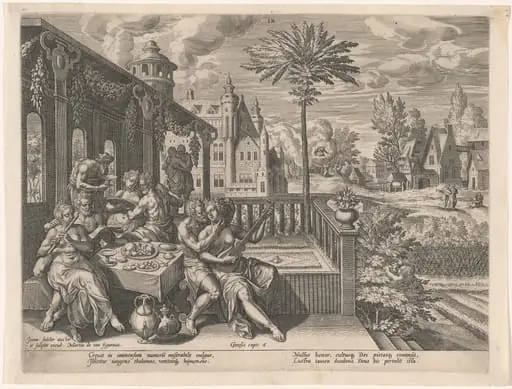
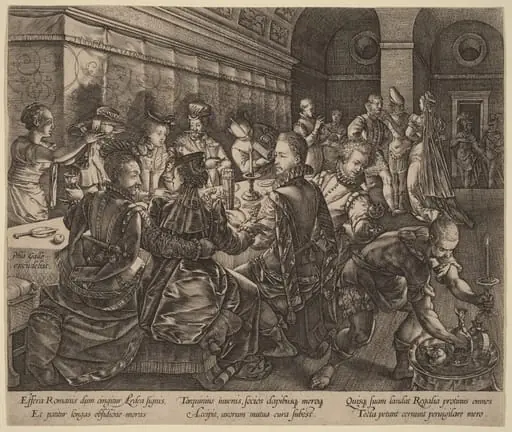
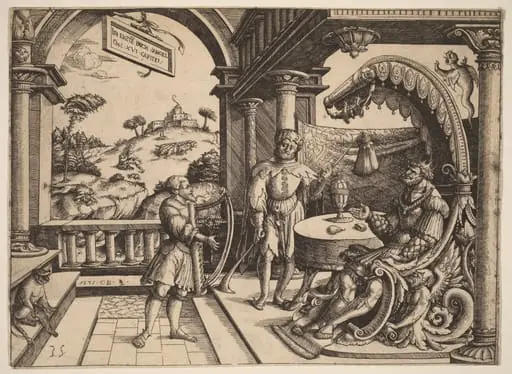
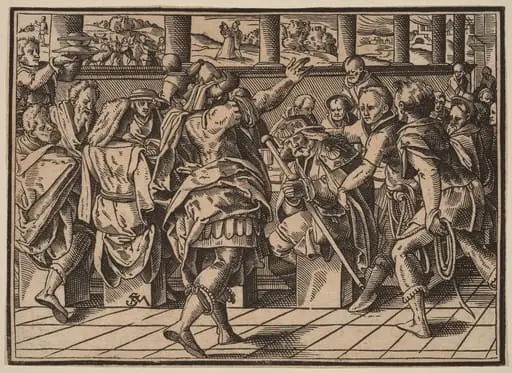
Pharaoh and the Plague of Frogs is a 1566 engraving attributed to the French printmaker Woeiriot de Bouzey, produced during the reign of Pierre II. Executed as a single‑plate print, the work measures roughly 30 × 20 cm and presents a densely populated narrative scene that illustrates the biblical episode of the Egyptian frog plague.
Subject & Meaning
The image visualises the biblical story in which a pharaoh confronts a deluge of frogs sent as divine punishment. Central to the composition is a regal throne occupied by a figure wielding a staff, surrounded by swarms of amphibians and other fantastical creatures, suggesting the chaos and divine retribution associated with the plague.
Technique & Style
De Bouzey employs fine, cross‑hatching and parallel lines to model forms and suggest depth, a hallmark of mid‑16th‑century engraving. The artist arranges multiple vignettes within a single frame, using line work to differentiate architectural interiors, crowded streets, and the open courtyard where the throne stands, creating a sense of spatial layering despite the medium’s limitations.
History & Provenance
The print was issued in 1566, likely as part of a series of religious illustrations circulated in France during the Counter‑Reformation. Surviving copies are held in several European libraries and museums, indicating that the work was widely distributed and collected as a devotional image.
Context
The engraving reflects contemporary interest in biblical typology and the moral instruction of Old Testament narratives. Its crowded composition mirrors the Renaissance fascination with complex, narrative-driven prints that could be examined closely, serving both didactic and decorative purposes in private devotional settings.
Legacy
While not as frequently reproduced as later biblical prints, de Bouzey’s work contributes to the development of narrative engraving in the late Renaissance, demonstrating how line can convey intricate storytelling and influence subsequent generations of printmakers exploring biblical themes.
Artist & collection


![Temporalis Aeternitas [Second Version], by Italian 17th Century](https://artifactworldgallery.com/img/italian-17th-century--temporalis-aeternitas-second-version--2b55857961773f67-w320.webp)