Artwork
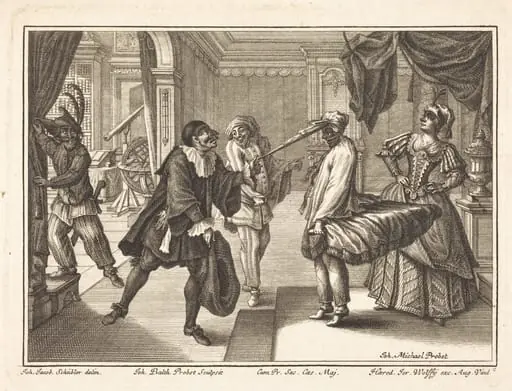
Mezzetin and Harlequin Use the Picture Frame to Catch Pantaloon and Pierrot
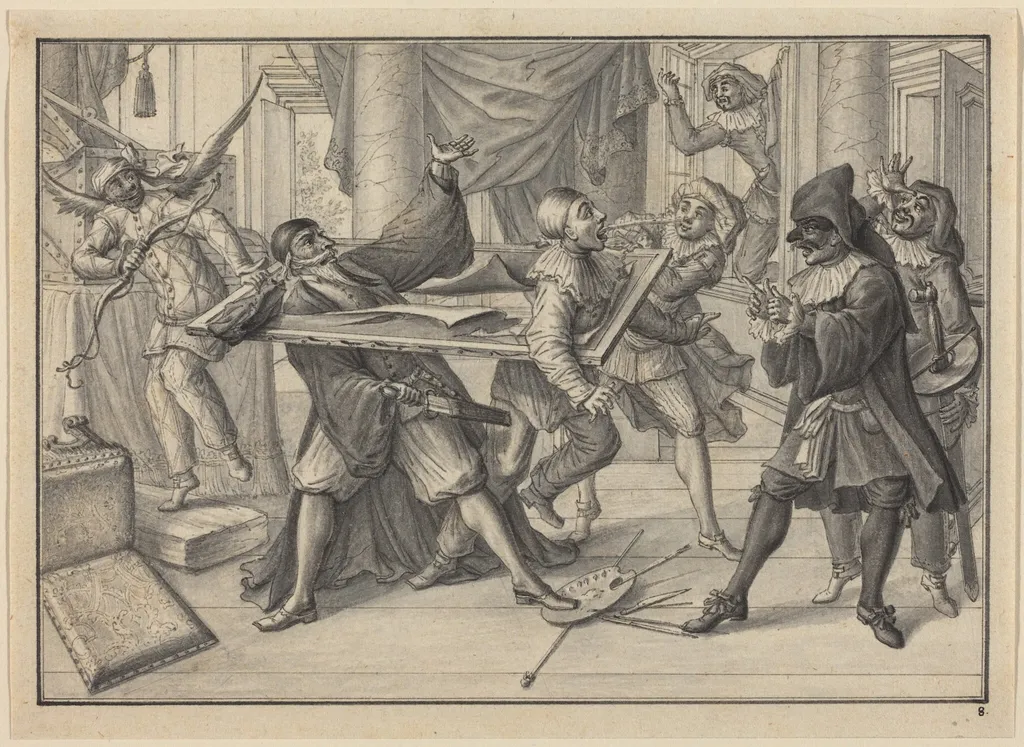
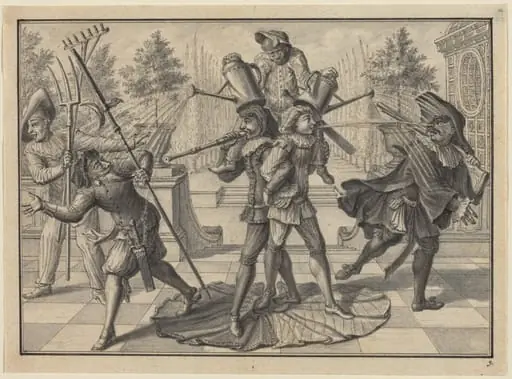
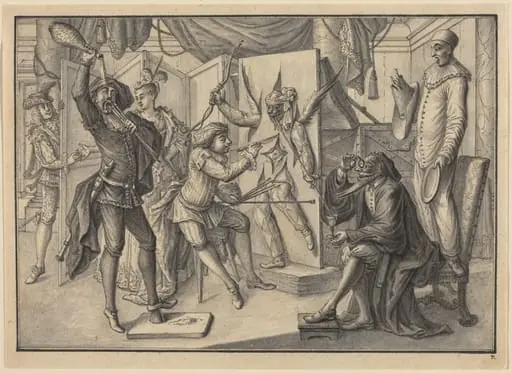
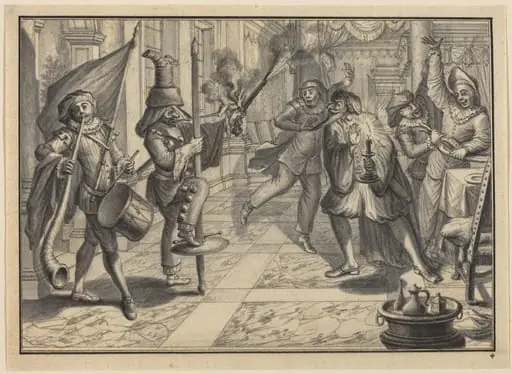
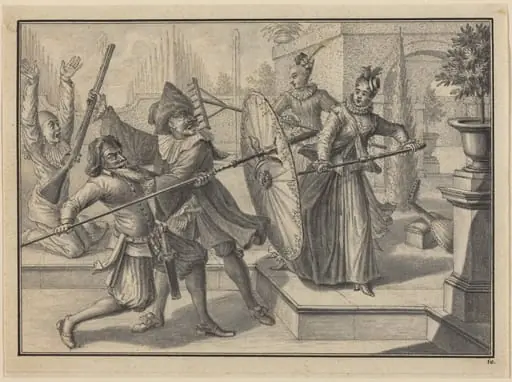
Mezzetin and Harlequin Use the Picture Frame to Catch Pantaloon and Pierrot is an ink drawing by the Baroque artist Johann Jacob Schübler. It dates from 1729 and is held in the collection of the National Gallery of Art.
About this work
Overview
The composition suggests a playful commentary on artistic practice, blending physical comedy with studio clutter.
Created around 1729 by Johann Jacob Schübler, this ink and wash drawing captures a lively, theatrical moment. Executed on laid paper with scoring marks indicating it was intended for transfer, the work presents a dynamic scene of commedia dell'arte figures engaged in a mischievous act. The composition suggests a playful commentary on artistic practice, blending physical comedy with studio clutter.
Subject & Meaning
The drawing depicts five commedia dell'arte characters in a moment of orchestrated chaos: one figure is carried upside-down on a stretcher while others react with laughter or music. A curtain and distant figure at a window extend the scene beyond the frame, implying a staged performance. The scattered palette and overturned stool hint at a studio setting, suggesting the scene is a satire of artistic rivalry or the absurdity of creative labor.
Technique & Style
Schübler employed pen and black ink with gray wash to define form and shadow, using scored lines to prepare the image for transfer onto another surface. Delicate cross-hatching builds volume in clothing and facial expressions, while loose, energetic strokes convey motion and spontaneity. The sketch-like quality enhances the sense of improvisation, mirroring the unruly behavior of the figures.
History & Provenance
The drawing is attributed to Schübler, a German artist active in the early 18th century, though little is documented about its early ownership. Its transfer-ready preparation suggests it may have been a preparatory study for a print or decorative panel. No known exhibition or collection history predates the 20th century, leaving its original purpose partially speculative.
Context
Commedia dell'arte figures were widely recognized in European visual culture, often used to satirize social and professional roles. Schübler’s depiction aligns with a broader trend of artists portraying their own profession through theatrical parody. The inclusion of studio tools and the framing device reflect contemporary interest in meta-commentary—art about art—within German-speaking regions during the Baroque era.
Legacy
While Schübler’s oeuvre remains relatively obscure, this drawing exemplifies a niche tradition of artist-as-clown imagery in 18th-century Germany. Its emphasis on physical humor and self-referential satire anticipates later artistic self-parodies. The work survives as a quiet testament to the playful, subversive side of draftsmanship during a period dominated by formal portraiture and religious themes.
Artist & collection