Artwork
Allegorische Darstellung
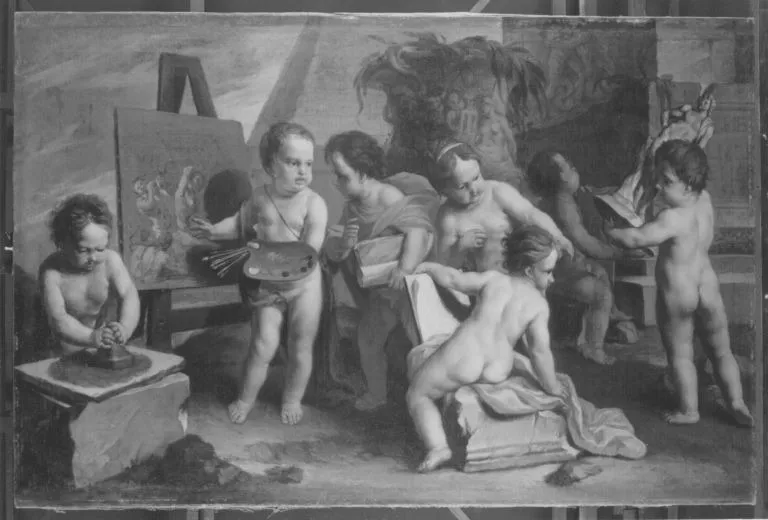
Allegorische Darstellung is an unspecified painting by the Rococo painting artist Balthasar Augustin Albrecht. It dates from 1731 and is held in the collection of the Bavarian State Painting Collections.
About this work
Overview
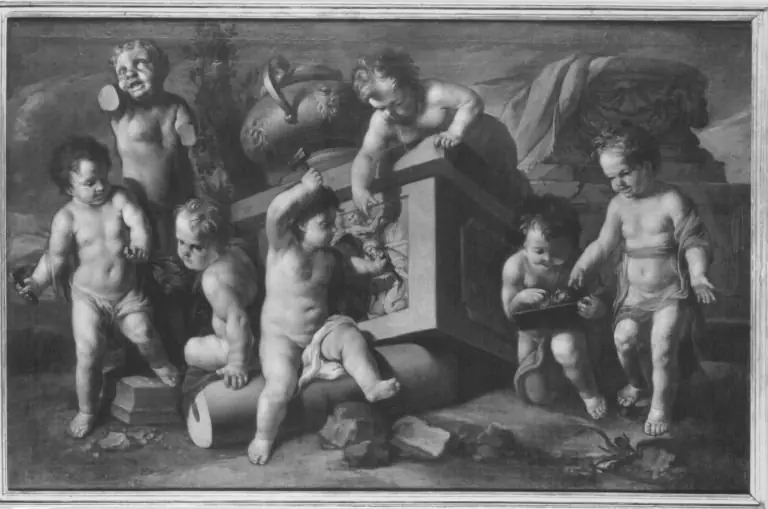
Created in 1731 by the German painter Balthasar Augustin Albrecht, this work titled “Allegorische Darstellung” is an oil painting now part of the collection of Munich’s Alte Pinakothek. The composition depicts a crowded interior scene populated by six plump, unclothed youths engaged in various artistic activities, set against a plain, shadow‑filled backdrop.
Subject & Meaning
The figures are presented as a playful study of youthful creativity: one child rolls a lump of clay at a table, another wields a paintbrush, while a third leans on a stool. In the rear, a boy mixes pigments at an easel and another kneels on a cushion, suggesting an allegorical celebration of the arts and the innocence of apprenticeship.
Technique & Style
Albrecht employs strong chiaroscuro, contrasting deep shadows with illuminated forms to give the bodies a palpable volume. The darkened background isolates the round, fleshy figures, while the unevenly hung, unfinished canvas adds a sense of spontaneity. The brushwork is precise yet retains a lively, informal quality that underscores the work’s instructional tone.
History & Provenance
The painting was executed in the early eighteenth century, a period when allegorical genre scenes were popular in German court circles. After remaining in private hands for several decades, it entered the Alte Pinakothek’s holdings in the late nineteenth century, where it has been displayed as part of the museum’s Baroque and Rococo collection.
Context
Albrecht worked within the artistic milieu of southern Germany, where court patronage encouraged didactic imagery that combined moral instruction with visual pleasure. The depiction of child apprentices reflects contemporary attitudes toward artistic training, while the cluttered studio setting mirrors the bustling workshops of the time.
Artist & collection
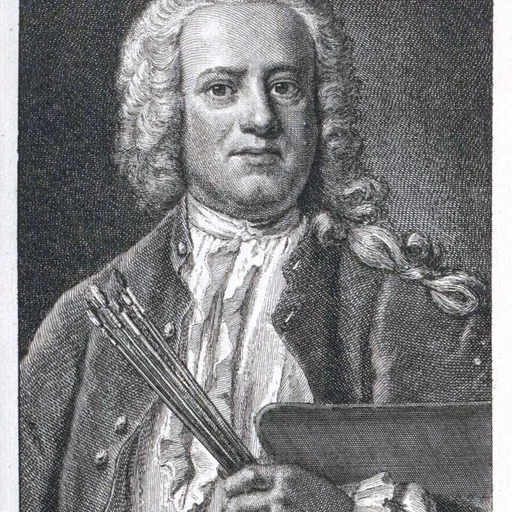
Artist
Balthasar Augustin Albrecht (1687–1765) was an artist, born in Berg.

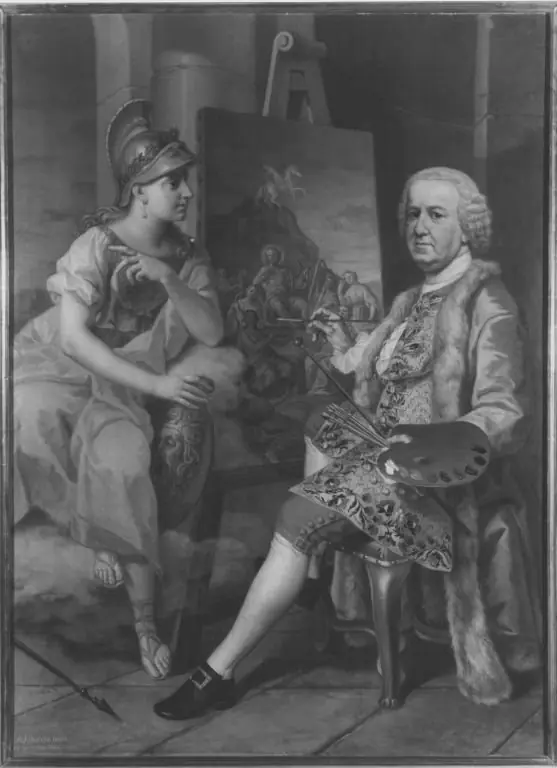
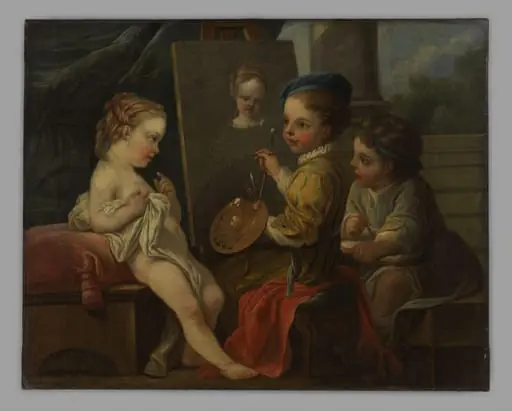 An Allegory of Painting
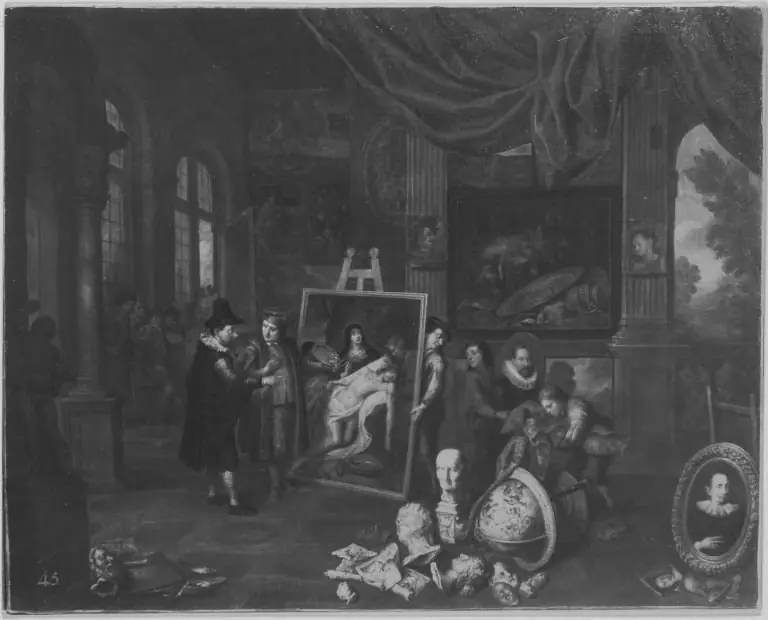 Maleratelier
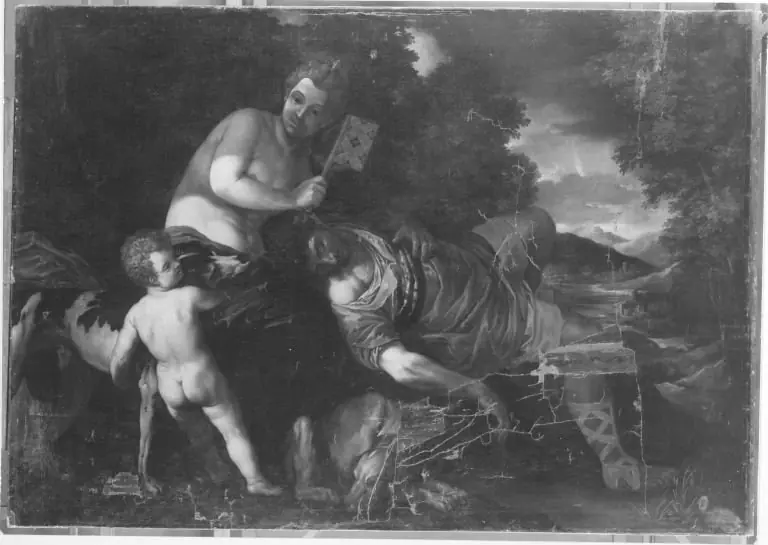 Venus with the sleeping Adonis
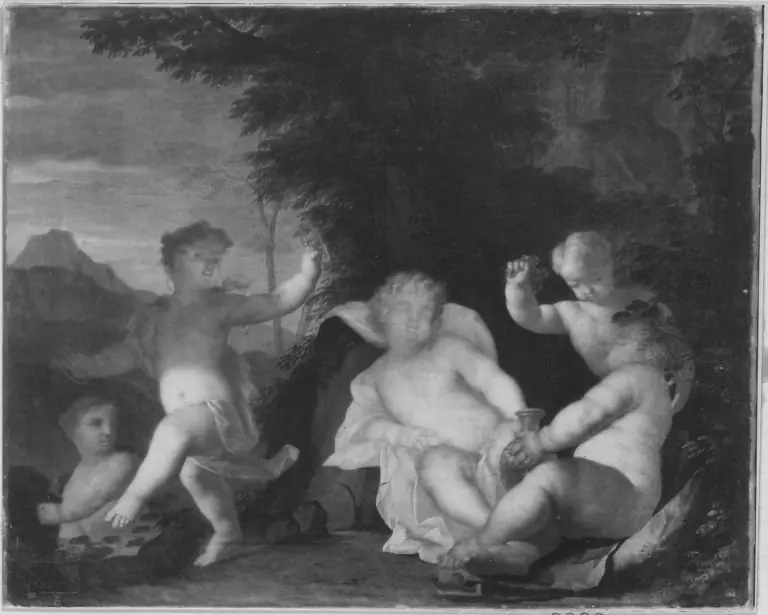 Der Herbst
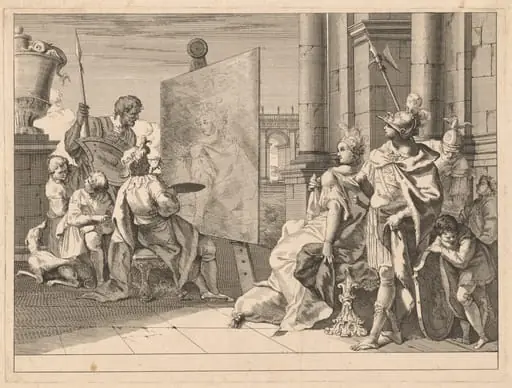 Alexander the Great and Campaspe in the Studio of Apelles
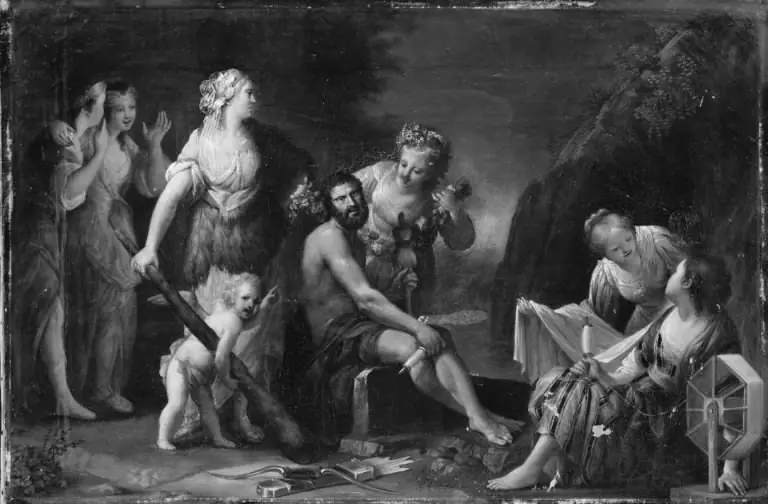 Hercules hos Omphale, omgivet af hendes veninder
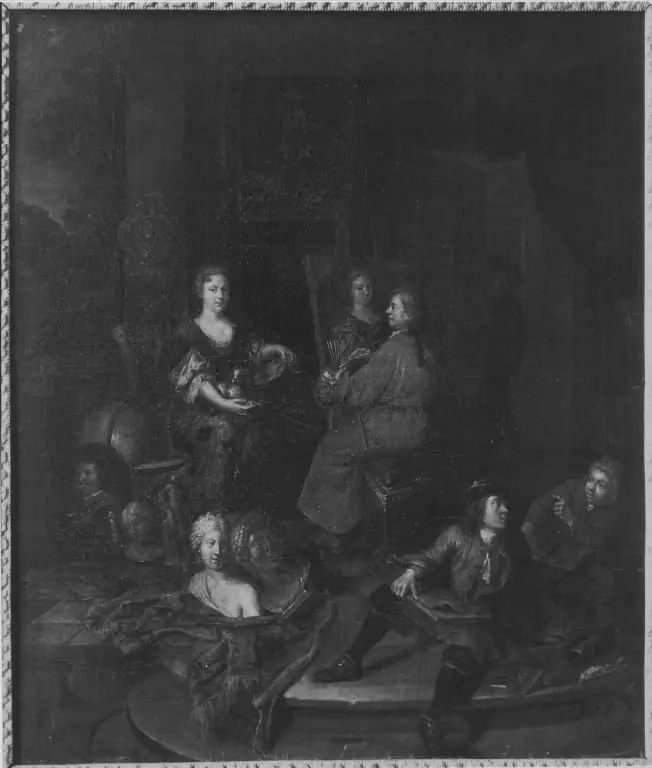 Maleratelier
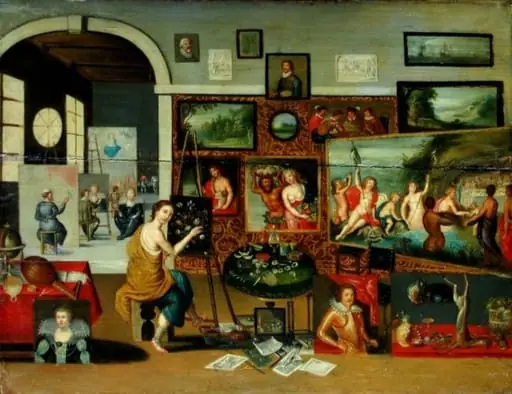 Academia de pictură
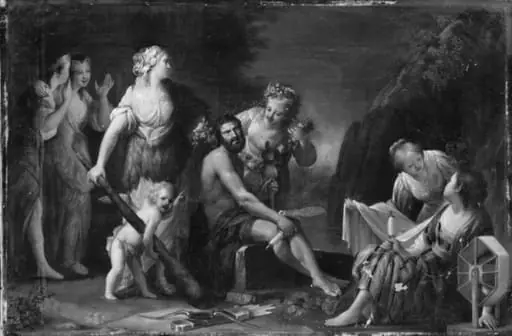 Hercules hos Omphale, omgivet af hendes veninder
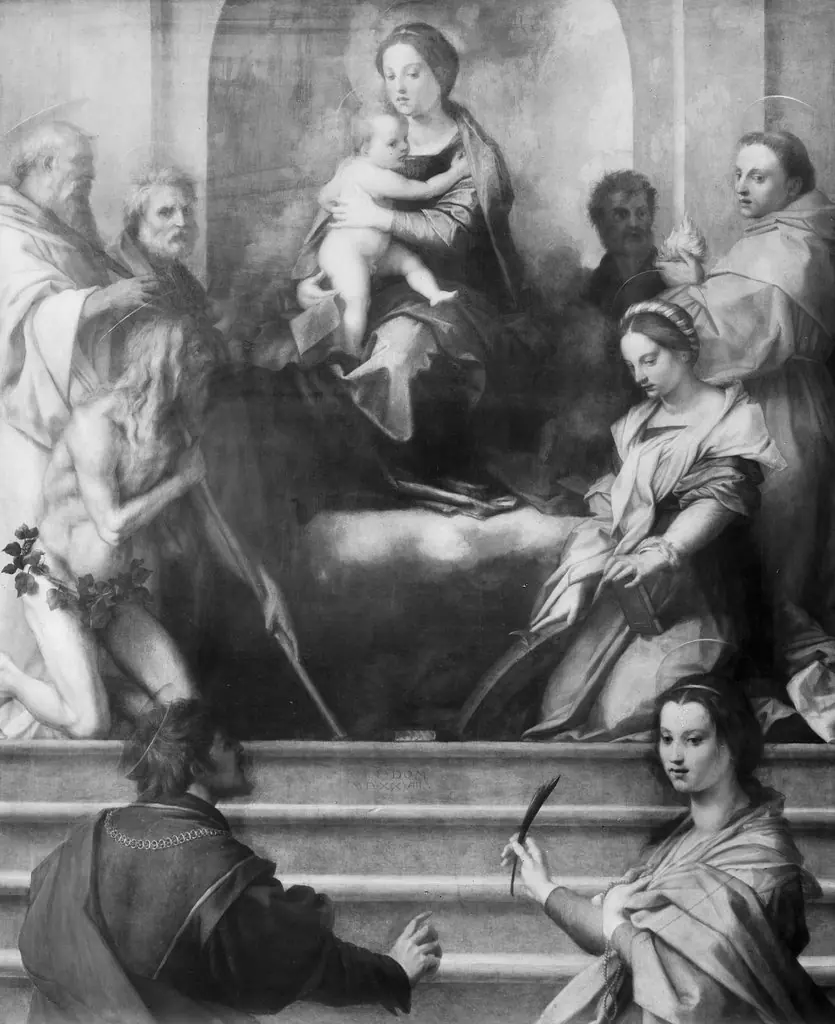 Mary enthroned with the child and eight saints
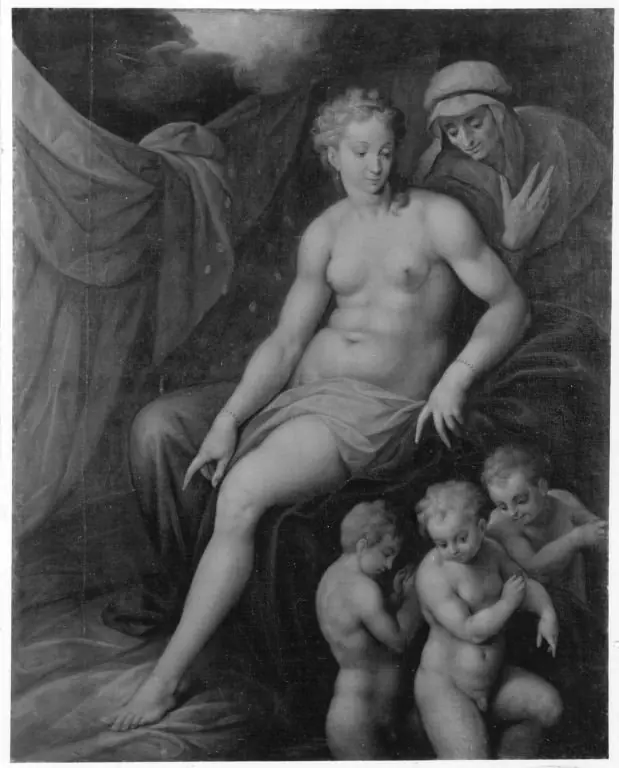 Danae im Goldregen