Artwork
Landscape with Figures
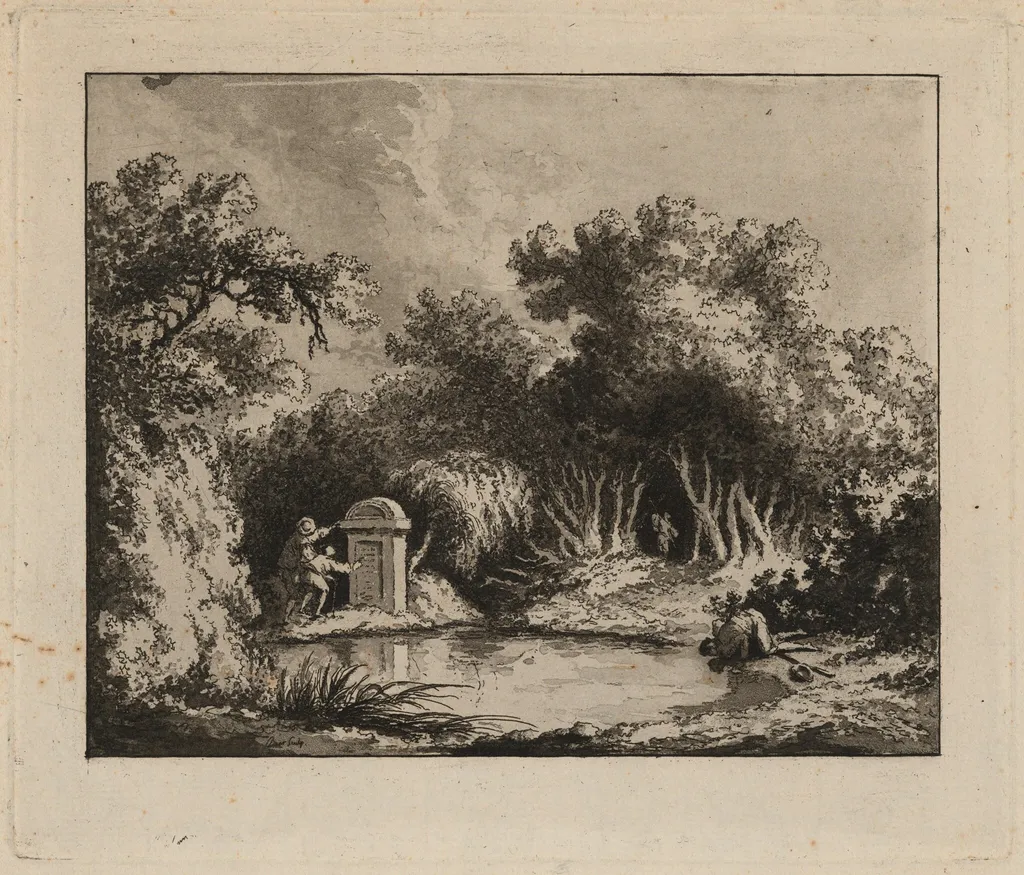
Landscape with Figures is an ink print by the Romanticist artist Jacques Charles Bar. It dates from 1786 and is held in the collection of the National Gallery of Art.
About this work
Overview
The print exemplifies 18th-century printmaking techniques that blend precise line work with subtle tonal gradations to evoke mood and spatial depth.
Landscape with Figures is an etching and aquatint on laid paper, dated around 1786, by the French artist Jacques Charles Bar. The work is part of the collection at the National Gallery of Art in Washington, D.C. It presents a tranquil rural scene rendered in monochrome tones, emphasizing atmosphere over narrative. The print exemplifies 18th-century printmaking techniques that blend precise line work with subtle tonal gradations to evoke mood and spatial depth.
Subject & Meaning
Two small human figures appear within a quiet woodland setting beside a still pond. One stands near a stone feature, possibly a ruined fountain, while the other crouches near the water’s edge. Their scale is deliberately diminished, integrating them into the natural environment rather than centering them as protagonists. The scene suggests contemplation or rest, reinforcing a Romantic sensibility toward solitude and the subdued beauty of the natural world.
Technique & Style
Bar employed etching for fine linear detail and aquatint to achieve soft, atmospheric washes of tone. The contrast between the dark, dense tree canopies and the pale, diffused sky creates a sense of depth and quiet light. The texture of the laid paper enhances the tactile quality of the print, while the restrained palette and delicate shading reflect a preference for nuance over dramatic effect, characteristic of late 18th-century landscape prints.
History & Provenance
The print was produced in France during the late 1780s, a period when landscape prints gained popularity among collectors interested in pastoral ideals. It entered the National Gallery of Art’s collection through established acquisition channels, likely as part of a broader effort to document European printmaking traditions. Its preservation in good condition reflects careful handling and consistent scholarly interest over time.
Context
Bar’s work emerged amid a growing European fascination with natural scenery and the picturesque. While contemporaries like Claude Lorrain influenced landscape composition, Bar’s focus on intimate, unidealized settings aligned with emerging tastes for quiet realism. The use of aquatint, a technique refined in the 1770s, allowed artists to mimic the tonal qualities of watercolor, bridging painting and printmaking traditions in the pre-Romantic era.
Legacy
Though not widely known today, Bar’s Landscape with Figures represents a quiet but significant strand of 18th-century printmaking that prioritized mood and subtlety. It contributes to the historical record of how landscape was interpreted through reproductive techniques, influencing later generations of printmakers who sought to capture atmosphere without overt narrative. The work remains a reference for studies in technical evolution and aesthetic restraint.
Own this work as a print
Artist & collection

 Pool in a Formal Garden
 Landscape with River and Rock
 Landscape with Broken Tree
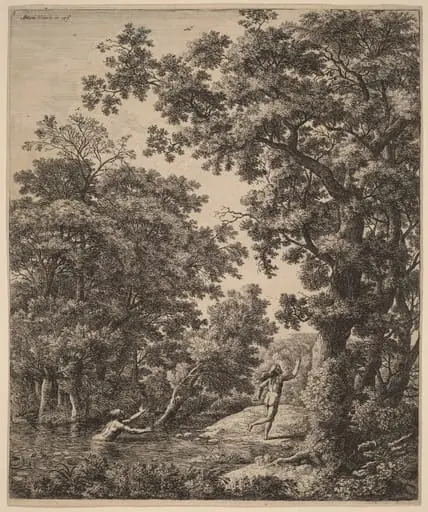 Landscape with Alpheus and Arethusa
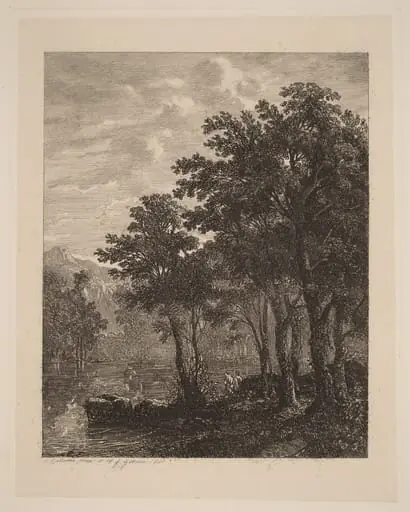 Trees by a River
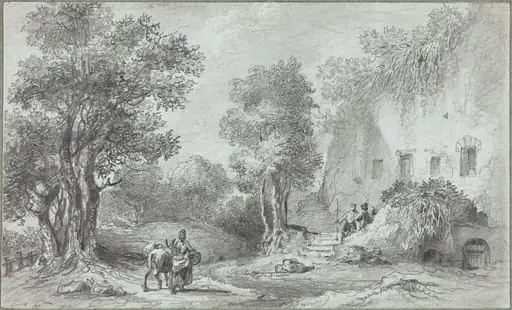 Landscape with Peasants before an Inn
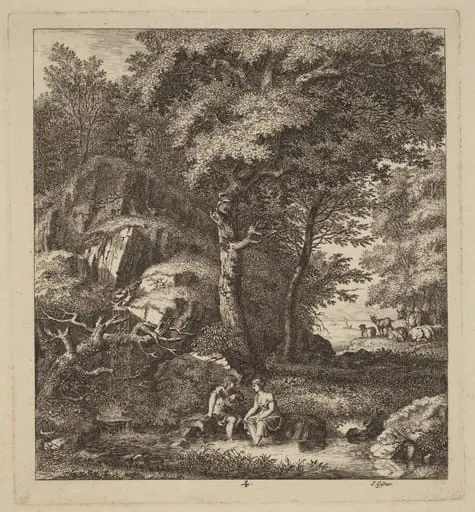 A Shepherd and a Young Woman With Their Feet in a Brook
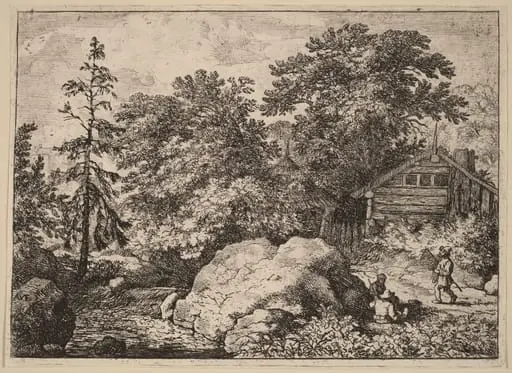 The Knoll
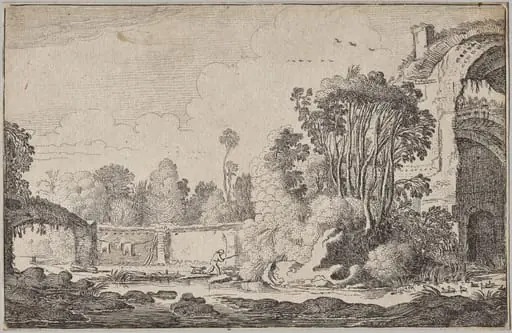 Landscapes, part III: Roman Ruins in Wooded Surroundings
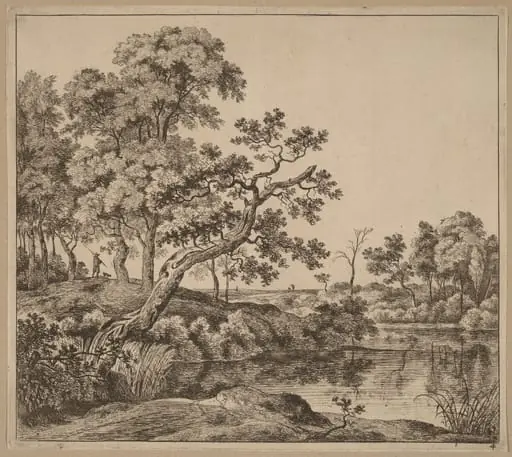 Landscape with a Bending Tree