Artwork
Landscape with Peasants before an Inn
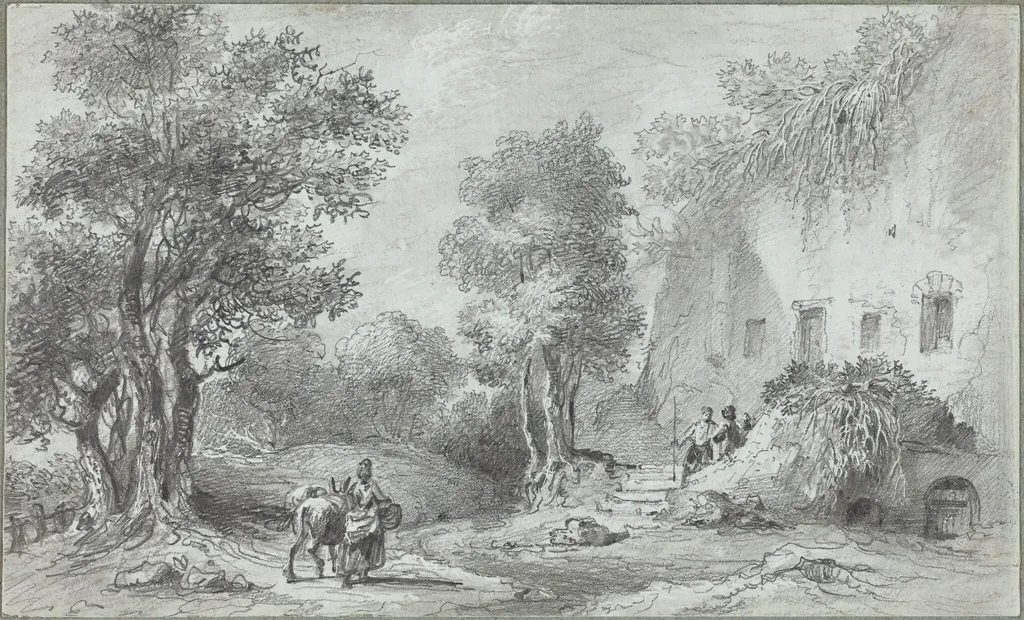
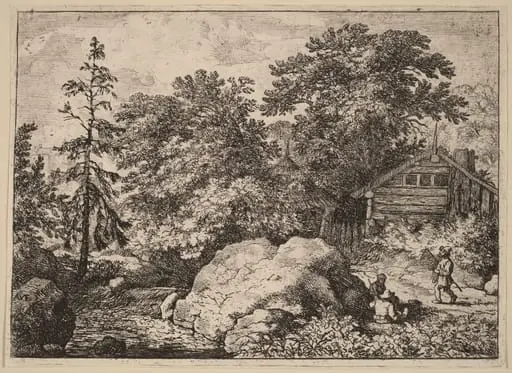
Landscape with Peasants before an Inn is a graphite drawing by the Romanticist artist Aignan-Thomas Desfriches. It dates from 1768 and is held in the collection of the National Gallery of Art.
About this work
Overview
Created around 1768, this drawing by Aignan-Thomas Desfriches depicts a rural scene with peasants gathered before a modest inn. Executed in graphite on white prepared paper, the work employs stumping for tonal gradation and scratching-out to define highlights and contours, reflecting a refined approach to landscape study common in 18th-century French draftsmanship.
Subject & Meaning
The scene captures ordinary rural life—peasants resting or conversing near a simple structure, suggesting a moment of pause in daily labor. There is no narrative climax or idealization; instead, the focus lies in the quiet observation of social interaction within a natural setting, aligning with emerging interest in authentic, unembellished rural existence.
Technique & Style
Desfriches used graphite with stumping to achieve soft, atmospheric transitions across the landscape, while scratching-out revealed the paper’s white surface to suggest light on walls, paths, and clothing. The composition is restrained, with figures scaled to emphasize the surrounding terrain, demonstrating a deliberate balance between human presence and environmental space.
History & Provenance
The drawing was laid down onto a support, a common conservation practice to stabilize fragile paper. Its early history is undocumented, but its technique and subject place it within the circle of French artists documenting provincial life during the decades before the Revolution, when such scenes gained modest scholarly attention.
Context
In mid-18th-century France, landscape drawing increasingly moved beyond topographical records toward intimate, observational studies. Desfriches’ work reflects this shift, aligning with contemporaries who valued quiet realism over grandeur, even as academic art favored historical or mythological themes.
Legacy
Though not widely exhibited or reproduced, the drawing remains a representative example of private, non-commissioned draftsmanship from the period. It contributes to the understanding of how lesser-known artists engaged with rural subjects, preserving a visual record of everyday life outside the urban centers of artistic patronage.
Own this work as a print
Artist & collection


 Travelers in a Rocky Wood
 Landscapes, part III: Roman Ruins in Wooded Surroundings
 Hut with the Remains of a Hedge
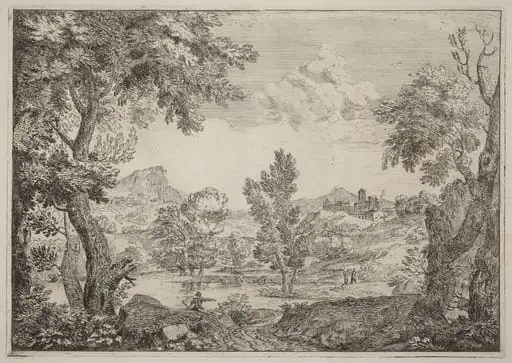 The Stream
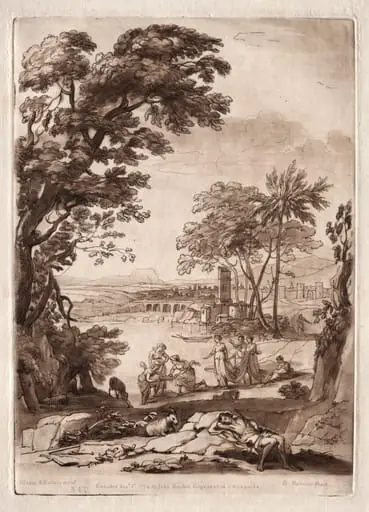 Liber Veritatis: No. 47, A River Scene with the Finding of Moses
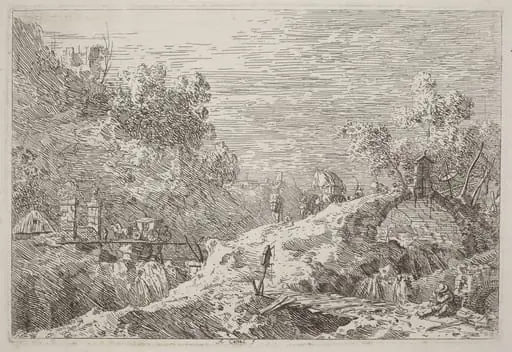 Mountain Landscape with Five Bridges
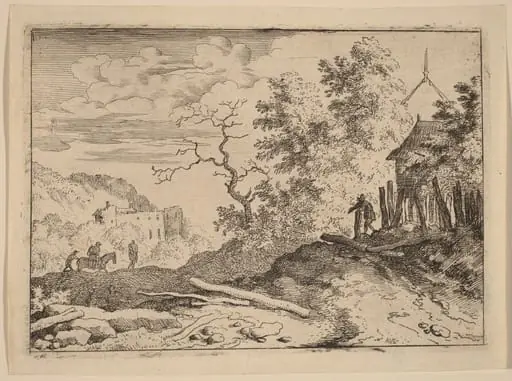 Hut with the Remains of a Hedge
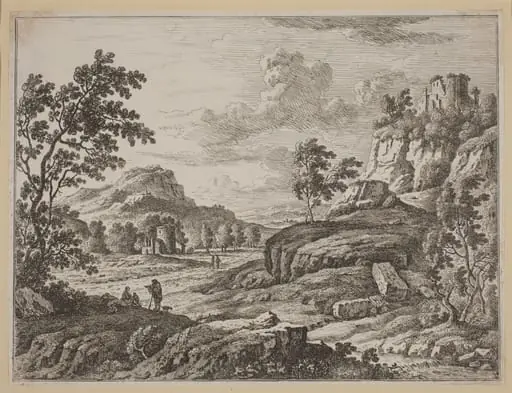 Landscape with Two Ruined Towers
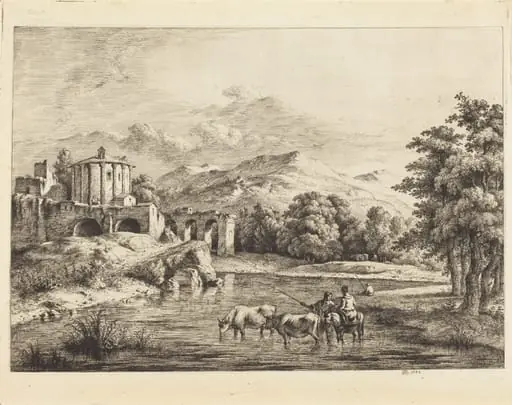 The Temple of Vesta
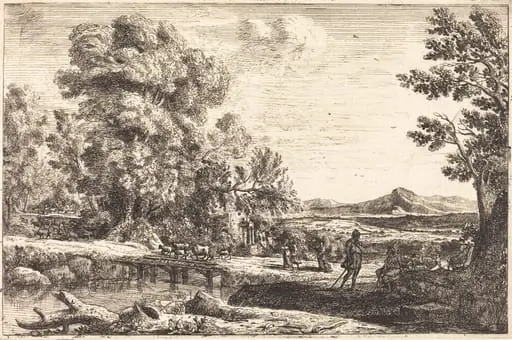 Rebecca and Eliezer (Le pont de bois)
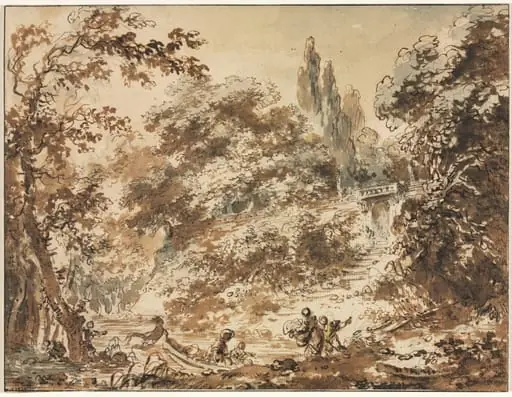 Scene in a Park
 The Knoll