Artwork
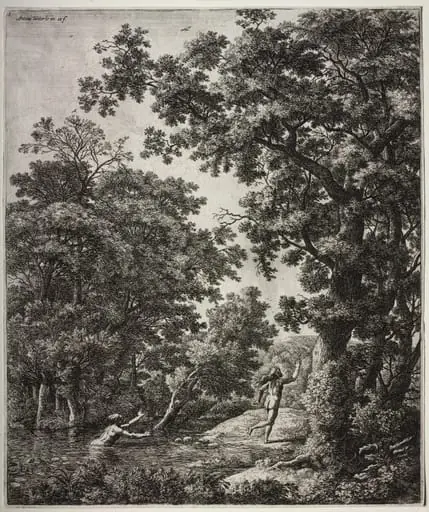
Landscape with Alpheus and Arethusa
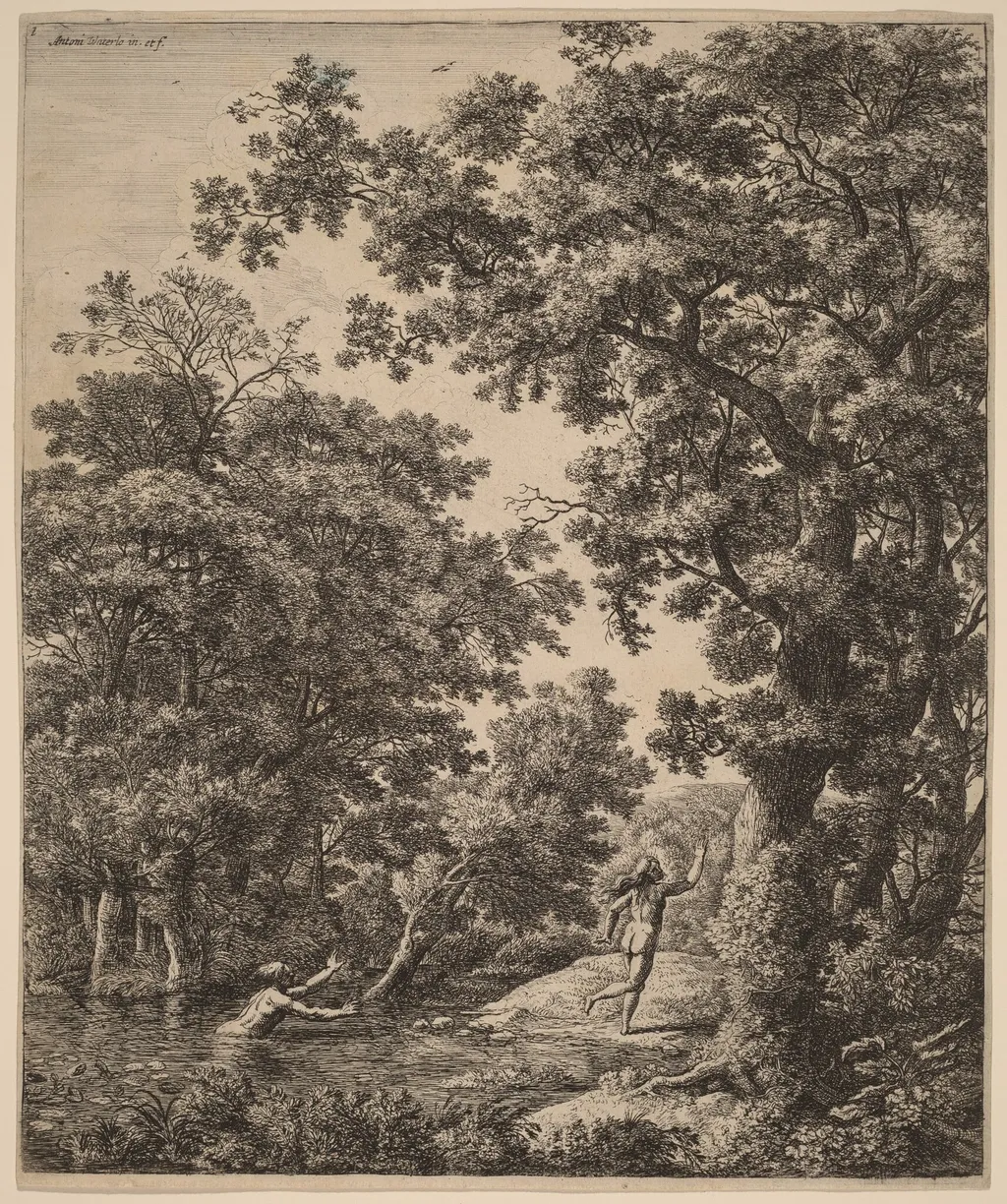
Landscape with Alpheus and Arethusa is an ink print by the Baroque artist Antonie Waterloo. It dates from 1650 and is held in the collection of the National Gallery of Art. Created in 1650, this print by Dutch artist Anthonie Waterloo presents a cultivated landscape rendered through the medium of etching.
About this work
Overview
Created in 1650, this print by Dutch artist Anthonie Waterloo presents a cultivated landscape rendered through the medium of etching. The composition centers on a water‑filled setting framed by trees and shrubbery, where two figures engage in a moment of pursuit. The work exemplifies the Baroque interest in narrative drama, employing light and shadow to guide the viewer’s eye across the scene.
Subject & Meaning
The foreground figures represent the mythological chase of Alpheus and Arethusa, a tale in which the river god pursues the nymph who transforms into a spring.
The foreground figures represent the mythological chase of Alpheus and Arethusa, a tale in which the river god pursues the nymph who transforms into a spring. The male figure is captured mid‑stride, while the female reaches outward, suggesting both the urgency of the pursuit and the nymph’s desperate attempt to escape. The surrounding nature underscores the tension between human (or divine) desire and the refuge offered by the natural world.
Technique & Style
Waterloo’s use of etching allows for fine lines that convey the texture of foliage and the rippling water, creating a convincing sense of depth. The print’s chiaroscuro—contrasting illuminated areas with darker recesses—heightens the sense of movement and emotional intensity, hallmarks of the Baroque aesthetic. Variations in line weight give the figures a dynamic presence within the otherwise tranquil landscape.
History & Provenance
The work originates from Waterloo’s mid‑seventeenth‑century output, a period when Dutch printmakers frequently explored classical themes through landscape settings. While specific ownership records are scarce, the print has appeared in several catalogues of Baroque prints and is held in public collections that focus on Dutch graphic art, reflecting its continued relevance to scholars of the era.
Own this work as a print
Artist & collection

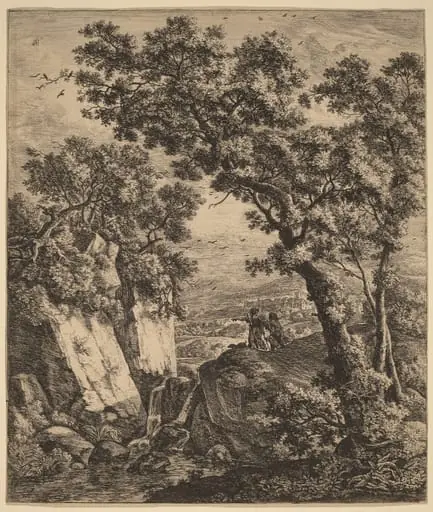
 Six large upright landscapes with scenes from Ovid's Metamorphoses
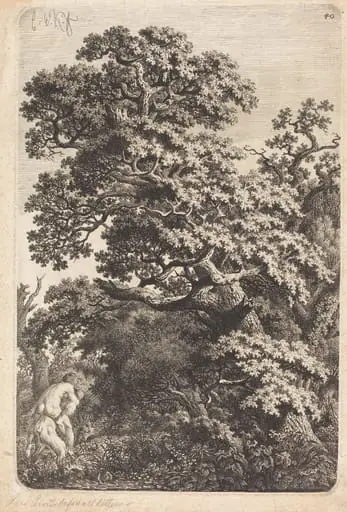 Satyr and Nymph in a Swamp
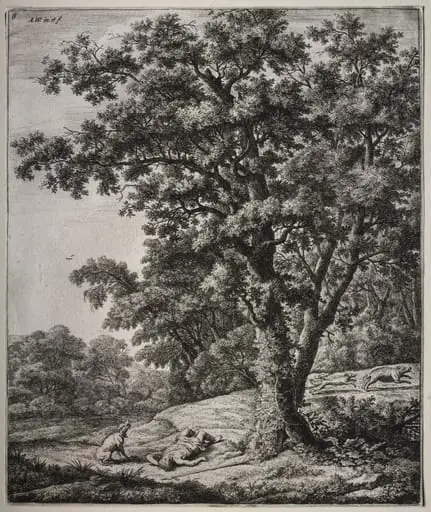 Six large upright landscapes with scenes from Ovid's Metamorphoses: The Death of Adonis
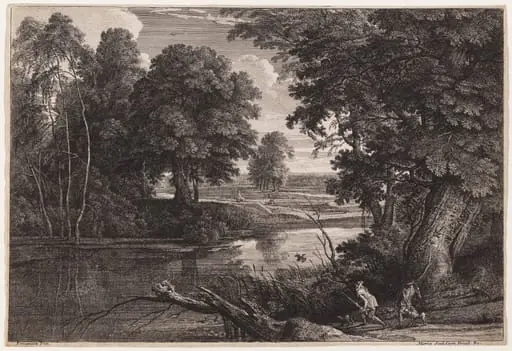 Landscape with Duck Hunters
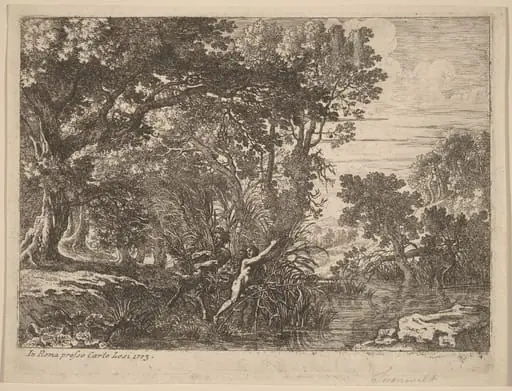 Pan and Syrinx
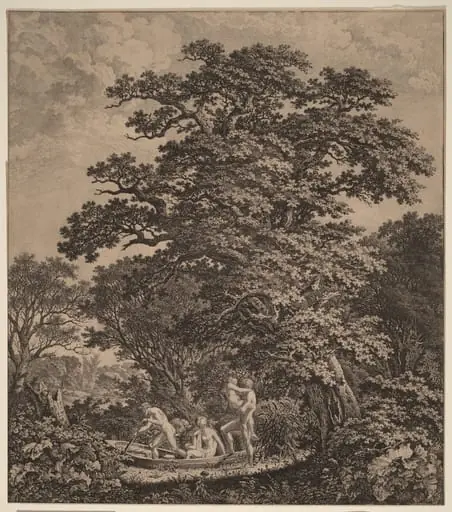 Landscape with Nudes Boarding a Boat
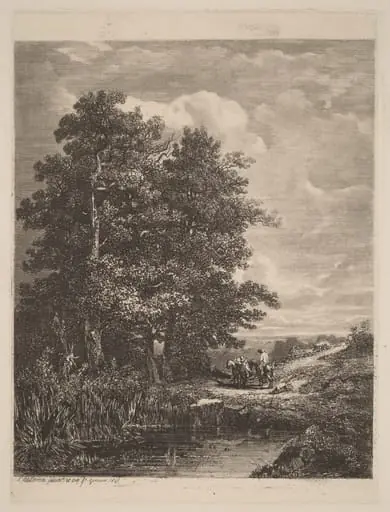 Riders by a Pond
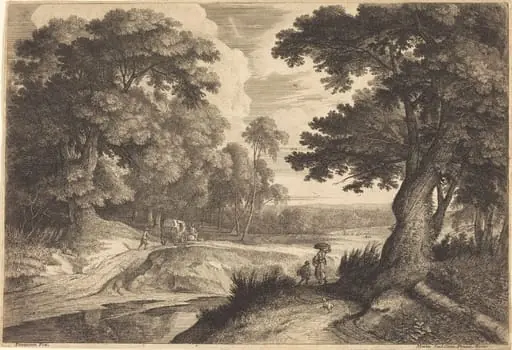 Edge of a Wood with Peasants Going to Market