Artwork
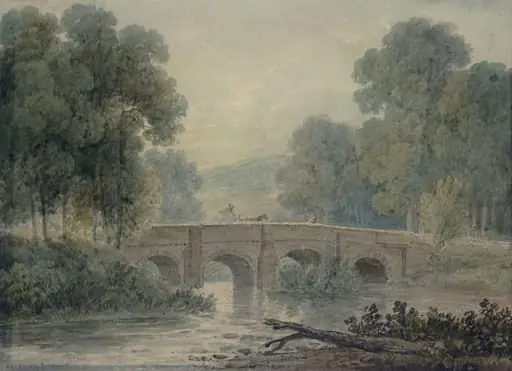
Buttermere Bridge, Cumberland
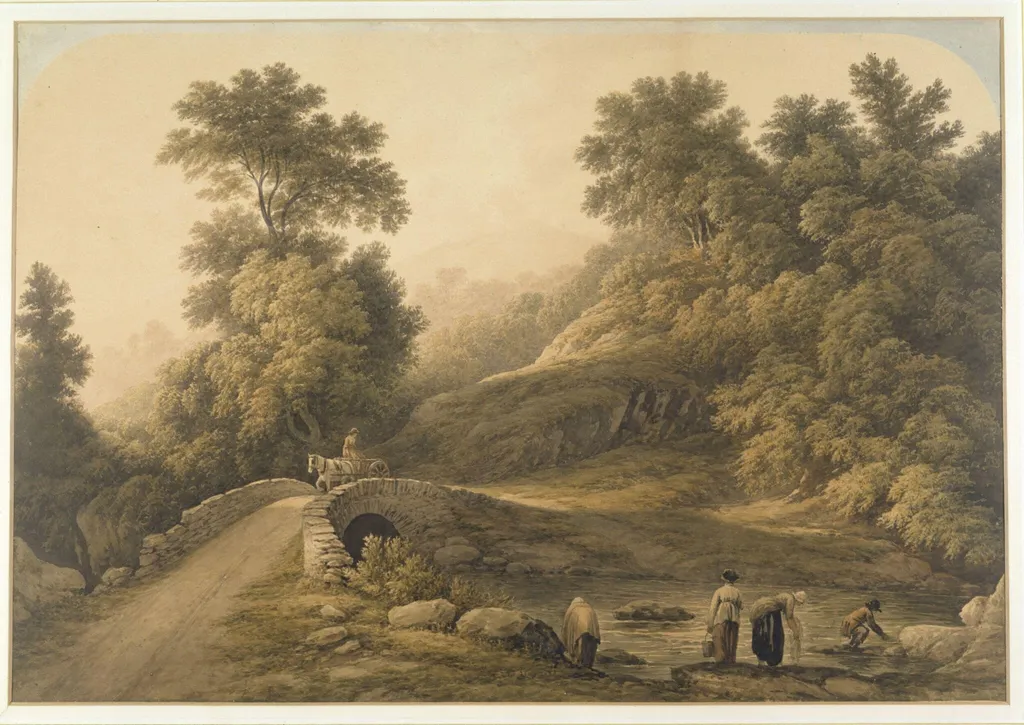
Buttermere Bridge, Cumberland is a watercolor work on paper by the British Romanticist artist John Glover. It dates from 1790 and is held in the collection of the Victoria and Albert Museum.
About this work
Overview
Buttermere Bridge, Cumberland is a watercolour painting by John Glover, created in 1790. The work captures a serene rural scene centered around the eponymous bridge in Cumberland.
Subject & Meaning
The painting depicts everyday life in a natural setting, with a stone bridge over a stream as its focal point. Figures engage in quiet activities: a horse and cart cross the bridge, while others stand by the stream, some bent in contemplation or task, emphasizing the tranquility of rural existence.
Technique & Style
Glover employs watercolour to evoke depth and atmosphere, leveraging color and light to enhance the sense of natural surroundings. The composition's central axis, defined by the bridge and stream, contributes to the work's balance and harmony.
History & Provenance
Dated 1790, the painting bears the artist's name and title. Specific provenance details are not provided in the available information.
Context
Buttermere Bridge, Cumberland aligns with the Romanticism movement, which often celebrated the beauty of the natural world and the simplicity of rural life. It shares thematic and stylistic elements with works by other Romantic-era artists.
Own this work as a print
Artist & collection

Artist
John Glover (18 February 1767 – 9 December 1849) was an English-born artist. In later life he migrated to Van Diemen’s Land and became a pastoralist during the early colonial period. He has been dubbed "the father of…

 Woody landscape
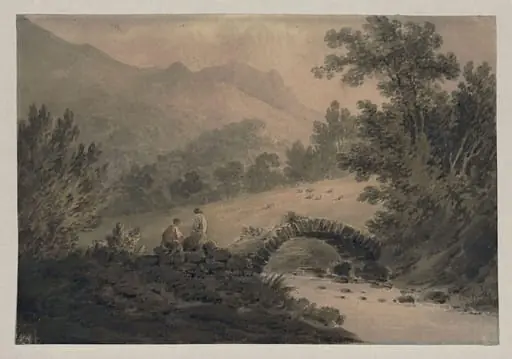 View near Halifax
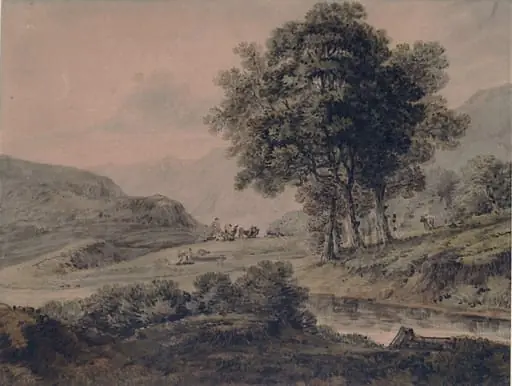 Landscape with stream, cattle and figures
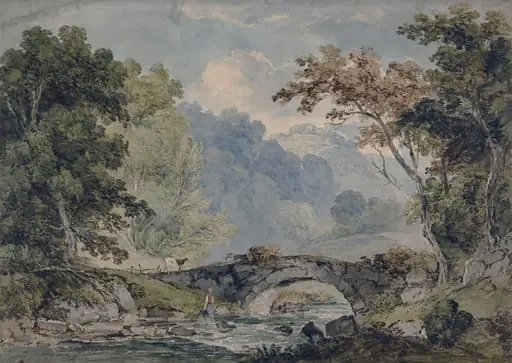 Bridge at Kippenross, near Dunblane
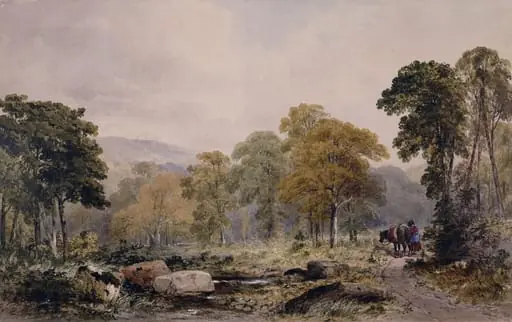 A Wood near Cheltenham
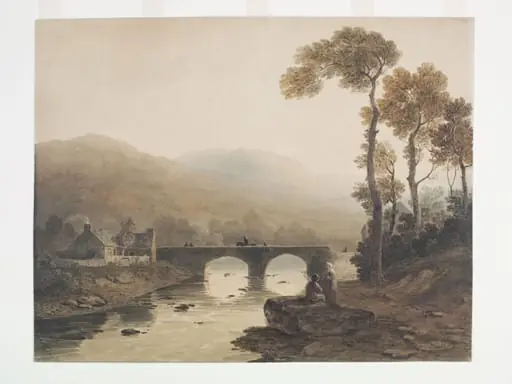 Beddgelert Bridge
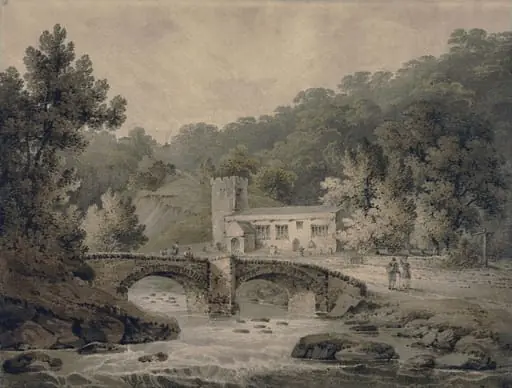 Church and bridge at Hubberholme, Yorkshire
![Landscape View [?in North Wales], by John Glover](https://artifactworldgallery.com/img/john-glover--landscape-view-in-north-wales--a6780e3d0b73ec67-w320.webp) Landscape View [?in North Wales]
Landscape View [?in North Wales]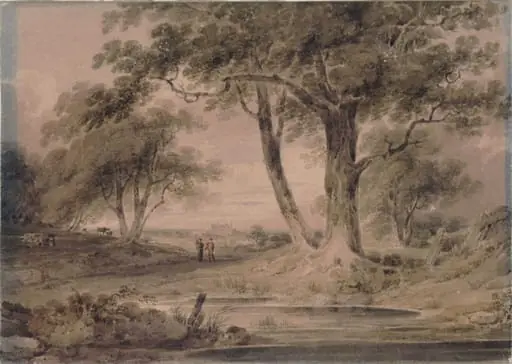 Landscape: Ripon Cathedral in the distance
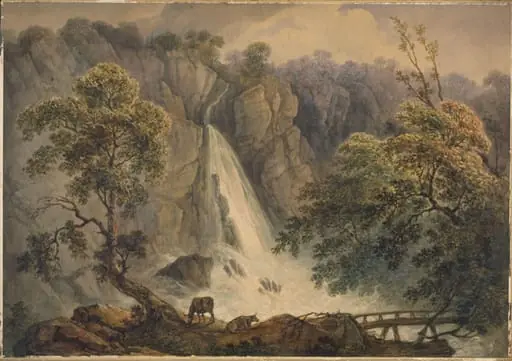 Falls of Powerscourt, near Bray, Co. Wicklow