Artwork
Standing Figure with Extinguished Torches
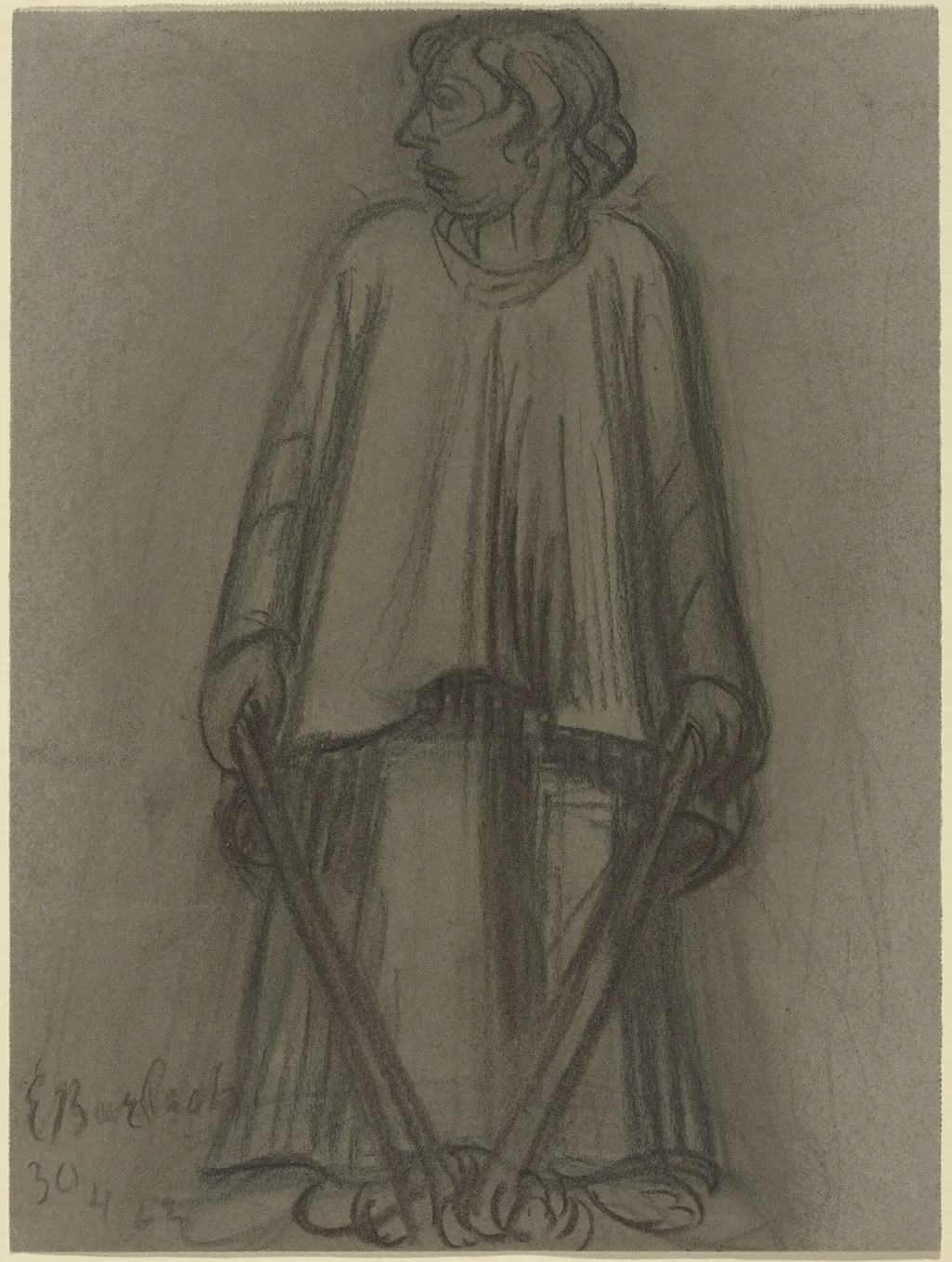
Standing Figure with Extinguished Torches is a charcoal drawing by Ernst Barlach. It dates from 1922 and is held in the collection of the National Gallery of Art.
About this work
The painting is titled Standing Figure with Extinguished Torches.
It was created by Ernst Barlach in 1922.
The artist used charcoal on green-gray paper to create this work, which is a notable fact about the piece.
You can learn more about the artist's style and other works at the National Gallery of Art, Washington, or by looking into the technique of cross-hatching.
Overview
Ernst Barlach produced this charcoal drawing in 1922 on a muted green-gray paper, a choice that enhances the somber tone of the subject. As a sculptor and printmaker deeply affected by the trauma of World War I, Barlach turned to drawing as a direct means of expressing grief and moral reflection. The medium’s immediacy suited his need to convey emotional weight without embellishment.
Subject & Meaning
The figure stands alone, holding two extinguished torches—symbols of lost light, guidance, or hope. The absence of flame suggests abandonment or the collapse of ideals, possibly referencing the disillusionment following the war. Barlach’s figures often embodied silent suffering, and this one resists narrative clarity, inviting contemplation rather than explanation.
Technique & Style
Barlach employed charcoal with deliberate, gestural strokes, using smudging and layered hatching to model form in shadow. The green-gray paper acts as a mid-tone ground, allowing the dark charcoal to emerge with stark contrast. His approach merges the raw energy of Expressionism with the grounded observation of Realism, avoiding idealization in favor of emotional truth.
History & Provenance
Created in the immediate aftermath of World War I, the drawing reflects Barlach’s personal reckoning with violence and loss. It entered institutional collections in the decades following its creation, notably held by the National Gallery of Art in Washington, D.C., where it remains part of a broader archive of his anti-war works.
Context
In early 1920s Germany, artists grappled with national trauma through visceral imagery. Barlach’s work stood apart by rejecting glorification of conflict, instead focusing on the human cost. This drawing aligns with a broader movement of postwar art that prioritized introspection over spectacle, resonating with pacifist and humanist currents of the time.
Legacy
Though less known than his sculptures, this drawing exemplifies Barlach’s consistent thematic concerns: solitude, mourning, and moral witness. Its restrained technique and symbolic weight influenced later generations of German artists seeking to articulate trauma through minimal, evocative forms.
Artist & collection
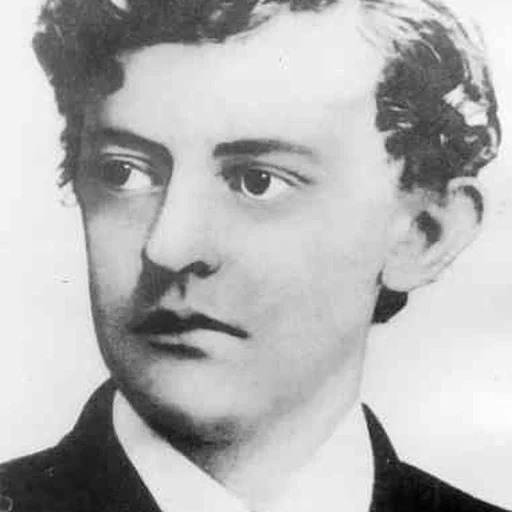
Artist
Ernst Heinrich Barlach (2 January 1870 – 24 October 1938) was a German expressionist sculptor, medallist, printmaker and writer.

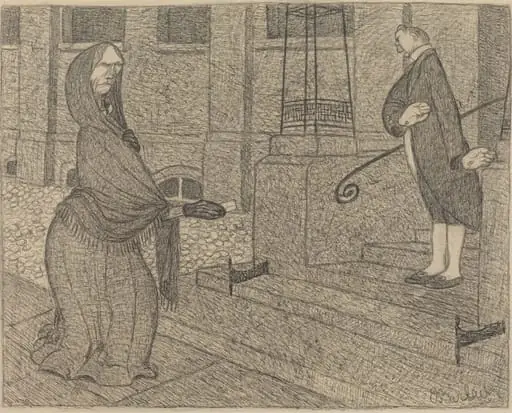
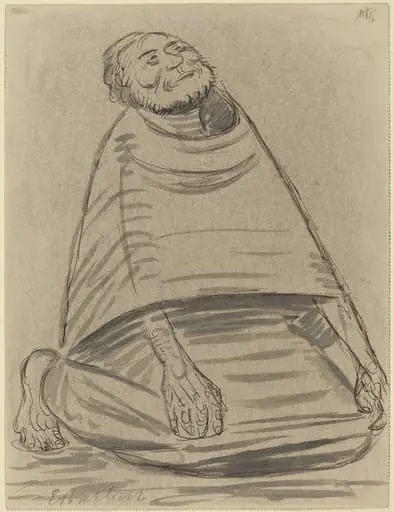
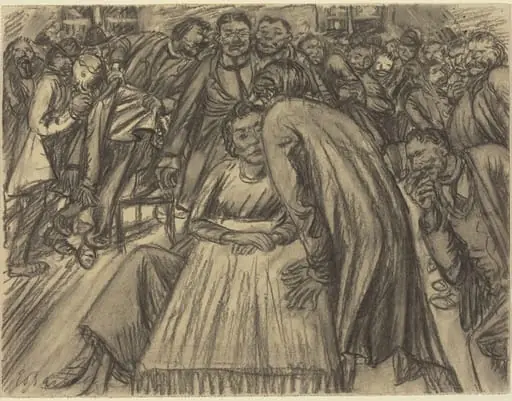
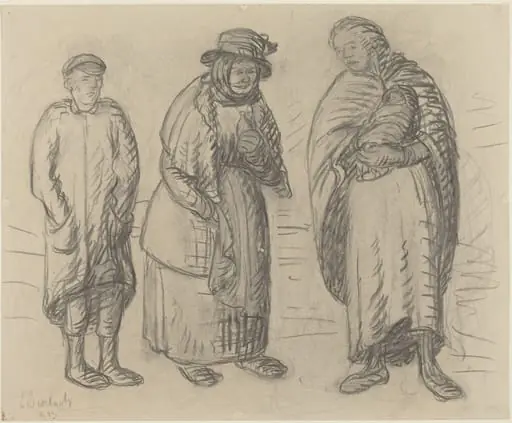
 One of Balzac's 'Contes Drolatiques'
 The Fur Cloak
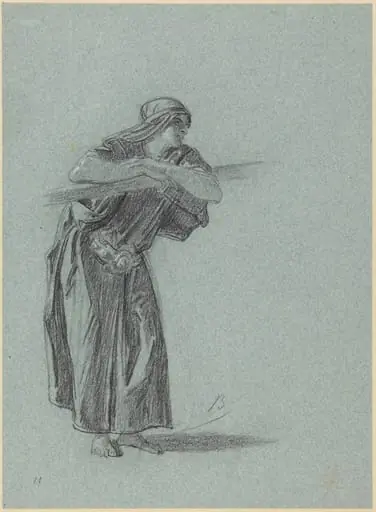 The Woman in the “Song of Songs”
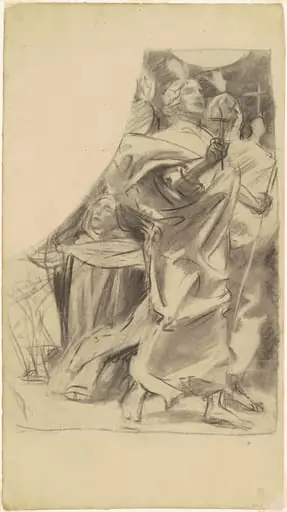 Study for "Triumph of Religion"
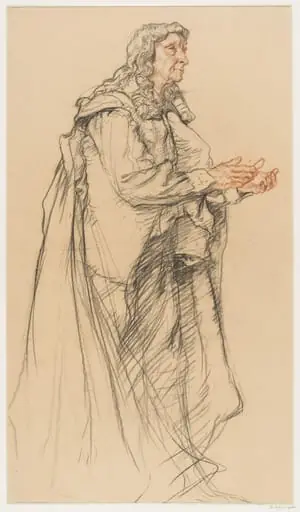 Prince Rupert receiving the Charter of the Hudson Bay Company from Charles II
![Man Wearing a Cloak [verso], by Edouard Manet](https://artifactworldgallery.com/img/edouard-manet--man-wearing-a-cloak-verso--0bd057994533d120-w320.webp) Man Wearing a Cloak [verso]
Man Wearing a Cloak [verso]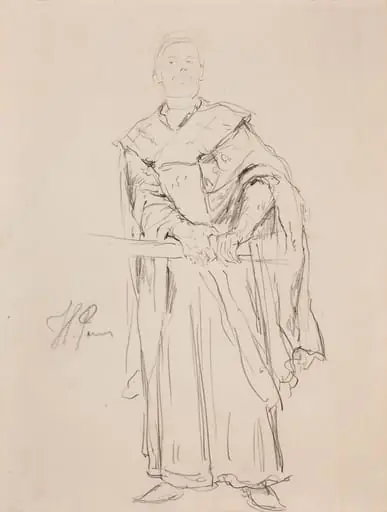 Luonnos maalaukseen Pyhä Nikolaus Lyykian Myrasta
![Man Wearing a Cloak [recto], by Edouard Manet](https://artifactworldgallery.com/img/edouard-manet--man-wearing-a-cloak-recto--6f165c0376318d82-w320.webp) Man Wearing a Cloak [recto]
Man Wearing a Cloak [recto]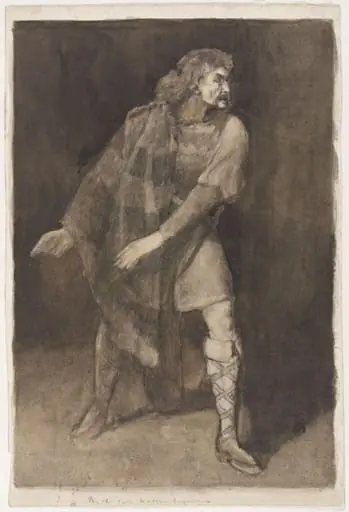 Untitled
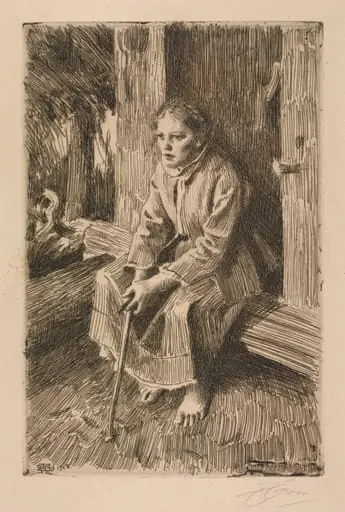 Vallkulla
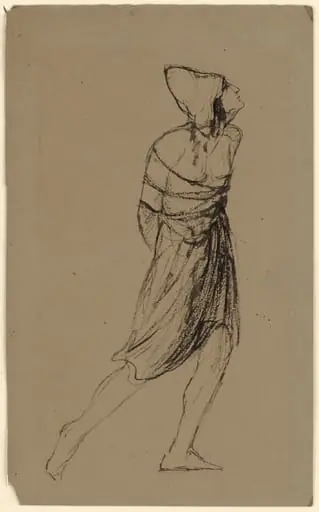 Untitled
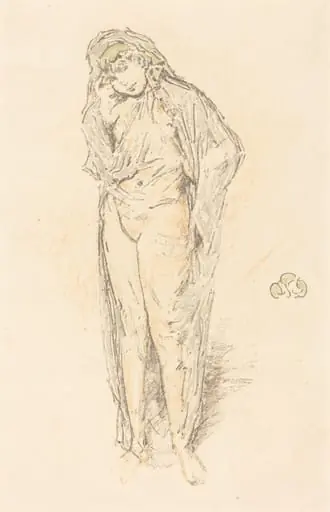 Draped Figure, Standing