Artwork
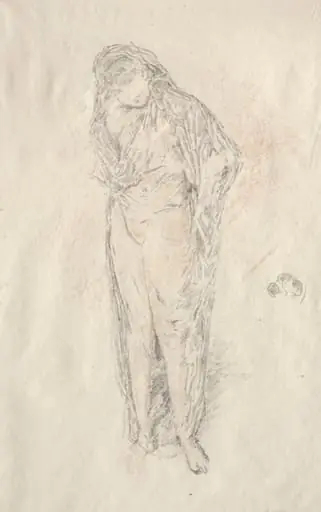
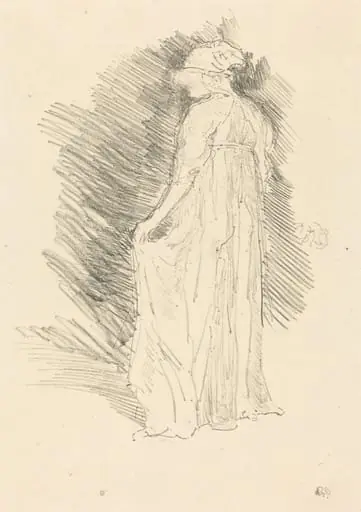
Draped Figure, Standing
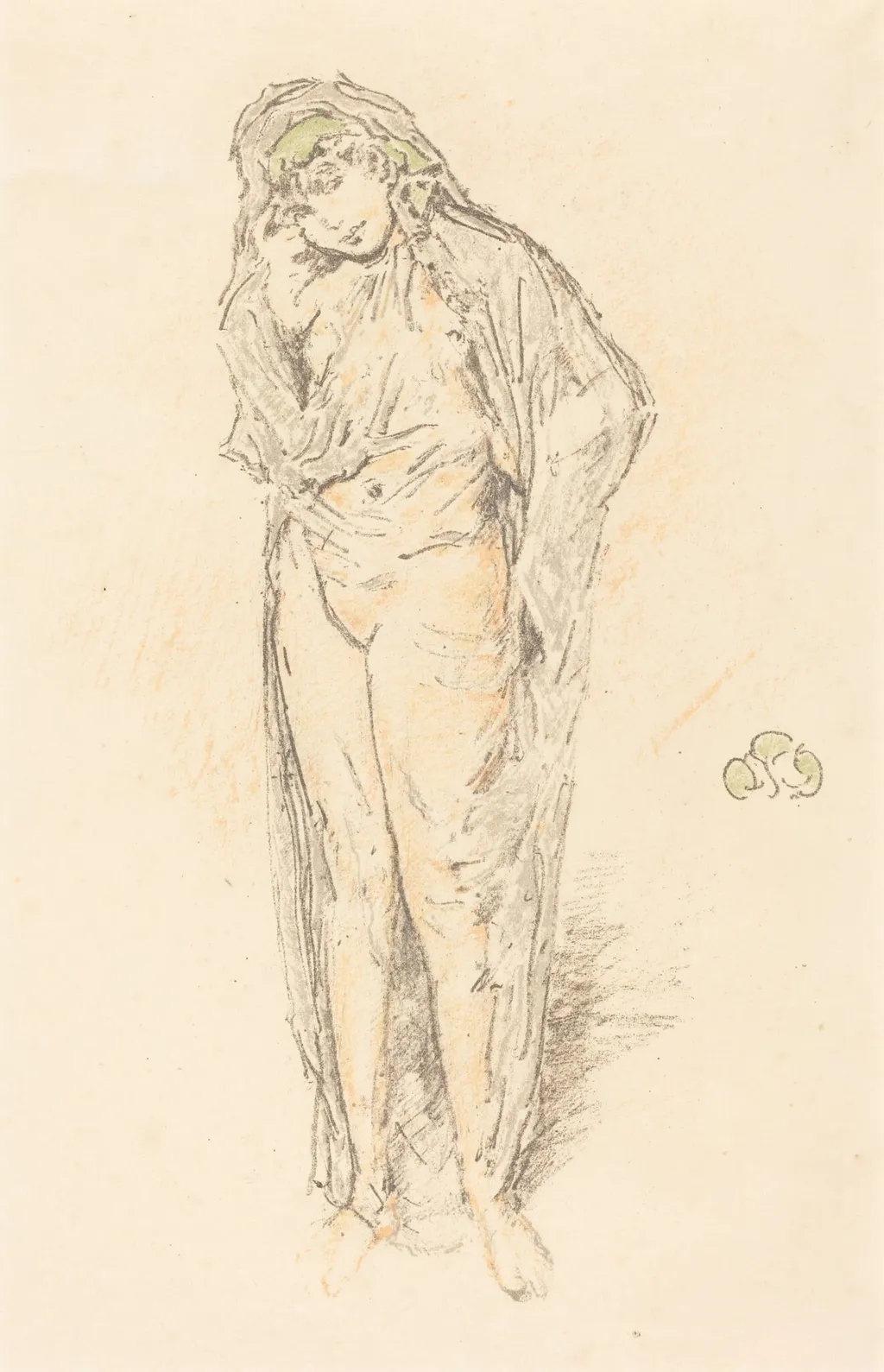
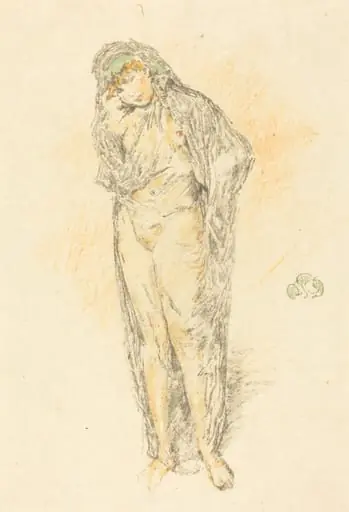
Draped Figure, Standing is an ink print by the Impressionist artist James McNeill Whistler. It dates from 1891 and is held in the collection of the National Gallery of Art.
About this work
Overview
Created in 1891, *Draped Figure, Standing* is a color lithograph on wove paper by James McNeill Whistler, produced during his years in Britain.
Created in 1891, *Draped Figure, Standing* is a color lithograph on wove paper by James McNeill Whistler, produced during his years in Britain. Though primarily known for oil and watercolor works, Whistler consistently explored printmaking as a medium for formal experimentation. This piece exemplifies his interest in tonal harmony and simplified form, aligning with his broader aesthetic philosophy that prioritized visual balance over storytelling.
Subject & Meaning
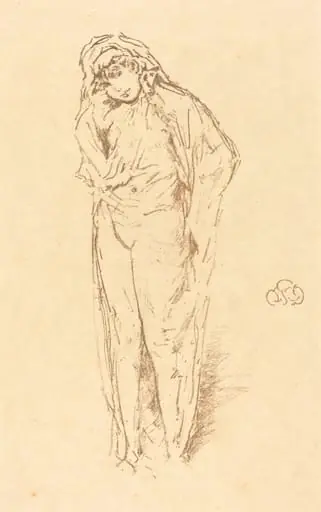
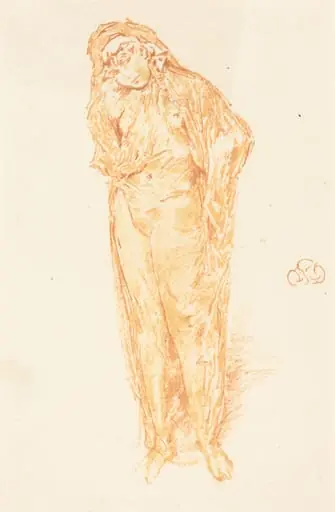
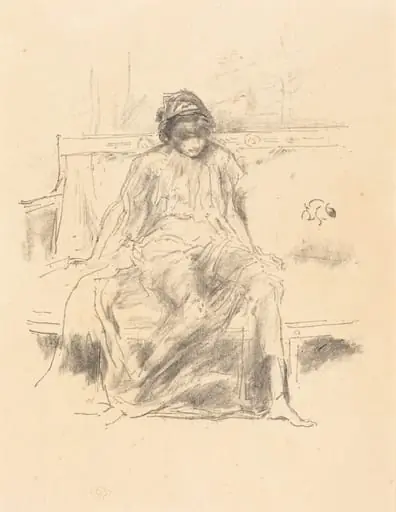
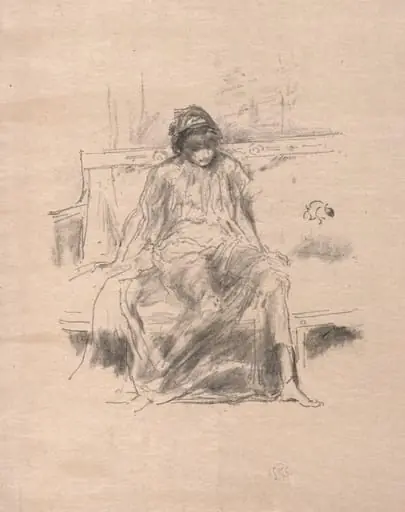
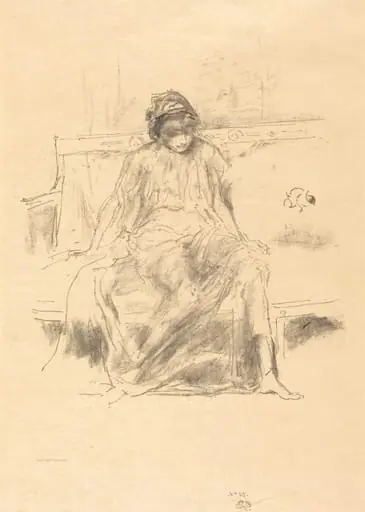
The image presents a solitary female figure in a sideways stance, enveloped in loosely rendered drapery that suggests modesty without defining specific identity or narrative. The pose is still, almost meditative, inviting attention to posture and volume rather than expression or action. Whistler avoids symbolic or emotional cues, focusing instead on the quiet presence of the human form as an arrangement of line and shadow.
Technique & Style
Executed in color lithography, the work employs minimal hues and fluid, sketch-like lines to suggest form with economy. Shading is soft and atmospheric, avoiding sharp contours; fabric folds and skin are indicated through subtle gradations rather than detailed modeling. The plain background isolates the figure, emphasizing its silhouette and the interplay of light across surfaces. This approach reflects Whistler’s preference for suggestive rather than descriptive rendering.
History & Provenance
Produced in 1891, the lithograph emerged from Whistler’s active period in British printmaking, following his earlier experiments with etching and drypoint. It was likely made for private circulation or as part of a portfolio, consistent with his practice of releasing limited, high-quality impressions. No public exhibition record from the time is widely documented, but the work remains part of institutional collections today, preserved as an example of his late graphic output.
Context
Whistler’s work in lithography during the 1890s coincided with broader European interest in Japanese prints and the rise of Aestheticism. His focus on form, tone, and compositional rhythm aligned with these movements, distancing his art from Victorian narrative conventions. This piece, like others in his graphic oeuvre, reflects a deliberate turn away from literal representation toward an emphasis on sensory experience and visual harmony.
Legacy
*Draped Figure, Standing* contributes to the understanding of Whistler’s late graphic work as a bridge between traditional draftsmanship and modernist simplification. Its restrained execution influenced later artists exploring the expressive potential of minimal line and tone. Though not widely exhibited in his lifetime, it remains a quiet testament to his commitment to aesthetic discipline and the autonomy of visual form.
Artist & collection
Artist
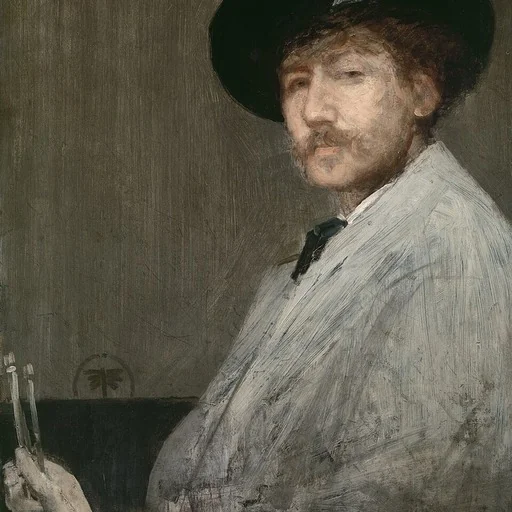
James Abbott McNeill Whistler was an American painter in oils and watercolor, and printmaker, active during the American Gilded Age and based primarily in the United Kingdom.

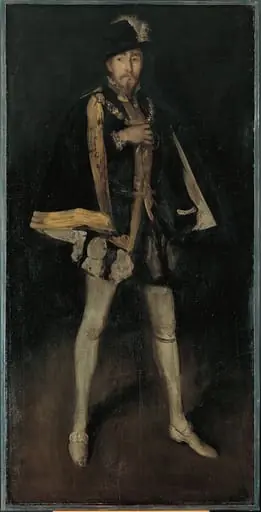 Arrangement in Black, No. 3: Sir Henry Irving as Philip II of Spain
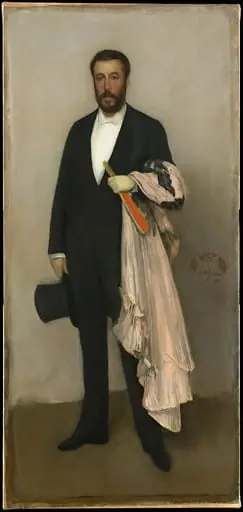 Arrangement in Flesh Colour and Black: Portrait of Theodore Duret
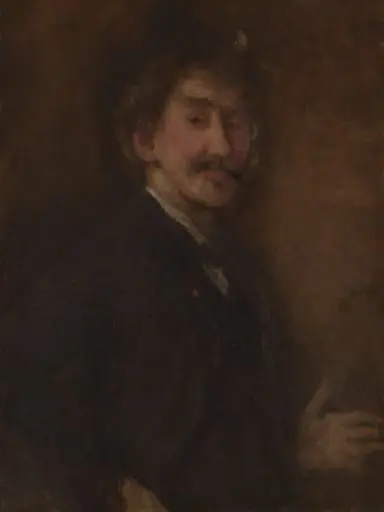 Gold and Brown: Self-Portrait
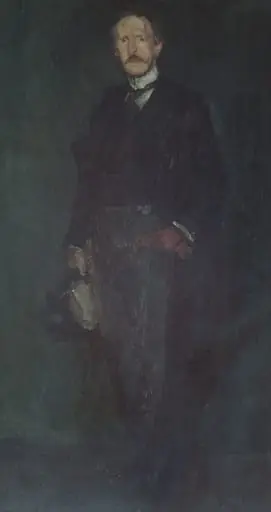 Edward Guthrie Kennedy
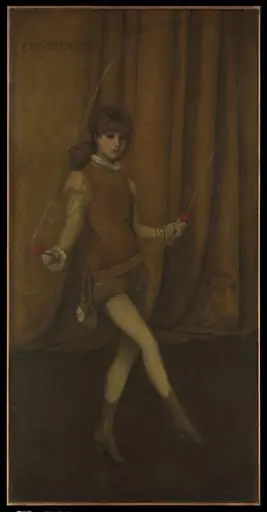 Harmony in Yellow and Gold: The Gold Girl—Connie Gilchrist
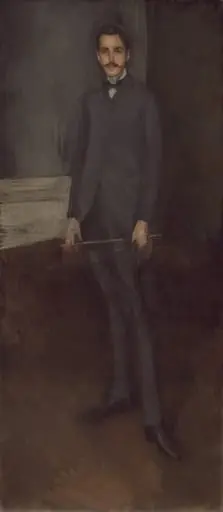 George W. Vanderbilt
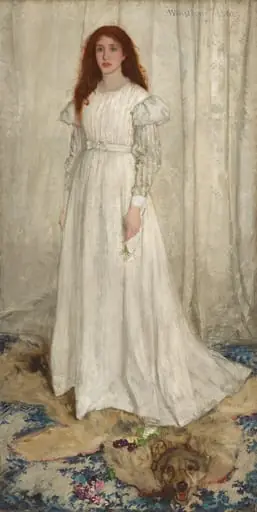 Symphony in White, No. 1: The White Girl
 Henry Irving as Philip II of Spain