Artwork
Ruins of the Imperial Palaces on the Palatine Hill
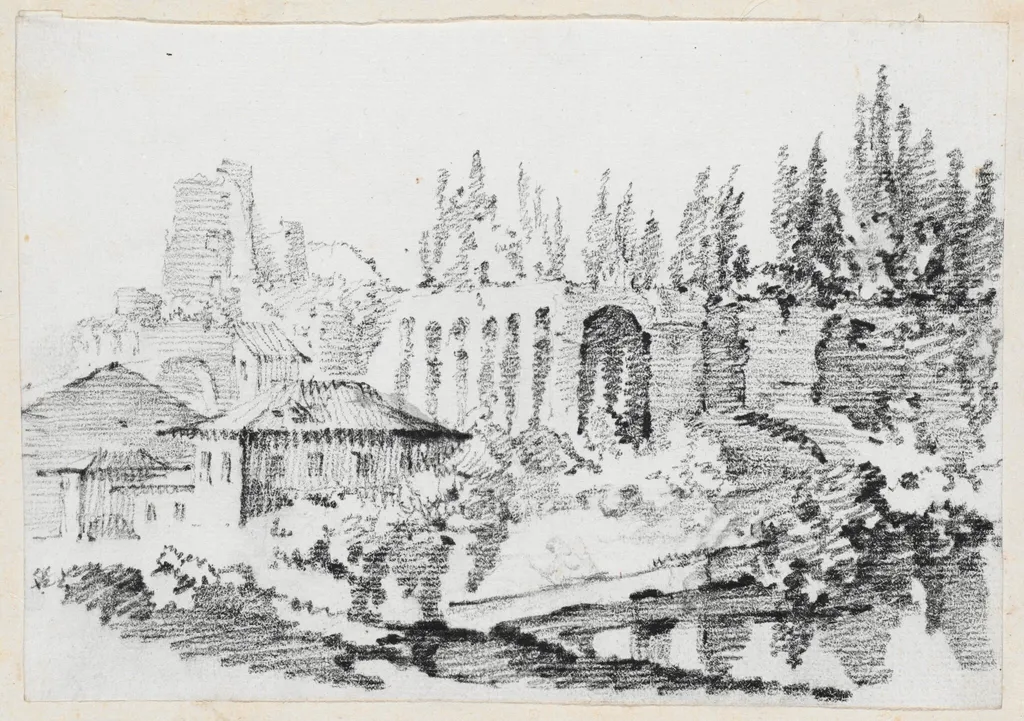
Ruins of the Imperial Palaces on the Palatine Hill is a graphite drawing by the Baroque artist Joseph-Marie Vien. It dates from 1747 and is held in the collection of the National Gallery of Art.
About this work
Overview
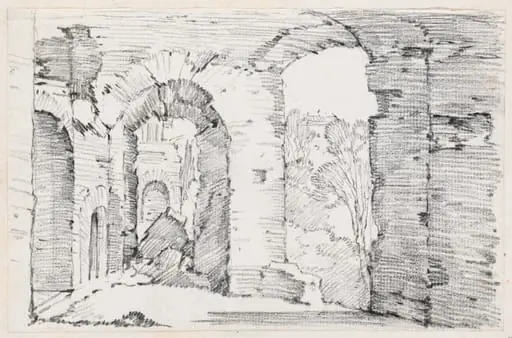
Joseph-Marie Vien's 1747 drawing, Ruins of the Imperial Palaces on the Palatine Hill, is a graphite work on laid paper. It captures the ancient remains on Rome's Palatine Hill.
Subject & Meaning
The drawing depicts crumbling stone structures and arches, overgrown with trees and half-buried in earth. The focus is on the decay of ancient buildings as nature reclaims them, a theme that resonated with 18th-century interests in historical remnants.
Technique & Style
Executed in quick, dark graphite lines with selective shading, the sketch conveys a sense of rugged terrain and the interplay of light and shadow on the ruins.
Context
Created early in Vien's career, this work reflects the emerging Neoclassical fascination with classical antiquity, a trend that would shape Vien's subsequent artistic direction and contribute to the shift from Rococo to Neoclassicism in French art.
Artist & collection
Artist
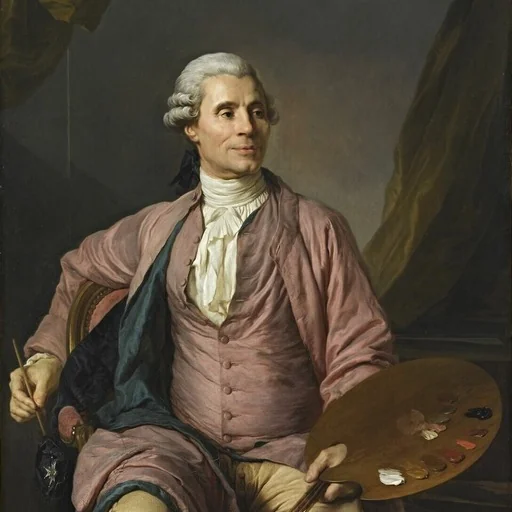
Joseph-Marie Vien (18 June 1716 – 27 March 1809) was a French painter. He was the last holder of the post of Premier peintre du Roi, serving from 1789 to 1791, before it was abolished during the French Revolution.

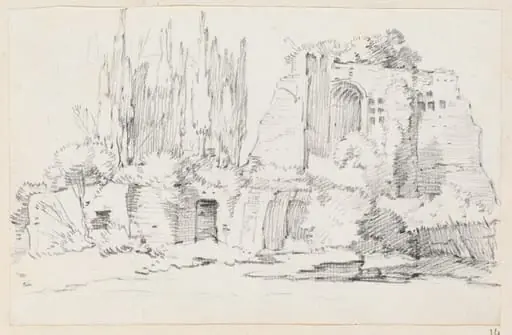 Roman Ruins with a Stand of Cypresses
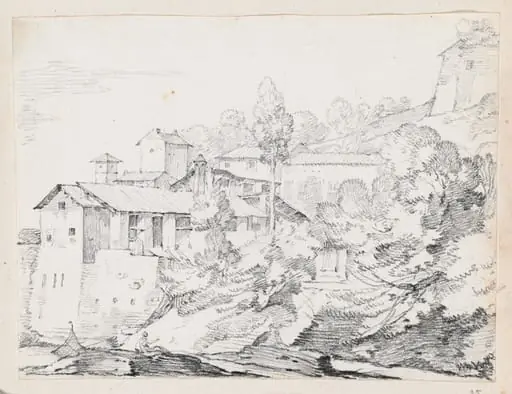 Italian Buildings on a Hillside
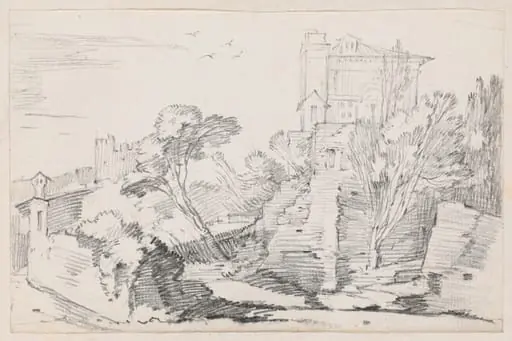 Casino Farnese on the Palatine Hill, Rome
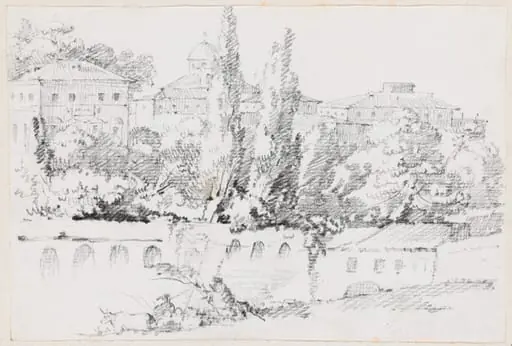 Walls of Rome with Santa Maria del Popolo in the Distance
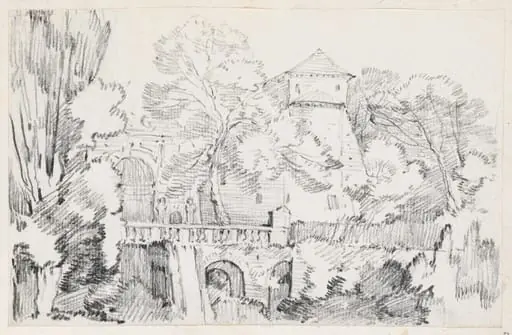 The Water Organ in the Gardens of the Villa d'Este, Tivoli
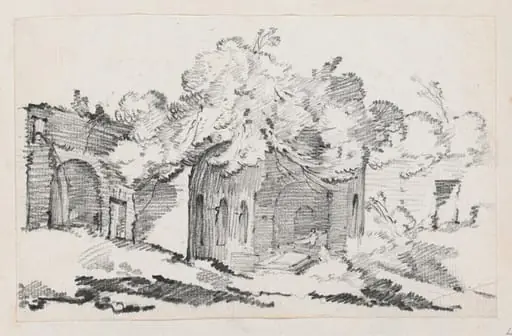 The Grotto of the Nymph Egeria
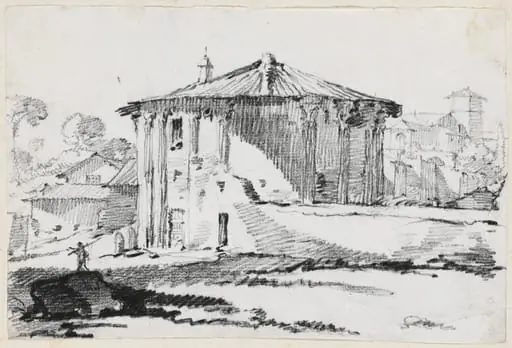 The Round Temple on the Piazza Bocca della Verità, Rome
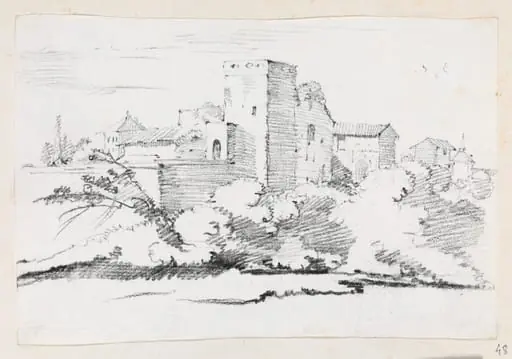 Buildings behind the Vatican
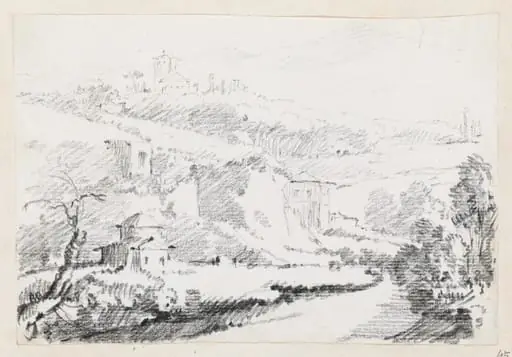 Landscape in the Alban Hills