Artwork
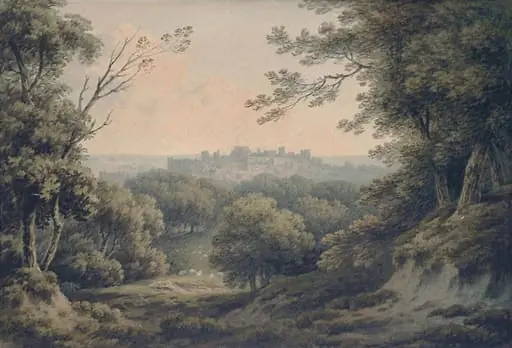
Windsor Park, with the castle in the distance
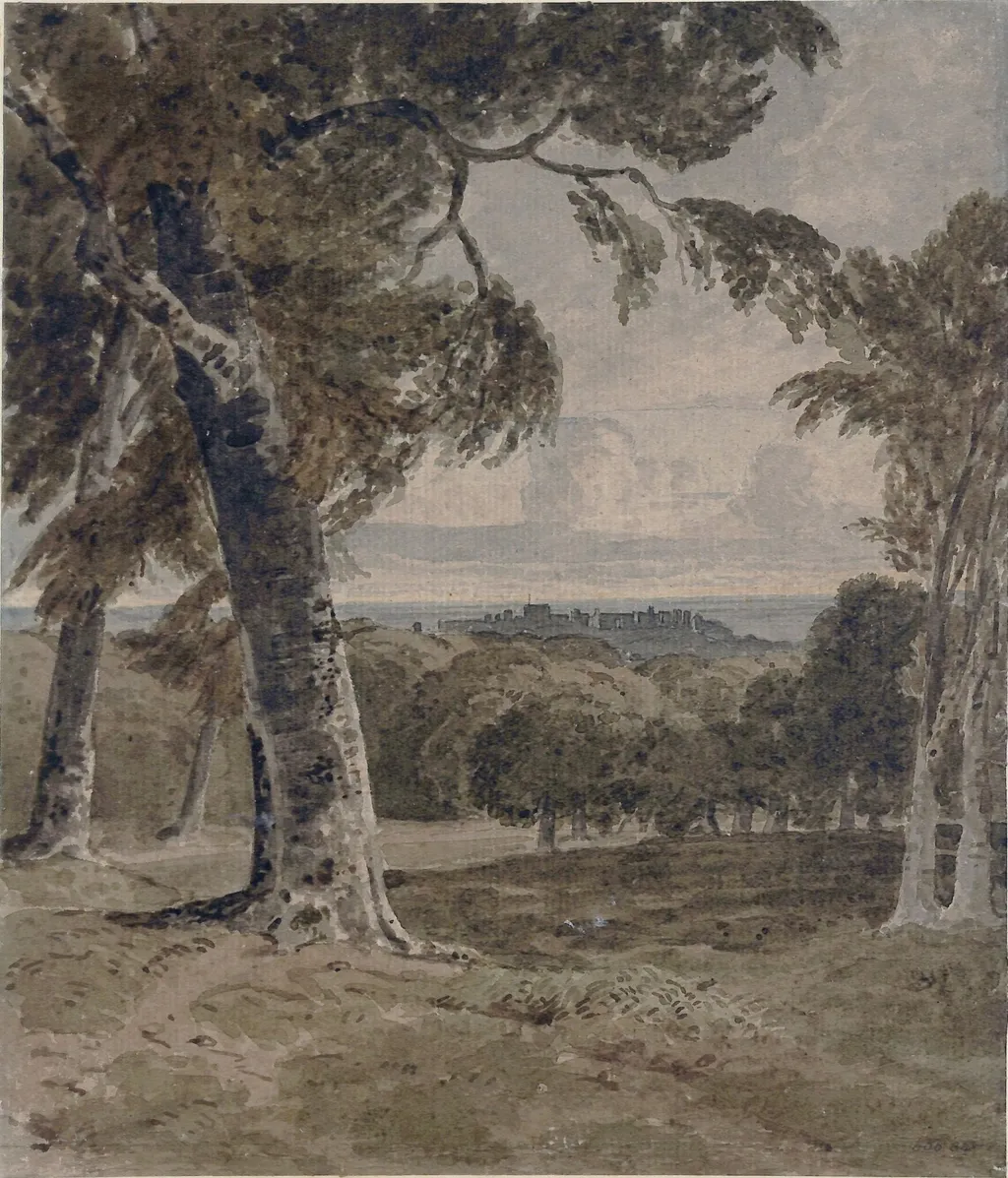
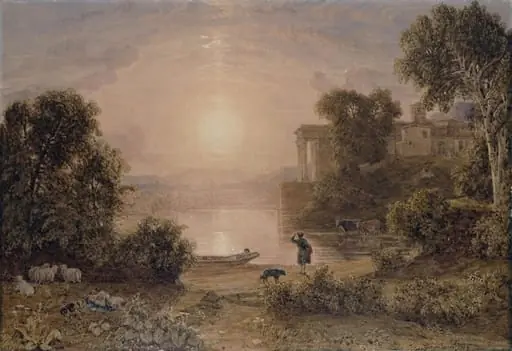
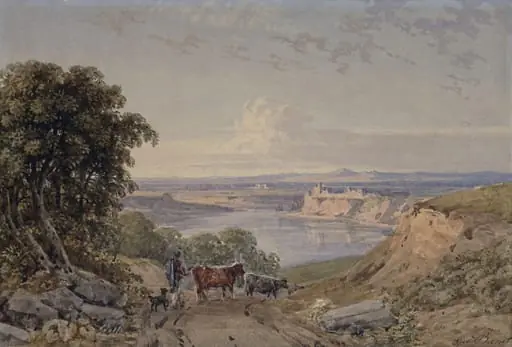
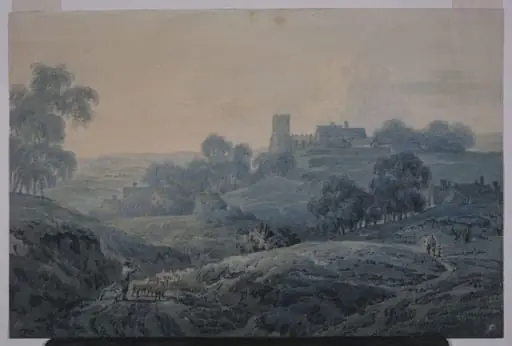
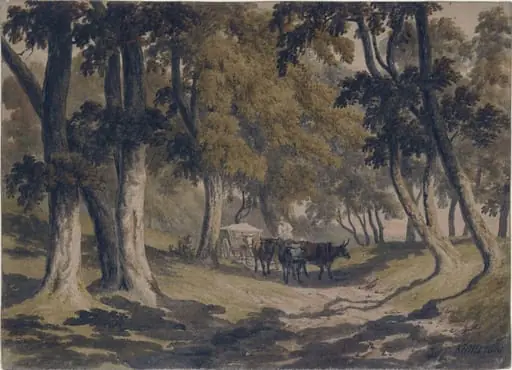
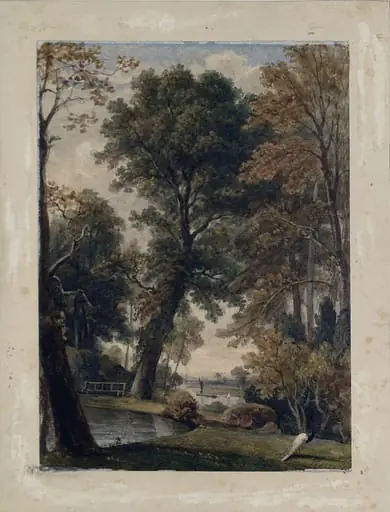
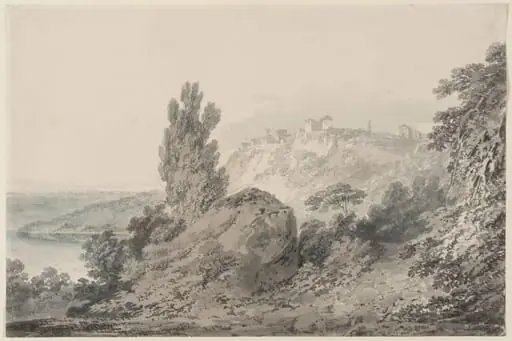
Windsor Park, with the castle in the distance is a watercolor work on paper by the British Romanticist artist George the younger Barret. It dates from 1790 and is held in the collection of the Victoria and Albert Museum.
About this work
Overview
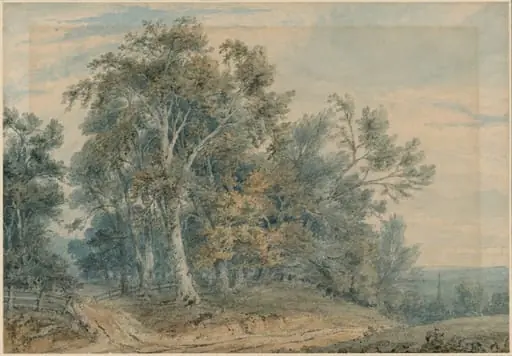
Painted in 1790 by George Barret the Younger, this watercolor depicts a tranquil stretch of Windsor Park with the distant silhouette of Windsor Castle.
Painted in 1790 by George Barret the Younger, this watercolor depicts a tranquil stretch of Windsor Park with the distant silhouette of Windsor Castle. Executed in delicate washes, the work captures a quiet moment in the English countryside, emphasizing atmosphere over detail. It resides in the collection of the Victoria and Albert Museum, where it represents a quiet strand of late 18th-century landscape observation.
Subject & Meaning
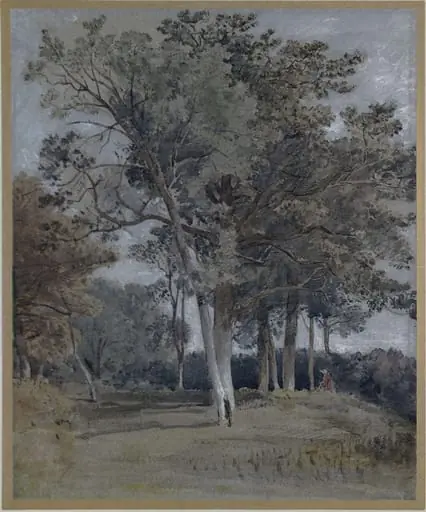
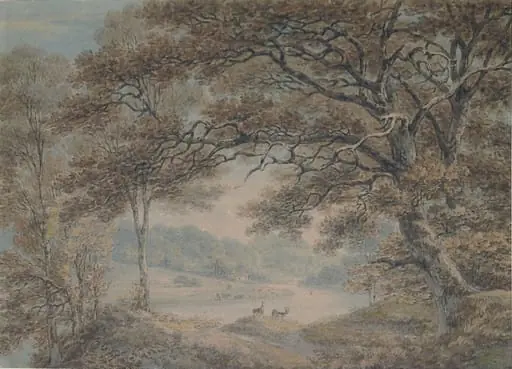
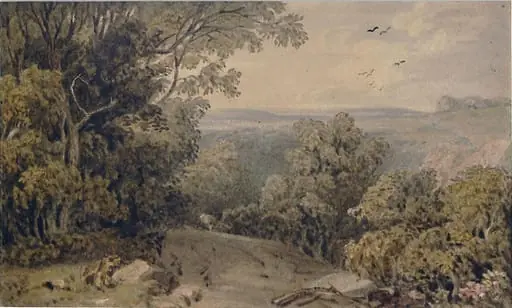
The scene centers on a winding path flanked by two prominent trees, guiding the viewer’s gaze toward Windsor Castle perched on a hill near the river. The castle, faint but recognizable, suggests historical continuity amid the natural setting. The composition invites contemplation rather than narrative, reflecting a preference for serene, uneventful landscapes common in the period’s topographical tradition.
Technique & Style
Barret employed transparent watercolor washes to render soft gradients in the sky and foliage, avoiding sharp outlines. The ground is suggested with subtle tonal shifts between grass and earth, while the distant castle is rendered in pale, muted hues to enhance depth. The technique prioritizes atmospheric effect over precision, aligning with a growing interest in mood and light over architectural detail.
History & Provenance
Created in 1790, the painting entered the Victoria and Albert Museum’s collection through established channels of British art acquisition. While little is documented about its early ownership, its preservation in a major national institution reflects its recognition as a representative example of Georgian watercolor practice, valued for its technical restraint and topographical accuracy.
Context
This work emerged during a time when British artists increasingly turned to native landscapes for inspiration, moving away from idealized continental scenes. Though not overtly Romantic, its quiet reverence for nature and historical architecture anticipates Romantic sensibilities. It aligns with contemporaneous topographical watercolors produced for private patrons and antiquarian interest.
Legacy
Barret’s painting contributes to the broader tradition of British watercolor landscape, influencing later artists who favored subtle tonality and naturalistic composition. Its presence in the V&A underscores its role as a quiet but significant record of how 18th-century viewers perceived their environment—not as dramatic spectacle, but as a place of enduring, understated beauty.
Own this work as a print
Artist & collection
Artist
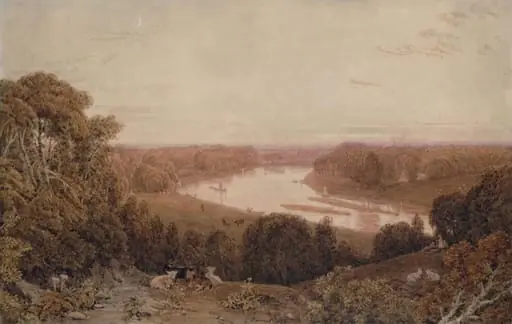
This English painter built quiet drama into gentle views. His watercolours show cattle grazing near Richmond, evening rivers winding through hills, and Windsor Castle glimpsed across a Surrey park. Barret worked in the…